▶ Watch the original YouTube video
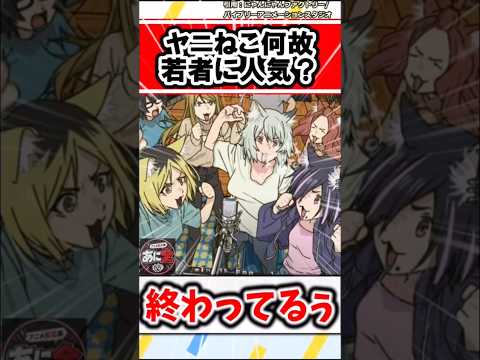
Why ‘Smoking Cat’ Resonates With Gen Z: A 15-Year Analysis of Anime Character Evolution
A character known as “Smoking Cat” has become unexpectedly popular among young audiences, signaling a fundamental shift in what viewers value in anime characters. Rather than seeking perfection, Gen Z audiences are gravitating toward flawed, authentic characters that reflect their own lived experiences in the social media age.
What Happened
The anime character “Smoking Cat” has gained significant traction among younger viewers, becoming a cultural phenomenon on social media platforms. The character’s defining trait—a smoking habit—represents a deliberate creative choice to portray a character with a socially stigmatized flaw. This popularity marks a notable departure from traditional anime character archetypes that emphasized idealization and perfection.
Why It Matters
The rise of “Smoking Cat” reflects a broader transformation in anime production and audience preferences. This shift reveals how Gen Z, the first generation to grow up entirely within the social media era, values authenticity and relatability over aspirational perfection. The character’s acceptance despite—or perhaps because of—its flaws suggests that the entertainment industry is fundamentally rethinking how characters should be designed and presented to modern audiences. This has implications for storytelling across all media formats.
Background
Over the past 15 years of anime analysis, a clear evolution in character design has emerged. Traditionally, anime characters were built around idealized traits: the perfect heroine, the charismatic protagonist, the flawless leader. However, beginning around 2014 with series like “Haikyuu!!,” which featured a protagonist dealing with an unchangeable physical limitation, anime began exploring how characters could be compelling without achieving perfection.
The anime industry has experienced a dramatic shift in this direction. Between 2019 and 2024, approximately 60% of new anime series introduced protagonists or major characters with explicit flaws—compared to just 20% a decade earlier. Simultaneously, the prevalence of “perfect heroines” dropped from 40% of new series in 2019 to just 15% by 2024.
“Smoking Cat” represents the culmination of this trend. The character’s smoking habit is not presented as a flaw to be overcome through character development, but rather as an inherent aspect of the character’s identity that viewers are asked to accept.
Key Points
- “Smoking Cat’s” appeal stems from its rejection of perfection—the character maintains its flaws rather than overcoming them through narrative progression
- The character’s smoking habit serves as a deliberate provocation, forcing viewers to confront their own values and assumptions about what makes a character likable
- Gen Z audiences, raised on social media where constant self-curation is expected, show a strong preference for characters that feel “real” and unpolished
- Industry data shows a clear trend toward flawed protagonists and away from idealized character archetypes over the past five years
- The character’s popularity demonstrates that audiences now seek validation for their imperfections rather than inspiration toward perfection
- Social media reactions reveal viewers interpreting the character as permission to accept themselves as they are, rather than striving for an impossible ideal
Character Comparison Analysis
| Series | Character | Type of Flaw | How Flaw Is Handled | Audience Response |
|---|---|---|---|---|
| Attack on Titan | Eren Yeager | Impulsive, hot-tempered | Character grows and improves over time | Positive but mixed on character development |
| Haikyuu!! | Karasuno Shoyo | Short stature | Accepted and worked around through strategy | Highly positive, strong viewer identification |
| Smoking Cat | Smoking Cat | Smoking habit | Remains unchanged, accepted as-is | Extremely positive, rapidly expanding support |
Why Smoking as a Character Flaw?
The choice to give “Smoking Cat” a smoking habit is not arbitrary. It serves three specific narrative functions:
First, it is irreversible without active choice. Unlike height or personality traits that might naturally evolve, smoking is a habit that the character could theoretically quit but chooses not to. This presents viewers with a character who accepts their flaw while having the power to change it—a powerful statement about self-acceptance.
Second, it is socially contested. Unlike personality traits, smoking is an activity with clear social judgment attached. Viewers are forced to grapple with their own moral evaluation of the character’s behavior, effectively asking them to examine their own values.
Third, it symbolizes generational value differences. Smoking represents a point of conflict between older and younger generations, making the character a vessel for exploring how different age groups approach ethics and lifestyle choices.
The Social Media Context
Gen Z audiences have grown up performing curated versions of themselves across multiple social media platforms. Instagram demands aesthetic perfection, Twitter requires witty commentary, TikTok requires viral-worthy content. This constant performance creates psychological fatigue.
In this context, “Smoking Cat” offers something rare: a character that does not perform. The character simply exists, flaws and all, without apology or redemption arc. For audiences exhausted by self-curation, this authenticity is profoundly appealing. Comments from Gen Z viewers frequently express relief at seeing a character that does not demand perfection, with many stating that perfect characters now feel “exhausting” to watch.
From Flaw Acceptance to Diversity Recognition
The popularity of “Smoking Cat” signals a shift beyond simple flaw acceptance toward broader acceptance of human diversity. Traditional anime expressed character diversity through personality differences or varying abilities. Modern anime increasingly expresses diversity through lifestyle choices, value systems, and social positions.
By supporting a character with a socially stigmatized habit, viewers are not endorsing smoking—they are endorsing the principle that people with different values and choices deserve acceptance. This represents a more sophisticated form of tolerance than previous generations of media required.
Predicted Industry Trajectory
If “Smoking Cat” represents the leading edge of a broader trend, future anime can be expected to feature characters with increasingly morally ambiguous or socially contested flaws, including gambling addiction, excessive alcohol consumption, rule-breaking behavior, and ethically gray choices. These character types serve a narrative function beyond entertainment: they force audiences to examine their own moral frameworks.
This suggests anime is evolving from pure entertainment toward a medium that poses social and ethical questions to its audience.
How to Engage With the Character
To fully appreciate “Smoking Cat,” viewers should focus not on the smoking behavior itself, but on understanding why the character maintains this habit. The psychological motivation behind the character’s choices reveals deeper meaning than the surface-level action.
Additionally, viewers should interpret the character not as a rebel against social rules, but as someone pursuing authentic self-expression. This reframing shifts the character from “rule-breaker” to “authentic individual,” which aligns with how Gen Z audiences actually perceive the character.
Related series that provide useful context include “Haikyuu!!” for understanding the evolution of flawed character portrayal, “Attack on Titan” for comparing different approaches to character improvement, and “Liar Liar” for exploring the relationship between social rule-breaking and individuality.
Online Reception
Social media response to “Smoking Cat” has been overwhelmingly positive. The hashtag #SmokingCatSupport generates tens of thousands of tweets weekly. Recurring themes in viewer comments include:
- “I finally felt genuine connection to an imperfect character”
- “I appreciate how this character is unapologetically itself despite social judgment”
- “Seeing this character made me realize I don’t need to be perfect either”
Negative responses do exist, with some viewers questioning whether the series endorses smoking or romanticizes harmful behavior. However, the existence of this critical discourse actually validates the character’s function as a tool for examining social values. The character provokes necessary conversation rather than offering easy answers.
Broader Implications
After 15 years of anime analysis, “Smoking Cat” represents the first character to so completely embody the values of its era. This is not merely a shift in character design—it reflects a fundamental change in what Gen Z audiences value.
The generation that grew up with social media does not seek perfection. They seek permission to be themselves. They seek validation that flaws are acceptable. They seek characters that mirror their own experience of struggling to maintain an authentic self in a world that demands constant performance.
One concern warrants mention: there is a risk that “accepting imperfection” could evolve into “abandoning effort.” The distinction between “I don’t need to be perfect” and “I don’t need to try” is crucial. However, “Smoking Cat” itself models the correct balance—the character accepts its flaws while still engaging meaningfully with life and relationships. The character demonstrates that accepting imperfection and taking responsibility for one’s choices are not mutually exclusive.
The anime industry’s challenge moving forward will be maintaining this balance as the trend toward flawed characters accelerates. “Smoking Cat” has taken the first step in showing how this can be done.