▶ Watch the original YouTube video
What Does Kamille’s “NT is the Best” Really Mean? Analyzing Gundam’s Most Debated Line
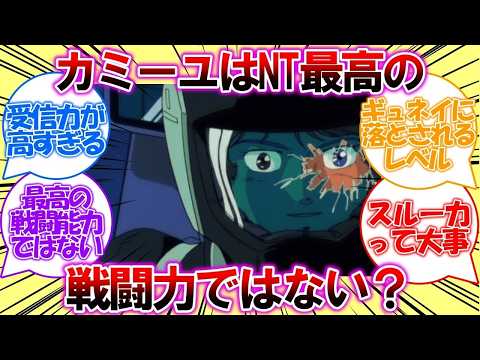
A single line from Mobile Suit Z Gundam has sparked decades of debate within the anime community: Kamille Bidan’s cryptic statement “NT is the best.” What appears to be a nonsensical utterance may actually represent a profound psychological breakdown, revealing the series’ innovative approach to character psychology and mental deterioration.
What Happened
During Mobile Suit Z Gundam, protagonist Kamille Bidan utters the phrase “NT is the best” (NT referring to Newtype, a central concept in the Gundam franchise). The line has become one of anime’s most discussed and debated statements, spawning countless interpretations across fan communities. Some dismiss it as a scriptwriting failure, while others argue it represents a deliberate and sophisticated portrayal of psychological collapse.
Why It Matters
This single line encapsulates a pivotal moment in anime history. Mobile Suit Z Gundam, which aired in 1985, represented a watershed moment when the anime industry began exploring psychological depth and mental deterioration in ways previously unseen. Rather than depicting a protagonist who grows stronger through conflict, Z Gundam showed Kamille gradually breaking down mentally. Understanding “NT is the best” requires recognizing it as a window into how anime could express complex psychological states through seemingly incoherent dialogue. This innovation influenced decades of subsequent anime production and established new possibilities for character-driven storytelling.
Background
Mobile Suit Z Gundam serves as a direct sequel to the original Mobile Suit Gundam (1979). The series follows 17-year-old Kamille Bidan as he becomes involved in a military conflict between Earth’s government and anti-government forces. Unlike previous Gundam protagonists such as Amuro Ray, who demonstrated clear growth and reached definitive conclusions, Kamille’s arc follows an inverse trajectory. Rather than becoming stronger, he experiences progressive psychological deterioration throughout the series.
The concept of Newtype (NT) represents humanity’s evolutionary potential and the possibility of transcending warfare through enhanced consciousness. However, by the series’ conclusion, Kamille’s mental state has become severely compromised. He has experienced multiple traumatic losses: conflict with rival pilot Jerid Mesa, separation from love interest Fa Yuiry, the death of Emma Sheen, and a final confrontation with Char Aznable. These cumulative experiences push his psyche toward complete breakdown.
Director Tomino Yoshiyuki deliberately chose to depict mental collapse rather than heroic triumph. This represented a radical departure from anime convention in 1985, when the medium was still primarily viewed as children’s entertainment. Z Gundam aired in an evening time slot accessible to all ages, yet Tomino pursued deeply adult themes of psychological trauma and identity dissolution.
Key Points
- Kamille’s “NT is the best” statement emerges during the final episodes when his mental state has deteriorated significantly, representing a moment of psychological crisis rather than logical analysis
- The phrase’s grammatical incompleteness—lacking a complete sentence structure—deliberately mirrors Kamille’s fractured mental state and inability to process reality coherently
- The statement functions as a form of escapism, with Newtype becoming Kamille’s final psychological anchor as he loses grip on objective reality
- Internet communities primarily treat the line as a “nonsensical quote” or meme, but this interpretation overlooks the sophisticated psychological intent behind the dialogue
- The line represents an early example of anime using seemingly incoherent speech to convey mental deterioration, a technique later refined in works like Neon Genesis Evangelion
- Z Gundam’s approach to depicting psychological breakdown influenced subsequent Gundam series and established new standards for character-driven anime storytelling
Timeline
- 1979: Original Mobile Suit Gundam establishes the Newtype concept and introduces protagonist Amuro Ray, who experiences clear character growth
- 1985: Mobile Suit Z Gundam premieres with Kamille Bidan as protagonist; the series deliberately inverts the growth narrative by depicting psychological deterioration
- Episodes 1-20: Kamille joins anti-government forces and gains combat experience
- Episodes 21-40: Kamille begins experiencing psychological stress through repeated combat and personal losses
- Episodes 41-50: Kamille’s mental state completely collapses; “NT is the best” is uttered during this final phase
- 1995: Neon Genesis Evangelion further develops psychological portrayal techniques in anime, building upon Z Gundam’s foundation
- 2000s onward: “NT is the best” becomes recognized as a significant moment in anime history, generating ongoing fan discussion and analysis
Perspectives
The “Nonsensical Quote” Interpretation: Many fans and casual viewers treat “NT is the best” as an example of poor scriptwriting or an unintentionally absurd moment. This perspective dominates social media platforms like Twitter and YouTube comments, where the line is frequently cited as a meme or example of Gundam’s quirks.
The Psychological Analysis Perspective: Scholars and dedicated fans argue the line represents intentional artistic expression. They point to the grammatical incompleteness as deliberate, the timing within the narrative arc as significant, and the broader context of Kamille’s deteriorating mental state as evidence of sophisticated character writing. This interpretation views the line as a masterwork of psychological portrayal rather than a failure.
The Historical Context Perspective: Understanding 1985 anime production reveals that Z Gundam was genuinely innovative. Director Tomino was attempting something unprecedented: depicting mental collapse in a medium primarily associated with children’s entertainment. The line should be evaluated not by modern standards but within its historical moment, when such psychological depth was rare in anime.
The Comparative Analysis Perspective: Other Gundam protagonists have uttered seemingly nonsensical lines that carry psychological weight. Judau Ashta’s “I hate war” in Gundam ZZ and Kira Yamato’s “I will fight” in Gundam SEED follow similar patterns—simple statements that mask deeper psychological struggles. This suggests Z Gundam established a tradition of using incomplete or seemingly illogical dialogue to express complex mental states.
Insights
Kamille’s “NT is the best” represents a crucial moment in anime history where the medium expanded beyond conventional storytelling. Rather than depicting a protagonist who overcomes adversity and emerges stronger, Z Gundam showed a young person systematically broken down by war and trauma. The line itself—grammatically incomplete, emotionally raw, seemingly meaningless—perfectly encapsulates this psychological dissolution.
The statement functions as Kamille’s final grasp at identity. As he loses the ability to distinguish reality from delusion, Newtype becomes his last anchor point, the final concept through which he attempts to understand his existence. By expressing this through an incomplete, almost childlike utterance, the series communicates psychological breakdown more effectively than any explicit exposition could achieve.
The ongoing debate surrounding this line reveals how anime audiences engage with complex character work. While some dismiss it as a mistake, others recognize it as evidence of artistic ambition. This divide reflects broader questions about how we evaluate art: Do we judge by immediate clarity, or do we consider the artist’s intent and the work’s historical significance?
Z Gundam’s influence extends far beyond Gundam fandom. The series demonstrated that anime could tackle psychological themes with sophistication and nuance. Subsequent works like Neon Genesis Evangelion built upon this foundation, using fragmented dialogue and seemingly incoherent statements to convey mental states that conventional language cannot adequately express. In this lineage, “NT is the best” stands as an early landmark—a moment when anime proved it could be more than entertainment, becoming a medium for exploring the human psyche.
For viewers encountering Z Gundam today, the challenge lies in resisting the impulse to dismiss Kamille’s statement as absurd. Instead, examining the context—his accumulated trauma, his fractured mental state, his desperate search for meaning—reveals a line of genuine artistic merit. What appears nonsensical on the surface becomes, upon reflection, a profound expression of psychological crisis. This transformation from apparent failure to recognized achievement demonstrates how understanding context and intent can fundamentally alter our interpretation of art.