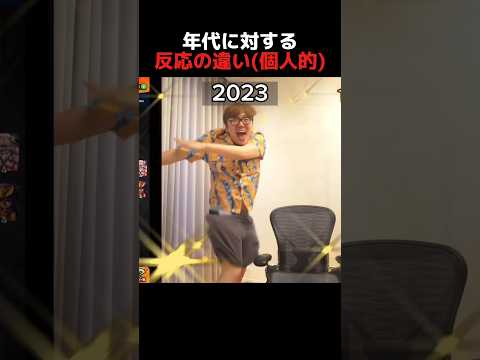
▶ Watch the original YouTube video
How Content Consumption Differs Across Generations: A 15-Year Analysis of YouTube Audience Reactions
A content analyst with 15 years of experience examining creator reactions reveals how the same YouTube video can generate vastly different responses depending on viewer age. The phenomenon reflects deeper shifts in media literacy, humor structures, and what different generations value in entertainment.
What Happened
YouTuber Hikaru Kaji (Hikakinn) released a video exploring how different age groups react to identical content. The video prompted widespread discussion about generational divides in entertainment consumption, with viewers from different age brackets recognizing that their own reactions to the same material often differ significantly from other generations.
Why It Matters
Understanding generational differences in content consumption has significant implications for creators, media platforms, and intergenerational communication. As media environments evolve—from television to YouTube to TikTok—the way audiences process humor, evaluate authenticity, and determine what constitutes entertainment has fundamentally shifted. These differences aren’t merely about preference; they reflect distinct cognitive frameworks shaped by the media environment in which each generation grew up. For content creators, this means the challenge of appealing to multiple age groups simultaneously while maintaining authenticity.
Background
The analysis draws from 15 years of systematic observation of content creator reactions across platforms. The author has tracked how audiences responded to the same videos at different points in time, noting that content which resonated strongly with one generation often fell flat with another. Key historical reference points include the Nico Nico Douga era (around 2009), the rise of “challenge” and “try it” video formats (2015), and the evolution of short-form content platforms like TikTok.
The generational breakdown examined includes: those who grew up with television as their primary media (1980s generation), those who experienced the YouTube transition (1990s generation), and those raised entirely on social media and short-form content (2000s generation and later).
Key Points
- Humor structures vary by generation: Older audiences appreciate traditional narrative-based humor with clear setup-and-punchline structures, while younger audiences respond to internet meme culture that requires shared contextual knowledge.
- Media environment shapes perception: Television-era audiences were trained to be passive consumers of edited content, while social media generations actively participate in determining what is entertaining through community validation.
- Content quality vs. creator loyalty: Older viewers prioritize content quality and entertainment value, while younger audiences often prioritize whether they “support” the creator, making the creator’s identity more important than the content itself.
- Definitions of authenticity differ: Older generations associate authenticity with lack of heavy editing, while younger audiences define authenticity as whether the creator’s genuine emotions are visible, regardless of production quality.
- Creators face multi-generational challenges: Content creators like Hikakinn must navigate appealing to audiences with fundamentally different values and humor frameworks simultaneously.
- Intergenerational communication gaps emerge: When families watch the same content together, the inability to explain why something is funny can create misunderstandings rooted in different cultural frameworks.
Generational Response Patterns: Comparative Analysis
| Creator | 20s Generation Response | 30+ Generation Response | 10s Generation Response |
|---|---|---|---|
| Hikakinn | Appreciates effort and commitment | Compares unfavorably to traditional television | Values relatability and authenticity |
| Hajime Shacho | Respects creative concept execution | Unclear appeal or entertainment value | Supports creator regardless of content |
| Seto Koji | Engages with gadget-focused content | Values practical information delivery | Finds pacing slow and format outdated |
Historical Evolution of Content Consumption
- 2009 Nico Nico Douga Era: “[X] Person” format videos generated strong reactions from university-aged audiences but failed to resonate with younger viewers years later, suggesting format-specific generational appeal rather than timeless entertainment value.
- 2015 “Try It” Format: 20-something audiences experienced simultaneous appreciation and skepticism about whether creators were genuinely attempting challenges or performing for entertainment. Younger audiences showed no distinction between authenticity and performance.
- 2018 Hikakinn vs. Seikinn Rivalry Videos: 30-year-old viewers recognized the format from traditional variety television and found it derivative. Teenagers discovered the content novel and engaging, demonstrating how media exposure history shapes perception.
- 2019 Idol Group YouTube Livestreams: Older audiences dismissed daily-life content as uninteresting. Teenage fans valued access to their preferred creators’ everyday moments as the primary entertainment value.
Two Competing Humor Frameworks
Traditional Humor Structure: This framework, dominant in television-era entertainment, relies on clear narrative progression: setup, development, and punchline. Examples include role reversals (“I thought X, but actually Y”) and unexpected celebrity behavior. This structure requires no prior context and functions identically regardless of audience background.
Internet Meme Humor Structure: This framework requires shared cultural knowledge and community participation. A single image or phrase generates laughter only among those who understand its specific internet context. This humor cannot be explained through traditional narrative structure and often becomes incomprehensible when contextualized for outsiders. The humor derives from community membership rather than comedic construction.
Hikakinn’s content often exists at the intersection of these two frameworks, which may explain why his audience spans multiple generations while simultaneously experiencing divergent reactions to identical material.
The “Parasocial Support” Phenomenon
A critical distinction emerges between content consumption models: older audiences evaluate entertainment based on content quality, while younger audiences increasingly consume content based on their relationship with the creator. This shift represents a fundamental change in how entertainment value is determined.
In the traditional model, a video’s entertainment value is intrinsic to the content itself. In the newer model, a creator’s fans will find entertainment value in nearly any content the creator produces, because the appeal centers on the creator’s personality and perceived authenticity rather than the content’s objective quality.
This explains why 30-year-old viewers might dismiss a video as “boring” while 13-year-old fans of the same creator find it “amazing”—they are literally evaluating different variables.
Authenticity Redefined Across Generations
The concept of “authenticity” has undergone significant transformation. Early YouTube audiences valued authenticity as the absence of heavy production—”real people making videos in their bedrooms” represented the platform’s revolutionary appeal compared to polished television content.
Contemporary audiences, having grown up with professional YouTube production as the norm, have redefined authenticity to mean emotional transparency: whether the creator appears to be genuinely enjoying themselves or genuinely invested in the content, regardless of production quality. A highly edited video can feel authentic if the creator’s emotional state seems genuine, while a poorly edited video can feel inauthentic if the creator appears disengaged.
This represents a maturation of media literacy rather than a regression—younger audiences have developed more sophisticated frameworks for evaluating creator sincerity despite (or through) production techniques.
Insights and Implications
The generational differences in content reaction are not evidence of cultural decline or superiority of any single generation’s taste. Rather, they represent the natural adaptation of human cognition to different media environments. Each generation develops humor frameworks, authenticity metrics, and entertainment evaluation systems optimized for the media landscape they inhabited during formative years.
The phenomenon Hikakinn highlighted serves as a mirror for viewers to recognize their own generational characteristics. Many viewers reported that watching the video prompted them to consciously examine why they found certain content entertaining—a form of media self-awareness that benefits all age groups.
However, a concerning implication emerges: as generational media consumption patterns diverge, intergenerational communication becomes more difficult. Parents and children watching identical content may find themselves unable to explain their reactions to each other, not because of stubbornness or closed-mindedness, but because they are literally operating from different cognitive frameworks shaped by their media environments.
The deeper value systems underlying these reactions also diverge. Older generations often view YouTube success through a television lens—”making it” means television appearances and mainstream recognition. Younger generations view YouTube success as intrinsically valuable, with no need for traditional media validation. This represents not a generational flaw but a fundamental shift in what constitutes achievement and cultural relevance.
For content creators moving forward, the challenge is not to choose a single generation to appeal to, but to create content with sufficient depth that different age groups can find value through their respective frameworks. Hikakinn’s longevity as a creator may stem from his ability to create content that satisfies both traditional entertainment structures (appealing to older audiences) and parasocial connection (appealing to younger audiences) simultaneously.
Understanding these generational differences ultimately serves a constructive purpose: it enables better communication across age groups by making visible the different cognitive and cultural frameworks through which each generation processes media. Rather than dismissing another generation’s reaction as “not understanding,” recognizing these framework differences allows for genuine cross-generational dialogue about why entertainment, authenticity, and cultural value mean different things to different people.