▶ Watch the original YouTube video
How Anime’s Multiple Dating Tropes Captivate Viewers: A 15-Year Analysis of Shifting Fan Culture
Over the past 15 years, anime’s treatment of simultaneous romantic relationships has evolved dramatically—from moral warnings to complex psychological explorations. A recent short-form anime titled “Student Council Also Has Holes!” exemplifies this shift, revealing how modern viewers embrace ironic acceptance of infidelity in fictional spaces while grappling with deeper questions about character authenticity and emotional complexity.
What Happened
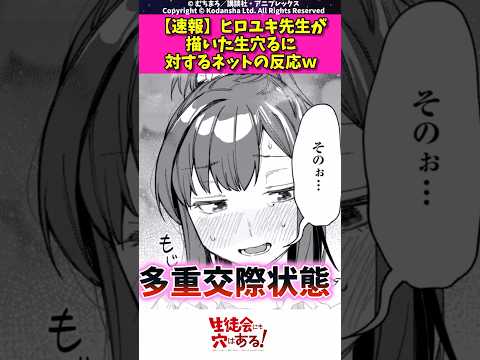
The short-form anime “Student Council Also Has Holes!” has generated significant online discussion regarding its portrayal of a protagonist engaged in multiple simultaneous relationships. Viewers’ reactions reveal a striking pattern: rather than moral condemnation, audiences express ironic acceptance framed around the idea that “love justifies anything.” The work’s depiction of the student council president—who initially appears understanding but gradually reveals conflicted emotions through subtle facial expressions—has become a focal point for psychological analysis among fans.
Why It Matters
This shift in viewer response signals a fundamental transformation in anime culture’s relationship with ethics and storytelling. The evolution from depicting multiple dating as a cautionary tale (as seen in 2008’s “School Days”) to treating it as a narrative device for exploring character psychology reflects broader changes in how audiences consume and interpret fictional media. Understanding these trends provides insight into contemporary fan culture, the boundaries between fiction and reality, and how anime production strategies have adapted to maximize emotional impact in short-form content.
Background
The treatment of multiple romantic relationships in anime has undergone significant transformation over the past 15 years. In 2006, “The Melancholy of Haruhi Suzumiya” introduced love triangle dynamics that were understood as conflicts requiring resolution. By 2019, “The Quintessential Quintuplets” achieved massive commercial success—exceeding 10 million copies sold—by reframing multiple simultaneous romantic interests as legitimate narrative choices rather than moral failures. This progression reflects changing audience expectations and the anime industry’s willingness to explore previously taboo relationship dynamics.
The emergence of short-form anime content on platforms like YouTube and TikTok has created new opportunities for creators to deliver maximum emotional impact within severely limited timeframes. This format demands precision in visual storytelling, particularly through character expressions and micro-animations that convey complex emotional states instantly.
Key Points
- Viewer responses to “Student Council Also Has Holes!” predominantly feature ironic acceptance rather than moral criticism, suggesting a shift toward postmodern relativism in anime fandom
- The student council president’s facial expressions—interpreted by viewers as “80% acceptance, 20% disapproval”—demonstrate how modern anime employs micro-expressions to convey psychological complexity
- Multiple dating has evolved from a cautionary narrative device (2008) to a tool for exploring character authenticity and emotional contradiction (2024)
- Online comments reveal viewers engage in multi-layered interpretation, simultaneously considering multiple psychological readings of character behavior
- Short-form anime production strategically manipulates viewer expectations through rapid emotional reversals designed for maximum viral impact
- The concept of “love” in contemporary anime culture has shifted from exclusive, one-to-one emotional bonds toward more fluid, inclusive interpretations
Timeline
- 2006: “The Melancholy of Haruhi Suzumiya” introduces love triangle dynamics as narrative conflict requiring resolution
- 2008: “School Days” depicts multiple dating as morally catastrophic, warning viewers of relationship dangers
- 2013: “My Teen Romantic Comedy SNAFU” explores multiple romantic relationships as vehicles for character development
- 2019: “The Quintessential Quintuplets” achieves unprecedented commercial success by legitimizing simultaneous romantic interest in multiple characters
- 2024: “Student Council Also Has Holes!” presents multiple dating as a psychological complexity device, generating ironic viewer acceptance
Perspectives
The Psychological Interpretation: From a character analysis perspective, the student council president’s conflicted expressions represent genuine emotional contradiction—the simultaneous desire to support a friend and disapproval of their behavior. This reflects authentic human psychology where multiple contradictory emotions coexist.
The Production Strategy View: Creators deliberately manipulate viewer expectations by establishing an initial impression of understanding, then subverting it through subtle visual cues. This calculated approach maximizes emotional engagement and encourages social media discussion.
The Cultural Shift Perspective: Viewer comments suggesting “if there’s love, nothing matters” indicate a broader acceptance of moral relativism within fictional spaces. This reflects influences from social media culture (recognition of “multiple selves”), globalization (diversity acceptance), and postmodern irony becoming mainstream among anime audiences.
The Ethical Concern: Some observers worry that the normalization of infidelity in anime may blur boundaries between fictional ethics and real-world values, potentially influencing viewer attitudes toward actual relationships.
Insights
The evolution of multiple dating narratives in anime represents more than changing romantic preferences—it reflects fundamental shifts in how audiences construct meaning from fiction. The progression from moral warning to psychological exploration to ironic acceptance demonstrates anime’s increasing sophistication in visual storytelling and character development.
The ironic tone dominating viewer responses reveals a mature fan culture capable of simultaneously enjoying fictional scenarios while maintaining awareness of their fictional nature. Comments like “if there’s love, nothing matters” function as knowing commentary rather than genuine moral endorsement, suggesting audiences have developed a postmodern literacy that distinguishes between narrative enjoyment and ethical judgment.
The student council president’s facial expressions exemplify how anime has refined the art of conveying psychological complexity through micro-animations. In an era of short-form content, creators have learned to compress emotional narratives into seconds, relying on subtle visual cues to trigger sophisticated interpretations from viewers trained to read these signals.
Looking forward, two trajectories appear likely: continued proliferation of multiple-dating narratives as creators capitalize on proven commercial success, or intensifying ethical criticism from audiences concerned about the normalization of infidelity. Regardless of which path emerges, works like “Student Council Also Has Holes!” will likely be remembered as pivotal moments when anime culture explicitly confronted the tension between artistic freedom and ethical representation.
Ultimately, this trend demonstrates anime’s evolution from entertainment medium to sophisticated narrative art form capable of exploring psychological contradiction and moral ambiguity with nuance previously reserved for live-action cinema and literature.