▶ Watch the original YouTube video
How AI-Generated Manga Depicts Fan Reactions to Celebrity Marriages Through Stereotypes
A new AI-generated manga explores fan psychology by intentionally exaggerating stereotypes around celebrity relationships. This emerging content format raises questions about the blurring line between fiction and reality in the age of artificial intelligence.
- What Happened
- Why It Matters
- Background
- Key Points
- The Evolution of Fan Reaction Depiction
- The Complexity of Real Fan Psychology
- AI Technology and Stereotype Amplification
- The Reality-Fiction Paradox
- Perspectives and Reactions
- Emerging Concerns and Unresolved Questions
- Insights: The Future of AI-Generated Commentary
What Happened
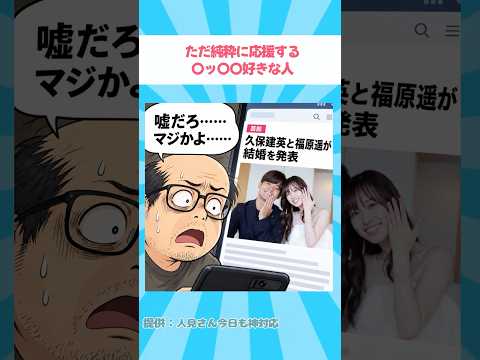
An AI-generated manga has surfaced that depicts fan reactions to the marriage of real-world celebrities—specifically referencing a personality known as “Main-chan” and a professional athlete—by deliberately portraying responses through the lens of extreme stereotypes and biases. Rather than attempting realistic representation, the work embraces caricature and exaggeration as its primary creative tool.
The piece uses AI generation technology to create visual content that amplifies typical fan archetypes and reactions, presenting an intentionally distorted version of how audiences might respond to such news. This approach differs fundamentally from traditional fan fiction or commentary, which typically aim for either realism or subtle humor.
Why It Matters
This content represents a significant shift in how AI-generated media engages with real-world events and public figures. As artificial intelligence becomes increasingly sophisticated and accessible, the boundary between fiction and reality continues to blur. The work demonstrates how AI technology can be deliberately weaponized to create commentary on fan psychology while simultaneously raising ethical questions about depicting real people in fictional scenarios.
The piece also illustrates broader trends in content consumption: the normalization of AI-generated creative works, the evolution of fan culture commentary, and society’s evolving relationship with technology-mediated storytelling. Understanding these developments is crucial for anyone tracking digital media trends and the future of creative industries.
Background
AI-generated content has evolved dramatically over the past five years. What began as experimental technology in 2019 has transformed into a mainstream creative tool by 2023-2024. This trajectory has enabled creators to produce high-quality visual and narrative content at unprecedented speed and scale.
The tradition of depicting fan reactions to celebrity news is not new. Similar themes appeared in anime such as “Koi Lab” (2013), which explored diverse fan psychology, and in fan communities around properties like “Kemono Friends” (2017), where fan-on-fan dynamics became rich material for secondary creative works. However, the use of AI technology to deliberately amplify stereotypes represents a novel approach to this established genre.
The technique of using exaggeration and stereotyping as creative tools has deep roots in storytelling. Works like “Danganronpa 3” (2015) and “Pop Team Epic” (2018) demonstrated how intentionally emphasizing biases and character archetypes could generate both humor and social commentary.
Key Points
- The AI manga deliberately portrays fan reactions through extreme stereotypes rather than realistic depictions
- AI generation technology naturally emphasizes typical patterns and archetypes from its training data, making it ideal for stereotype-focused content
- The work exists in a paradoxical space: using real people as subject matter while creating entirely fictional narratives
- Fan psychology in reality is far more complex than the simplified versions presented, involving simultaneous joy for the celebrity’s happiness and personal disappointment
- This content type represents an emerging genre that may become increasingly common as AI tools become more accessible to creators
- The work raises unresolved questions about privacy, dignity, and consent when real public figures become subjects of AI-generated fiction
The Evolution of Fan Reaction Depiction
Comparing this AI manga to previous works reveals a clear progression in how creators handle fan psychology:
| Work | Subject Matter | Medium | Stereotype Intensity | Realism Level |
|---|---|---|---|---|
| Koi Lab (2013) | Fictional couple formation | Hand-drawn anime | Moderate | High |
| Kemono Friends fan works (2017) | Fan community conflict | Multiple formats | High | Very high |
| Current AI manga | Real celebrity marriage | AI-generated | Extreme | Intentionally low |
This progression shows increasing stereotype intensity over time, suggesting that creators are becoming more comfortable with extreme exaggeration as a deliberate artistic choice rather than a limitation.
The Complexity of Real Fan Psychology
While the AI manga presents simplified, exaggerated responses, actual fan psychology involves multiple simultaneous and often contradictory emotions:
- Genuine happiness for the celebrity’s personal fulfillment
- Disappointment that the partner doesn’t match the fan’s idealized vision
- Internal conflict between romantic feelings toward the celebrity and supportive fan sentiment
- Comparison of personal preferences with other fans’ “favorites”
- Desire to legitimize personal emotional responses through fan community participation
The AI manga’s deliberate simplification of this complexity serves a dual purpose: it generates humor through exaggeration while simultaneously highlighting just how nuanced real fan experiences actually are.
AI Technology and Stereotype Amplification
A crucial insight is that AI generation technology naturally amplifies stereotypes. Machine learning models extract the most common patterns from training data, which means AI-generated content inherently emphasizes archetypal rather than unique characteristics. This makes AI an almost ideal tool for creators specifically seeking to produce stereotype-focused work.
This is not accidental. The choice to use AI for this particular project appears intentional—the technology’s tendency to emphasize typical patterns directly serves the stated goal of depicting “bias only.” In this sense, the medium and message are perfectly aligned.
The Reality-Fiction Paradox
Perhaps the most significant aspect of this work is its fundamental contradiction: it uses real people as subject matter while functioning as pure fiction. This represents a departure from traditional creative norms, where content about real individuals typically maintained at least some connection to factual accuracy.
The emergence of this content type reflects broader technological and cultural shifts. Over the past 15 years, the boundary between fiction and reality in digital media has progressively blurred. What was once considered inappropriate—creating detailed fictional scenarios about real public figures—has become normalized through fan fiction communities, memes, and now AI-generated content.
This shift accelerated significantly between 2019 and 2024, as AI technology matured from experimental to practical. The ability to generate high-quality fictional content about real people, quickly and at scale, has fundamentally changed what creators can attempt.
Perspectives and Reactions
This type of content generates diverse interpretations across audiences:
Positive interpretation: Viewers appreciate the sophisticated understanding of fan psychology demonstrated by the work. By exaggerating stereotypes, the creator highlights the actual complexity of real fan experiences, creating both humor and insight.
Critical interpretation: Some question whether using real public figures as material for AI-generated fiction is appropriate, regardless of the creative intent. Concerns center on consent, privacy, and the dignity of the individuals depicted.
Technical interpretation: Others view this primarily as a demonstration of AI capability—an interesting case study in how machine learning can be applied to creative commentary.
Ambiguity interpretation: Many viewers express uncertainty about the work’s nature: Is this commentary on fan behavior, or does it inadvertently reinforce the stereotypes it claims to exaggerate?
The work’s design appears to intentionally permit multiple interpretations. By explicitly framing itself as “bias only,” it invites viewers to question whether they’re seeing exaggeration or reflection of reality.
Emerging Concerns and Unresolved Questions
As AI-generated content about real people becomes more common, several important questions remain unanswered:
- How should privacy and dignity protections apply to AI-generated content featuring real individuals?
- What legal frameworks should govern this emerging content category?
- How do the depicted individuals and their representatives respond to such works?
- What are the long-term cultural effects of normalizing fictional AI content about real people?
Currently, legal and ethical frameworks lag significantly behind technological capability. As AI tools become more accessible and sophisticated, these questions will become increasingly urgent.
Insights: The Future of AI-Generated Commentary
This AI manga represents more than an isolated creative experiment. It signals the emergence of a new content category: AI-generated fiction that uses real people as subject matter while maintaining explicit fictional status. Based on current technological trajectories, this genre will likely become established and widespread between 2025 and 2026.
The work demonstrates several important principles about contemporary content consumption:
Technology shapes expression: The specific capabilities and limitations of AI technology directly influence what creators can express. AI’s tendency to amplify archetypal patterns makes it particularly suited to stereotype-focused commentary.
Reality and fiction continue merging: The clear separation between fictional and factual content that existed in earlier media eras has progressively dissolved. This work exemplifies that dissolution.
Fan psychology remains complex: Despite the work’s intentional simplification, actual fan responses involve sophisticated emotional and psychological dynamics that resist easy categorization.
New tools enable new perspectives: AI generation technology, despite legitimate concerns, enables creative commentary and social observation that would be difficult or impossible to produce through traditional means.
For content consumers, engaging with this type of work productively requires several considerations: recognizing it as intentional fiction despite its real-world subject matter, understanding the fan psychology it references while acknowledging its exaggeration, and appreciating the technological innovation it represents while remaining alert to ethical implications.
The broader significance of this content lies not in the specific work itself, but in what it represents about the trajectory of creative media. As AI tools become standard creative instruments, the relationship between technology, creativity, and reality will continue to evolve in ways that challenge existing assumptions about how stories are told and who gets to tell them.