▶ Watch the original YouTube video
Suit Actors Riding Motorcycles in Full Costume: The Dangerous Reality Behind Japan’s Special Effects Industry
A viral video highlighting suit actors performing motorcycle stunts while wearing full character costumes has sparked widespread concern about safety standards in Japan’s special effects and tokusatsu production industry. The incident raises critical questions about workplace safety, industry regulations, and the exploitation of dedicated craftspeople who prioritize artistic vision over personal protection.
What Happened
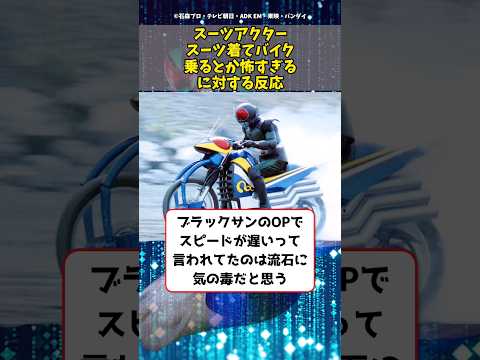
A YouTube video titled “Suit Actors Riding Motorcycles in Full Costume: That’s Terrifying” has drawn significant attention to the dangerous working conditions faced by suit actors in Japan’s special effects industry. The video documents instances where performers, fully encased in character costumes, operate motorcycles at speeds exceeding 40 kilometers per hour. Viewers have responded with shock and concern, questioning how such hazardous practices are permitted in professional film and television production.
Why It Matters
This incident exposes a fundamental structural problem within Japan’s film and television production industry: the systematic reliance on craftspeople’s dedication to justify inadequate safety measures and compensation. Unlike Hollywood stunt performers who operate under strict international safety protocols, Japanese suit actors work within a system that has historically prioritized visual authenticity and cost reduction over worker protection. The visibility of this issue through social media has created an opportunity to examine broader labor practices across the entire Japanese entertainment production sector, from tokusatsu (special effects) to anime production.
Background
Suit actors represent a unique profession developed within Japan’s special effects industry. These performers do far more than simply wear costumes—they must fully embody characters, conveying emotion and intention through physical movement while operating under severe physical constraints. The profession gained prominence through iconic series such as Ultraman and Kamen Rider, where suit actors have been essential to creating believable monster and hero performances.
Historically, the Japanese entertainment industry has operated on a model of “craftsperson dedication,” where workers accept low compensation and dangerous conditions in exchange for the opportunity to contribute to beloved cultural products. Suit actors have traditionally earned only tens of thousands of yen per day of filming—a fraction of what comparable stunt performers earn in Western productions—despite performing equally dangerous work.
Key Points
- Vision Impairment: Suit actors experience approximately 70% reduction in peripheral vision when wearing full costumes, making motorcycle operation comparable to riding while blindfolded
- Respiratory and Thermal Stress: Many costume materials offer poor breathability, creating heat stroke risks during outdoor filming and limiting oxygen supply during physically demanding scenes
- International Safety Gap: Hollywood stunt performers operate under mandatory professional training, comprehensive insurance, on-set safety coordinators, and hazard-adjusted compensation—standards largely absent in Japan
- Systemic Underpayment: Suit actors receive significantly lower daily rates than actors despite performing objectively more dangerous work, creating economic pressure to accept unsafe conditions
- Generational Shift: Younger suit actors are increasingly advocating for safety improvements and better working conditions through social media, signaling potential industry change
- Technological Alternative: Advancing CGI technology offers opportunities to reduce reliance on dangerous practical suit acting, though adoption remains inconsistent
Timeline
- 12 years ago: The author first became aware of suit acting as a profession while watching Ultraman behind-the-scenes footage, witnessing performers running through explosion effects in full costume
- 15 years of observation: The author has tracked suit actor working conditions through documentary footage, interviews, and production analysis across multiple tokusatsu franchises
- Recent years: Young suit actors have begun publicly advocating for safety and compensation improvements via social media platforms
- Present: The viral motorcycle video catalyzes widespread public discussion about industry safety standards and worker treatment
Perspectives
Industry Perspective: Production companies prioritize visual authenticity and narrative impact, arguing that practical effects with real suit actors create superior cinematic believability compared to CGI alternatives. Budget constraints in Japanese productions—substantially lower than Hollywood equivalents—limit resources available for comprehensive safety infrastructure. Directors emphasize that the commitment to practical effects serves the artistic vision and ultimately delivers better entertainment to audiences.
Suit Actor Perspective: Despite acknowledging the dangers, many suit actors express deep professional pride in their work. They view their role as essential to inspiring children and creating meaningful entertainment. This sense of mission—contributing to beloved cultural franchises—provides psychological motivation that transcends economic compensation. However, suit actors increasingly recognize that industry reliance on their “dedication” enables exploitation and prevents necessary safety reforms.
Viewer and Public Perspective: Social media responses reveal shock and concern, with many viewers unaware of the extent of danger involved in suit acting. Comments express both admiration for suit actors’ courage and criticism of the industry for permitting such hazardous conditions. This public awareness represents potential pressure for systemic change.
International Standards Perspective: As Japanese entertainment content reaches global audiences through streaming platforms, international safety regulations and expectations increasingly apply. Production companies seeking international distribution face pressure to adopt standards aligned with Hollywood practices, creating potential leverage for safety improvements.
Insights
The suit actor motorcycle incident illuminates a critical tension within Japan’s creative industries: the conflict between artistic ambition and worker welfare. The industry has historically resolved this tension by romanticizing craftsperson sacrifice, framing dangerous conditions as necessary costs of excellence. This narrative, while culturally resonant, fundamentally misrepresents the issue—safety and quality are not opposing values but complementary ones.
Three significant developments suggest potential industry transformation. First, younger suit actors are rejecting the implicit contract of their predecessors, demanding safety improvements and fair compensation. Second, advancing CGI technology provides viable alternatives to dangerous practical effects, reducing the argument that hazardous conditions are unavoidable. Third, international distribution requirements create external pressure for safety standard alignment with global norms.
The suit actor issue extends beyond tokusatsu production. Similar problems affect stunt performers in action films, animators working excessive overtime, and other creative professionals throughout Japan’s entertainment sector. Addressing suit actor safety requires confronting the broader structural problem: an industry model that treats worker exploitation as an acceptable cost of production.
For viewers, this incident offers an opportunity to deepen engagement with special effects entertainment. Recognizing the human effort and risk behind on-screen performances transforms passive consumption into informed appreciation. Simultaneously, viewers can support industry reform by advocating for safety standards and fair compensation—using their voice as consumers to pressure production companies toward ethical practices.
The path forward requires three concurrent actions: adoption of international safety standards and mandatory professional training for all performers; compensation structures that reflect actual hazard levels; and industry-wide commitment to treating worker safety as a non-negotiable production value rather than an optional expense. Only through such systemic change can the suit actor profession evolve from a symbol of exploited dedication into a respected, protected craft.