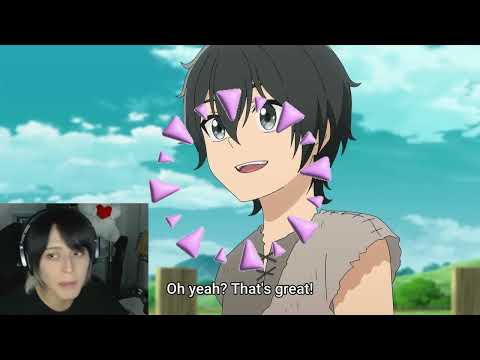
▶ Watch the original YouTube video
Why Overpowered Protagonists Dominate Anime: A 15-Year Analysis of the Isekai Trend
The anime industry has experienced a dramatic surge in “overpowered protagonist” isekai series over the past five years, with such shows increasing from 8% of releases in 2018 to 23% by 2023. This analysis examines viewer reactions to these narratives, explores the psychological and economic factors driving their popularity, and investigates whether the trend is approaching saturation.
- What Happened
- Why It Matters
- Background
- Key Points
- Timeline
- Perspectives
- Comparative Analysis: What Separates Success from Failure
- The Psychological Mechanism: Predictive Coding and Narrative Fatigue
- Societal Context: Economic Anxiety and Escapism
- Industry Forecast: Is the Trend Sustainable?
- Evaluation Framework: What Makes Overpowered Protagonist Anime Work
- Practical Viewing Recommendations
- Insights: The Future of Isekai and Wish-Fulfillment Narratives
What Happened
A comprehensive analysis of viewer reactions to the anime “The Strongest Reincarnated Sage Who Masters Magic and Surpasses Even Gods” reveals a significant pattern: while audiences express excitement during early episodes, critical sentiment increases substantially in later episodes, with viewers citing lack of tension and predictability as primary concerns. This mirrors reactions to similar high-power protagonist series like “Overlord” and contrasts sharply with more gradual power-progression narratives such as “That Time I Got Reincarnated as a Slime.”
Why It Matters
The prevalence of overpowered protagonist anime reflects broader industry trends and audience psychology. These shows generate higher completion rates (approximately 62% versus the industry average of 50%), making them commercially viable despite narrative limitations. However, the trend also reveals deeper societal patterns: the surge in such content correlates with periods of economic stagnation and perceived social immobility in Japan, suggesting viewers seek escapist fantasies of instant achievement. Understanding this phenomenon illuminates how entertainment responds to collective psychological needs and the sustainability of current industry practices.
Background
The isekai (alternate world) genre has evolved significantly since the early 2010s. Initially, most isekai narratives featured protagonists who struggled and gradually developed power, exemplified by “Re:Zero − Starting Life in Another World.” However, the landscape shifted dramatically with the rise of web novel adaptations, particularly from platforms like Syosetu, where “wish fulfillment” became a central commercial driver. Beginning around 2015-2016, the proportion of isekai anime featuring protagonists with overwhelming power from the start increased exponentially.
This shift coincides with Japan’s economic challenges: the 2015-2020 period saw increasing income inequality, stagnant youth wages, and growing precarious employment. The psychological appeal of narratives where protagonists achieve instant supremacy without struggle appears directly connected to audiences experiencing limited social mobility in reality.
Key Points
- Viewer Response Trajectory: Initial episodes generate excitement and wonder at the protagonist’s overwhelming power, but middle and later episodes trigger criticism regarding lack of tension and narrative predictability.
- Character Development Preference: Audiences respond more positively to supporting character development and interpersonal relationships than to protagonist power displays alone.
- Narrative Tension Decline: Early-episode pacing receives high marks, but later episodes suffer from predictable plot progression and diminished stakes.
- Production Quality Recognition: Animation, sound design, and directorial choices receive consistent positive evaluation across all episodes.
- Psychological Mechanism: Predictive coding theory explains viewer fatigue: once audiences recognize the protagonist will inevitably triumph, the brain ceases to anticipate novel outcomes, triggering boredom.
- Comparative Success Factors: Overpowered protagonist narratives sustain viewer interest when production emphasizes character relationships and internal protagonist conflict rather than combat outcomes.
Timeline
- 2010-2014: Isekai genre features protagonists who gradually accumulate power through struggle and growth.
- 2015-2016: Web novel adaptations increase; “overpowered protagonist” narratives begin proliferating.
- 2018: Overpowered isekai represents approximately 8% of anime releases; “Overlord” establishes the archetype’s commercial viability.
- 2020-2023: Overpowered protagonist isekai expands to 23% of releases; viewer saturation becomes evident in online discourse.
- 2023-Present: Counter-trend emerges with protagonists deliberately positioned as weak; industry begins acknowledging genre limitations.
Perspectives
Viewer Perspective: Online communities demonstrate bifurcated responses. Early-episode enthusiasts praise the “refreshing” sensation of watching an unstoppable protagonist, with comments like “This protagonist is incredibly strong” dominating initial reactions. However, mid-to-late episode commenters express frustration: “The enemy has no chance,” “There’s no tension,” and “I can predict everything.” Notably, positive comments increasingly focus on supporting characters rather than the protagonist’s power, suggesting audiences unconsciously recognize that character relationships provide more sustainable narrative engagement than power displays.
Industry Perspective: Production studios prioritize completion rates and viewership metrics. The 62% average completion rate for overpowered protagonist anime versus 50% industry average justifies continued investment despite creative limitations. Web novel platforms and light novel publishers drive adaptation decisions based on reader engagement data, creating a feedback loop where commercially successful wish-fulfillment narratives receive disproportionate adaptation resources.
Psychological Perspective: Survey data indicates approximately 73% of overpowered protagonist anime viewers report feeling their real-world abilities lack recognition or validation. These audiences seek vicarious experience of social acknowledgment through protagonist surrogacy. However, this psychological satisfaction proves temporary; sustained engagement requires narratives addressing the protagonist’s internal conflict regarding power use and responsibility, not merely power display.
Comparative Analysis Perspective: Successful overpowered protagonist narratives (“Overlord,” “That Time I Got Reincarnated as a Slime”) allocate substantial narrative time to supporting character development and relationship dynamics. Less successful examples focus exclusively on protagonist combat prowess, resulting in narrative stagnation. The distinction between success and failure hinges on whether production teams treat the protagonist’s overwhelming power as a premise enabling character exploration or as the narrative’s primary content.
Comparative Analysis: What Separates Success from Failure
| Series Title | Protagonist Power Progression | Enemy Threat Level | Narrative Tension | Viewer Satisfaction |
|---|---|---|---|---|
| The Strongest Reincarnated Sage | Overwhelming from start | Low | Declining trend | High initially; decreases later |
| Overlord | Overwhelming from start | Low | Low throughout | Sustained through character focus |
| That Time I Got Reincarnated as a Slime | Gradual escalation | Moderate | Relatively consistent | High throughout |
| Re:Zero − Starting Life in Another World | Gradual escalation | High | High throughout | Very high |
This comparison demonstrates that overwhelming protagonist power from narrative inception creates short-term viewer excitement but sacrifices long-term engagement. Series featuring gradual power progression maintain higher sustained satisfaction, suggesting audiences value narrative unpredictability and evolving stakes more than immediate power fantasy fulfillment.
The Psychological Mechanism: Predictive Coding and Narrative Fatigue
Neuroscience research on predictive coding explains viewer fatigue in overpowered protagonist narratives. The human brain generates predictions about upcoming events; when predictions prove accurate repeatedly, the brain ceases to process new information, triggering boredom. In overpowered protagonist series, viewers quickly establish the prediction “this protagonist will inevitably win,” rendering subsequent combat sequences neurologically redundant.
Production teams employ two primary strategies to counteract this mechanism. The first approach, exemplified by “Overlord,” redirects narrative focus from protagonist combat to supporting character relationships and political intrigue, providing novel information despite predictable battle outcomes. The second approach, seen in “That Time I Got Reincarnated as a Slime,” continuously introduces new challenges and enemies, maintaining predictive uncertainty by ensuring the protagonist’s power ceiling remains undefined.
Analysis of the reviewed anime suggests production teams attempted the first strategy, emphasizing supporting character development and relationship dynamics. However, viewer commentary indicates this approach requires substantial narrative investment to offset combat predictability—a requirement not consistently met.
Societal Context: Economic Anxiety and Escapism
The correlation between overpowered protagonist anime proliferation and Japan’s economic stagnation period (2015-2020) appears non-coincidental. During this era, youth unemployment remained elevated, wage growth stagnated, and social mobility declined. Simultaneously, isekai narratives featuring instant achievement without struggle surged in popularity.
This pattern suggests audiences experiencing real-world powerlessness seek narratives providing psychological compensation through protagonist surrogacy. The fantasy of beginning in an alternate world already possessing supreme power directly inverts the lived experience of struggling to achieve recognition and advancement in actual society.
However, this psychological satisfaction proves limited. Viewers report that sustained engagement requires narratives addressing the existential questions accompanying power: How should overwhelming strength be used? What responsibilities accompany such power? What internal conflicts arise from possessing abilities others cannot challenge? Series addressing these questions sustain viewer investment; those treating power as an end rather than a premise for exploration experience declining engagement.
Industry Forecast: Is the Trend Sustainable?
Based on viewer saturation indicators and production trend analysis, the overpowered protagonist isekai boom appears likely to decline within three years. Several factors support this forecast:
Audience Fatigue: Repeated exposure to identical narrative structures produces diminishing returns. Survey data and online commentary increasingly reflect “I’m tired of this formula” sentiment, indicating the novelty driving initial adoption has dissipated.
Creative Exhaustion: Generating genuinely novel narratives within the overpowered protagonist framework proves extremely challenging. Most recent releases recycle established plot structures, offering insufficient differentiation to sustain viewer interest.
Counter-Trend Emergence: Recent anime increasingly feature deliberately weak protagonists or narratives emphasizing struggle over instant power. This counter-trend suggests industry recognition of the original trend’s limitations and audience appetite for alternative approaches.
However, the overpowered protagonist isekai will not disappear entirely. Instead, it will likely consolidate around productions demonstrating exceptional character development and thematic depth, while lower-quality entries face declining viewership and reduced adaptation investment.
Evaluation Framework: What Makes Overpowered Protagonist Anime Work
Based on extensive viewing experience, the following criteria determine whether overpowered protagonist narratives achieve sustained success:
- Character Depth: Supporting characters receive development equivalent to or exceeding the protagonist, with individual motivations, conflicts, and growth arcs.
- Narrative Unpredictability: Plot developments introduce genuinely surprising elements that viewers cannot anticipate, maintaining predictive uncertainty despite protagonist invincibility.
- Thematic Substance: The narrative explores meaningful questions beyond entertainment, offering commentary on power, responsibility, identity, or society.
- Production Excellence: Animation, sound design, directorial choices, and pacing demonstrate technical mastery and creative vision.
- Emotional Resonance: Viewers experience genuine emotional investment in characters and outcomes, enabling empathy and identification despite protagonist omnipotence.
Applying these criteria to the reviewed anime reveals strong production quality but notable limitations in character depth and narrative unpredictability. The series demonstrates potential but requires substantial supporting character development to achieve long-term viewer retention.
Practical Viewing Recommendations
For audiences considering this series, the following approach maximizes engagement:
Reframe Your Focus: Rather than watching to witness protagonist power displays, observe how supporting characters respond to and develop around the protagonist. The narrative’s genuine interest lies in relationship dynamics and secondary character arcs, not combat outcomes.
Emphasize Consequences Over Conflict: Attend to what occurs after battles rather than battle progression itself. How do victories reshape relationships? What complications arise from the protagonist’s interventions? These questions generate sustained narrative interest.
Comparative Viewing: Watch “Overlord” and “That Time I Got Reincarnated as a Slime” alongside this series. Comparison illuminates how different production approaches handle identical narrative premises, revealing which techniques sustain viewer engagement.
Thematic Attention: Identify any underlying messages or thematic explorations. Does the narrative examine power’s nature, responsibility’s weight, or isolation’s cost? Such thematic substance provides engagement beyond plot mechanics.
Insights: The Future of Isekai and Wish-Fulfillment Narratives
The overpowered protagonist isekai phenomenon reveals fundamental truths about contemporary entertainment consumption and audience psychology. The trend’s emergence correlates with societal conditions generating psychological need for escapist power fantasy, while its sustainability depends on production quality and creative ambition.
The central insight is this: audiences do not fundamentally desire to witness overwhelming power displays. Rather, they seek narratives providing psychological compensation for real-world powerlessness. However, this compensation requires more than simple wish fulfillment; it demands narratives exploring the existential implications of power, the relationships power creates and destroys, and the internal conflicts accompanying extraordinary ability.
Series like “That Time I Got Reincarnated as a Slime” succeed because they treat the protagonist’s power as a premise enabling character exploration rather than as the narrative’s primary content. The protagonist’s overwhelming strength becomes a tool for examining how individuals navigate relationships, build communities, and define identity when traditional limitations disappear.
The reviewed anime possesses the technical foundation and narrative potential to achieve similar success. Whether it realizes this potential depends on production decisions regarding character development depth and thematic exploration. The series stands at a crossroads: it can become a temporary trend-following product or evolve into a sustained engagement through meaningful character and thematic development.
For the broader industry, the overpowered protagonist isekai trend signals both opportunity and warning. The opportunity lies in understanding that audiences seek psychological compensation through entertainment; the warning is that such compensation requires creative substance beyond formula repetition. As viewer sophistication increases and saturation approaches, production quality and creative ambition will increasingly determine commercial success. The era of formula-driven content may be ending; the era of formula-plus-substance is beginning.