▶ Watch the original YouTube video
Why the “We’re All Failures” Scene from the Tanpuri Movie Became a Viral Sensation: A Deep Analysis
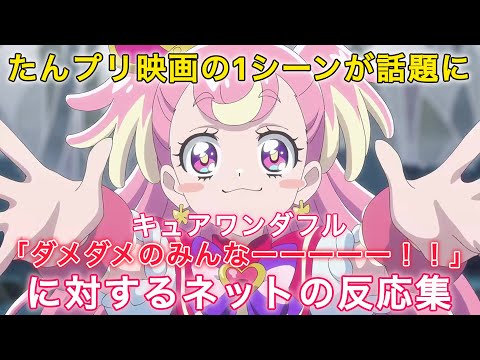
A pivotal scene from the Tanpuri movie titled “Damadama no Minna” (“We’re All Failures”) has sparked widespread discussion across social media and fan communities. The scene resonates with audiences of all ages by presenting a mature perspective on failure and perseverance that transcends typical children’s anime messaging.
What Happened
A scene from the Tanpuri movie featuring the phrase “Damadama no Minna” (“We’re All Failures”) has become the subject of intense online discussion. The scene depicts characters acknowledging their failures and shortcomings while choosing to move forward regardless. Viewers across YouTube, Twitter, and other platforms have shared emotional reactions, with many describing the moment as deeply moving and unexpectedly profound for a children’s anime film.
Why It Matters
This scene has resonated with audiences because it presents a nuanced message about failure and resilience that differs from conventional anime narratives. Rather than promoting the typical “failure leads to success” trope, the scene suggests that imperfection is acceptable and that continuing forward despite flaws is itself a form of strength. In contemporary society, where social media and cultural pressures emphasize perfection, this message carries significant psychological weight for both children and adults. The viral response indicates a broader cultural hunger for authentic, non-prescriptive narratives about human struggle.
Background
Tanpuri is a children’s anime series that has evolved into a multimedia franchise. The movie adaptation represents a significant expansion of the original television series, allowing for deeper character development and emotional storytelling within an extended runtime. The theatrical release has introduced the franchise to new audiences while providing longtime fans with more sophisticated narrative treatment of familiar characters and themes.
The specific scene in question occurs at a critical narrative juncture where characters have experienced repeated failures throughout their journey. Rather than overcoming these failures or learning from them in a traditional sense, the characters accept their limitations while maintaining their determination to continue. This psychological approach—accepting failure rather than transcending it—represents a departure from standard anime messaging.
Key Points
- The “Damadama no Minna” scene functions as a major turning point in the film, where characters embrace their imperfections rather than overcome them
- The scene balances positive determination with realistic acknowledgment of struggle, creating emotional resonance across age groups
- Online reactions emphasize the scene’s ability to convey depth and authenticity, with viewers noting it transcends typical children’s anime conventions
- The movie format allows for extended emotional expression compared to the television series, enabling fuller exploration of character psychology
- The message—that imperfection is acceptable and continuation despite flaws is valuable—addresses contemporary anxieties about perfectionism and failure
- Voice acting and visual direction work together to frame the phrase “we’re all failures” as a declaration of resolve rather than self-deprecation
Narrative Analysis: The Meaning Behind the Scene
At first glance, the phrase “Damadama no Minna” (“We’re All Failures”) appears negative. However, the scene’s actual meaning is fundamentally different. The dialogue carries what might be termed “positive resignation”—an acceptance of limitation combined with continued effort. This represents a psychological maturity rarely depicted in children’s media.
The characters in this scene have experienced repeated setbacks throughout the narrative. Rather than discovering a hidden strength or learning a crucial lesson that transforms their situation, they simply acknowledge their limitations and choose to proceed anyway. This contradiction—calling themselves failures while simultaneously demonstrating determination—captures an essential aspect of human experience that most narratives avoid.
The production team likely intended to communicate that perfection is unnecessary and that persistence itself holds value. This message proves particularly significant in contemporary contexts where children face substantial pressure to succeed without failure. The scene suggests an alternative framework: that imperfection is inherent to human existence and that continuing despite flaws constitutes genuine strength.
Comparative Analysis
To understand the scene’s unique approach, comparison with similar themes in other anime proves instructive:
| Work | Approach to Failure | Character Response | Core Message |
|---|---|---|---|
| Tanpuri (This Scene) | Accept failure and continue regardless | Acknowledge limitations while moving forward | Perfection is unnecessary; persistence matters |
| Typical Sports Anime | Learn from failure to achieve success | Transform failure into educational material | Failure leads to success |
| Inspirational Drama Anime | Overcome failure through effort | Transcend limitations through determination | Hard work yields results |
| Comedy/Slice-of-Life Anime | Neutralize failure through humor | Convert failure into comedy | Failure is part of life |
Tanpuri’s approach stands apart. While other works attempt to transform failure—into learning, success, or humor—Tanpuri accepts failure as failure and proposes that continuation despite failure constitutes value. This represents a more philosophically mature position, acknowledging that human experience includes irreducible struggle that cannot always be resolved or transcended.
Industry Context
The scene’s resonance reflects broader trends in anime production. Over the past five years, the industry has shifted from depicting “perfect” characters toward portraying flawed, conflicted individuals. This trend aligns with audience demand for authentic storytelling that reflects actual human complexity rather than idealized narratives.
The Tanpuri movie exemplifies this evolution. Operating within the children’s anime framework, it delivers emotional depth typically associated with adult-oriented media. This convergence suggests anime’s maturation as a storytelling medium, moving beyond age-specific categorization toward universal narrative appeal.
Social and Cultural Resonance
In 2024, society collectively grapples with perfectionism pressures amplified by social media. Digital platforms create constant pressure to present idealized versions of oneself, generating widespread anxiety about inadequacy. Within this context, the scene’s message—”being flawed is acceptable”—carries particular weight.
The viral response suggests audiences recognize and respond to this message’s relevance. Comments emphasizing emotional impact, analytical depth, and universal applicability indicate viewers across demographics found personal meaning in the scene’s portrayal of acceptance and persistence.
Online Reception
Online reactions demonstrate remarkable diversity. YouTube comments emphasize emotional impact, with viewers reporting tears and strong feelings. Twitter discussions focus on thematic depth and cross-generational appeal. Forum discussions highlight the movie’s superior treatment compared to the television series, with multiple users noting that the extended runtime enabled fuller emotional expression.
Overwhelmingly positive responses indicate broad audience appreciation. A small minority raised concerns about potential didacticism, though analysis suggests the scene depicts character choice rather than external instruction, mitigating such criticism.
The diversity of interpretations itself proves significant. Children extract the message that failure is acceptable; adults recognize commentary on perfectionism and authentic living. This multi-layered resonance reflects the scene’s sophisticated construction, enabling different audiences to derive age-appropriate meaning.
Insights
The “Damadama no Minna” scene’s viral success reveals several important truths about contemporary audiences and media. First, audiences hunger for narratives that acknowledge rather than deny human limitation. Second, emotional authenticity—depicting genuine struggle without false resolution—resonates more powerfully than conventional inspirational messaging. Third, children’s media can address sophisticated psychological themes without condescension.
The scene also demonstrates that movie adaptations of serialized content can achieve qualitative improvements through extended storytelling time. The theatrical format’s expanded runtime enabled character psychology exploration impossible within television’s structural constraints.
Most significantly, the response suggests a cultural moment where audiences are ready to embrace imperfection as legitimate and valuable. The scene’s popularity indicates that many viewers—across ages and backgrounds—find profound relief in seeing failure depicted not as something to overcome, but as something to accept while continuing forward. This represents a meaningful shift in how contemporary audiences understand resilience and human worth.
For viewers encountering Tanpuri for the first time, beginning with the television series provides essential context for the scene’s emotional impact. Character familiarity and narrative investment amplify the moment’s significance. Attention to character expressions and vocal delivery reveals the determination underlying the seemingly negative phrase, enriching interpretation and emotional engagement.