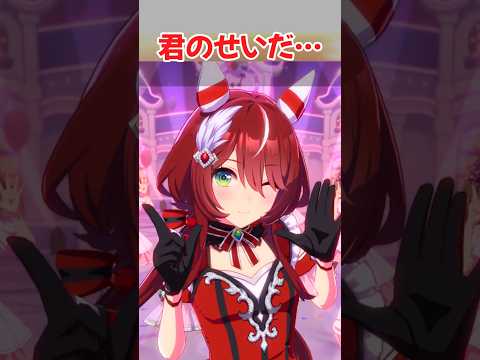
▶ Watch the original YouTube video
How Uma Musume’s “It’s Your Fault” Scene Became a Masterclass in Character Psychology
A pivotal scene from Uma Musume Pretty Derby featuring the character Win Barriasion has sparked widespread emotional responses from fans worldwide. The scene’s power lies in its sophisticated portrayal of conflicting emotions—blame, disappointment, and self-awareness—compressed into a single, devastating line of dialogue that resonates with universal human experience.
What Happened
A scene from Uma Musume Pretty Derby featuring the character Win Barriasion has generated significant fan engagement across social media platforms and video sharing sites. The scene centers on a single line of dialogue—”It’s your fault…” (君のせいだ…)—that has prompted widespread emotional reactions, including tears, deep reflection, and extensive online discussion. The scene has been compiled into a reaction video showcasing diverse fan responses, demonstrating the emotional impact of this moment on the anime and gaming community.
Why It Matters
This scene exemplifies a broader shift in anime and gaming production toward sophisticated character psychology and emotional authenticity. As audience expectations have evolved, creators increasingly prioritize nuanced emotional expression over surface-level storytelling. Uma Musume’s approach—expressing complex, contradictory emotions through minimal dialogue—represents a significant achievement in narrative craft. The scene’s resonance with viewers suggests that audiences are hungry for character work that reflects the psychological complexity of real human relationships and internal conflicts.
Background
Uma Musume Pretty Derby is a multimedia franchise that adapts real historical racehorses into human characters, exploring their personalities, relationships, and psychological development. The series has gained substantial popularity since its anime debut in 2021, with particular praise directed toward its character writing and emotional depth. Win Barriasion is characterized as possessing both strength and sensitivity—traits derived from the historical racehorse’s documented temperament and performance record. The franchise deliberately prioritizes character psychology, treating each character’s emotional arc with the same care typically reserved for traditional dramatic narratives.
Key Points
- Emotional Complexity in Minimal Dialogue: The phrase “It’s your fault…” simultaneously expresses anger, disappointment, self-recrimination, and conflicted affection—multiple contradictory emotions compressed into five syllables.
- Psychological Authenticity: The line captures a universal human experience: the tension between blaming others and recognizing one’s own responsibility, a conflict most people encounter in personal relationships.
- Voice Acting Excellence: The delivery of this single line demonstrates exceptional vocal performance, conveying layers of emotion through tone, pacing, and inflection.
- Multi-Layered Interpretation: The scene permits multiple valid interpretations—surface blame versus deeper self-awareness—creating depth that rewards repeated viewing and analysis.
- Community Resonance: Fan responses across Twitter, YouTube, and forums demonstrate that the scene successfully triggered emotional recognition and personal reflection among viewers.
- Industry Trend Indicator: The scene exemplifies a broader industry movement toward psychological realism and character-driven storytelling as primary value propositions in anime and gaming.
Comparative Analysis
When examined alongside similar emotionally complex moments from other acclaimed anime and games, Win Barriasion’s line demonstrates distinctive strengths. Eren Yeager’s “I will destroy them all!” from Attack on Titan expresses pure rage and determination. Edward Elric’s realization of his mistakes in Fullmetal Alchemist conveys regret and despair. Shoyo Hinata’s uncertain declaration in Haikyuu!! combines determination with self-doubt. The protagonist’s conviction in Fate/stay night blends certainty with hidden doubt. Win Barriasion’s “It’s your fault…” uniquely expresses simultaneous blame and self-blame—the speaker accuses another while implicitly acknowledging their own culpability. This simultaneous contradiction, where the surface meaning contradicts the underlying emotional truth, represents a more sophisticated emotional architecture than single-emotion expressions.
Psychological Mechanisms
The scene’s emotional impact operates through several psychological mechanisms. First, projection: viewers unconsciously project their own experiences onto the character, recognizing moments from their own lives when they have felt similarly conflicted. Second, emotional authenticity: the scene captures a genuine psychological state that most people experience but rarely see articulated in media. Third, narrative economy: the compression of complex psychology into minimal dialogue creates a sense of discovery—viewers must actively interpret the subtext, engaging them more deeply than explicit exposition would.
The scene also demonstrates what might be called “interpretive depth”—it can be understood differently on first viewing versus subsequent viewings. Initial interpretation may focus on surface blame; later interpretations reveal the self-directed nature of the emotion. This structure rewards repeated engagement and discussion, explaining why the scene continues generating fan analysis weeks or months after initial release.
Production Context
Uma Musume’s emphasis on psychological character work reflects deliberate creative choices by its production team. The franchise prioritizes character story content, with the game featuring extensive character-specific narratives that explore psychological development in detail. This approach differs from many anime and game productions that prioritize plot mechanics or visual spectacle. The decision to invest heavily in character psychology suggests a long-term strategy focused on building sustained fan loyalty rather than pursuing short-term popularity spikes. The approach has proven successful: Uma Musume has maintained consistent fan engagement since its 2021 anime premiere.
Fan Community Response
Online responses to the scene have been predominantly positive and emotionally engaged. Twitter users reported crying during the scene. YouTube commenters noted that repeated viewings continued to generate emotional responses, suggesting the scene possesses enduring psychological resonance. Forum discussions included detailed analysis of the line’s multiple interpretations and comparisons to similar moments in other media. The breadth and depth of fan engagement indicates that the scene successfully communicated its intended emotional complexity to its audience.
While overwhelmingly positive, some viewers offered alternative interpretations—for instance, reading the line as simple blame rather than conflicted emotion. However, the scene’s structure appears designed to accommodate multiple valid interpretations, with this ambiguity functioning as a strength rather than a weakness. The capacity to support multiple readings contributes to the scene’s longevity in fan discourse.
Broader Industry Implications
The scene’s success reflects and reinforces broader industry trends. From 2019 to 2024, audience expectations for anime and game narratives have shifted significantly. Viewers increasingly prioritize psychological authenticity and emotional realism over plot mechanics or visual novelty. They expect characters to express emotions in psychologically credible ways, with dialogue reflecting the complexity of actual human psychology rather than simplified emotional states. Uma Musume’s success in meeting these elevated expectations suggests that other productions will likely increase their investment in character psychology and emotional writing to remain competitive.
Practical Recommendations for Viewers
For those new to Uma Musume, several approaches maximize engagement with the series’ character work. First, engage with game-based character stories before or alongside anime viewing, as the game narratives provide greater psychological detail. Second, compare character stories across multiple characters to understand the production team’s techniques for creating distinct emotional expressions for each character. Third, when watching anime scenes, attend to the gap between what characters say and what they actually feel—Uma Musume specializes in this discrepancy. Fourth, compare Uma Musume to other character-focused works like Attack on Titan, Haikyuu!!, Fullmetal Alchemist, and Fate/stay night to better understand the distinctive qualities of Uma Musume’s emotional expression.
Insights and Conclusions
Win Barriasion’s “It’s your fault…” represents a significant achievement in character-driven storytelling. The scene demonstrates that sophisticated psychological expression does not require extensive dialogue or explicit exposition—instead, it emerges from the precise calibration of minimal language, vocal performance, and narrative context. The scene’s universal resonance suggests that audiences recognize themselves in the character’s conflicted emotional state, validating the production team’s decision to prioritize psychological authenticity.
Beyond its immediate entertainment value, the scene illustrates a broader principle: understanding others requires attention to the gap between their words and their underlying emotions. This principle extends beyond fictional narratives into actual human relationships. Uma Musume, while ostensibly entertainment, functions as a form of emotional education, teaching viewers to recognize and interpret psychological complexity in themselves and others.
The scene’s success also suggests that the anime and gaming industries may continue elevating their standards for character psychology and emotional writing. As audiences increasingly demand authenticity and complexity, productions that deliver sophisticated character work will likely achieve greater cultural resonance and sustained fan loyalty than those prioritizing spectacle or plot mechanics alone. Uma Musume’s trajectory demonstrates that investment in character psychology yields measurable returns in audience engagement and cultural impact.