▶ Watch the original YouTube video
Uma Musume’s Bouquet Scenario Oaks Race Sparks Intense Fan Debate Over Narrative Innovation
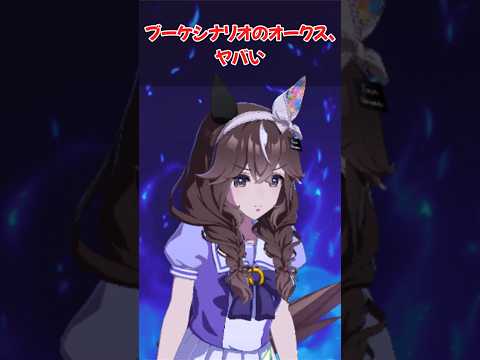
The Oaks race sequence in Uma Musume Pretty Derby’s Bouquet scenario has become a major talking point in the gaming community, with players praising its psychological depth while others debate whether it represents a bold narrative evolution or a departure from the game’s core appeal. The scenario centers on Karen Bouquet, a character whose internal conflict during the prestigious Oaks race challenges traditional storytelling expectations in the horse-racing simulation game.
What Happened
The Bouquet scenario, featuring the character Karen Bouquet, has generated significant discussion among Uma Musume Pretty Derby players due to its unexpected narrative direction during the Oaks race—one of Japan’s most prestigious horse races and a key milestone in the game. Rather than following the conventional “training to victory” formula, the scenario presents a complex psychological struggle that subverts player expectations and explores themes of internal conflict, identity, and the meaning of competition itself.
Why It Matters
This narrative approach represents a potential turning point in how Uma Musume constructs its character-driven stories. The scenario demonstrates that the game’s developers at Cygames are willing to move beyond straightforward victory narratives toward more nuanced, psychologically complex storytelling. This shift reflects broader trends in narrative-driven gaming, where character development and emotional authenticity take precedence over conventional success formulas. For players invested in the game’s storytelling depth, this represents validation that Uma Musume is evolving as a mature narrative experience rather than remaining a simple horse-racing simulation.
Background
Uma Musume Pretty Derby is a mobile game that combines horse-racing simulation with character development and narrative storytelling. The game features anthropomorphized versions of real racehorses, each with their own scenarios and story arcs. Karen Bouquet is a character designed around themes of elegance and delicacy, with her name referencing a bouquet of flowers. The Oaks is a prestigious race in Japanese horse racing, particularly significant for female horses, making it a natural focal point for dramatic narrative tension.
The game has evolved significantly since its 2021 launch, with developers increasingly incorporating psychological depth and character complexity into scenario design. Previous scenarios often followed a more linear progression toward victory, but recent releases have begun exploring themes of defeat, uncertainty, and personal growth beyond competitive achievement.
Key Points
- Psychological Complexity: Karen Bouquet faces internal contradictions during the Oaks race that go beyond typical competitive pressure, exploring deeper questions about identity and purpose.
- Subverted Expectations: The scenario deliberately contradicts player expectations of a straightforward victory narrative, creating emotional impact through narrative surprise.
- Non-Linear Character Growth: The story emphasizes personal development through struggle and setback rather than exclusively through victory, reflecting more realistic character arcs.
- Diverse Fan Reactions: Players have responded with a wide spectrum of interpretations, from praise for narrative innovation to concerns about departure from established game conventions.
- Narrative Evolution: The scenario represents a broader shift in Uma Musume’s storytelling approach toward greater thematic complexity and literary depth.
- Thematic Ambiguity: Unlike previous scenarios with clear resolutions, the Bouquet scenario presents open-ended questions that invite player interpretation.
Timeline
- 2021 Spring: Uma Musume Pretty Derby launches, initially attracting players primarily for its horse-racing mechanics.
- 2021-2023: Game evolves with increasingly complex character scenarios and psychological storytelling.
- 2023-2024: Noticeable trend toward scenarios featuring defeat, complexity, and non-linear character development.
- Recent Release: Bouquet scenario’s Oaks race sequence becomes a focal point of community discussion and analysis.
Perspectives
Narrative Innovation Perspective: Supporters view the Bouquet scenario as a necessary evolution of Uma Musume’s storytelling, arguing that psychological complexity and subverted expectations create more meaningful emotional experiences than conventional victory narratives. They compare it favorably to acclaimed anime and games that prioritize character depth over plot simplicity.
Traditional Gameplay Perspective: Some players express concern that the scenario’s complexity detracts from the core appeal of horse-racing simulation and character development. They worry that ambiguous narratives and defeat-focused storytelling may alienate players seeking straightforward, satisfying character arcs.
Analytical Perspective: Gaming analysts note that the scenario exemplifies broader industry trends toward “narrative games” where story complexity rivals traditional literary fiction. They identify the Bouquet scenario as evidence that mobile games are maturing as a storytelling medium.
Community Response Perspective: Social media reactions reveal significant diversity in interpretation. Twitter users report emotional responses ranging from tears of appreciation to frustration with unmet expectations. Forum discussions emphasize the scenario’s technical execution and character psychology, while YouTube comments praise both narrative and visual presentation.
Insights
The Bouquet scenario represents a deliberate artistic choice to prioritize psychological authenticity over narrative satisfaction. By subverting player expectations—a principle drawn from acclaimed works like “Attack on Titan” and “Haikyuu!!”—the developers create deeper emotional engagement through surprise and reinterpretation. The scenario’s power derives not from what happens, but from what players expected to happen and how that gap generates reflection.
The diverse fan reactions demonstrate that the scenario succeeds in its apparent goal: presenting a question without a single correct answer. This interpretive openness is characteristic of mature narrative design, where audiences must construct personal meaning rather than receive predetermined conclusions.
The Bouquet scenario also highlights a fundamental tension in Uma Musume’s design: the game is simultaneously a horse-racing simulation based on real historical races and a character-driven narrative work. By allowing Karen’s psychological reality to diverge from historical outcomes, the developers assert that character authenticity supersedes historical accuracy—a significant creative statement about the game’s true purpose.
Looking forward, the Bouquet scenario appears to signal the direction of Uma Musume’s future development. The trend toward complex, defeat-inclusive narratives suggests the game will continue evolving from a simple “training simulator” toward a sophisticated character study that uses horse racing as a framework for exploring human psychology, identity, and meaning. This evolution positions Uma Musume alongside narrative-focused games rather than traditional sports simulations, fundamentally redefining what the game can achieve as a storytelling medium.