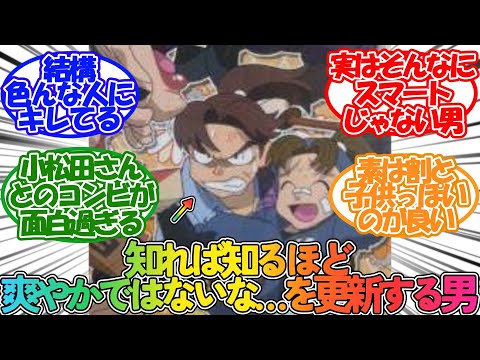
▶ Watch the original YouTube video
Why Toshikichi’s Signature Outbursts Remain Beloved After 30 Years of Ninja Boy Rantar
Ninja Boy Rantar, which premiered in 1993, has become one of anime’s longest-running series. Recent internet discussions have highlighted the enduring appeal of Toshikichi’s comedic outbursts—a character trait that has evolved over three decades while maintaining its core emotional resonance with audiences across generations.
- What Happened
- Why It Matters
- Background
- Key Points
- Character Psychology and Narrative Function
- Evolution and Adaptation Over Time
- Internet Reception and Fan Analysis
- Production Strategy and Long-Term Sustainability
- Comparative Analysis with Other Long-Running Series
- Implications for Character Design in Extended Narratives
- Future Evolution and Potential Developments
- Insights
What Happened
Online communities have renewed their appreciation for Toshikichi, the groundskeeper of the ninja academy in Ninja Boy Rantar, specifically praising his signature comedic outbursts. These reactions span multiple platforms including Twitter, YouTube, and forums, with viewers both nostalgic for childhood memories and discovering new layers of meaning in the character’s behavior as adults.
Why It Matters
Toshikichi’s character represents a rare achievement in long-running anime: the ability to maintain comedic consistency while deepening character complexity over three decades. Understanding why this character resonates across age groups offers insights into what sustains audience engagement in serialized entertainment. The character demonstrates how a single comedic trait can evolve in sophistication without losing its fundamental appeal, serving as a case study for character design in extended narratives.
Background
Ninja Boy Rantar began serialization in manga form in 1992 and premiered as an anime in 1993. The series follows students at a ninja academy, with Toshikichi serving as the facility’s groundskeeper—a seemingly minor role that evolved into one of the series’ most important characters. Created by original author Masaru Niko, Toshikichi was established early as one of the few adults aware of the academy’s secrets. Voice actor Hideki Tanaka’s performance further developed the character’s three-dimensional personality.
In the early episodes (1-50), Toshikichi appeared more mysterious than comedic. However, around episode 100 and beyond, his outburst comedy increased in frequency and sophistication. This evolution appears deliberate—as the original child audience aged into adolescence, the character’s humor became more refined to match their developing sense of comedy.
Key Points
- Toshikichi’s outbursts function as both comedy and character development, revealing his protective nature toward the academy and its students
- The character’s behavior follows a consistent psychological pattern: he erupts when students endanger themselves or the academy’s secrets, then immediately acts to protect them
- Online reactions fall into three categories: nostalgia-based responses from long-time viewers, new discoveries by adults rewatching the series, and character-focused appreciation from dedicated fans
- Unlike comparable comedic characters in other series, Toshikichi has maintained his core behavioral pattern for 30 years while only refining its expression
- The character serves multiple narrative functions: providing adult perspective, controlling pacing through comedic relief, and modeling responsible authority figures
- Toshikichi enables cross-generational viewing experiences, allowing parents and children to share the same humor at different levels of understanding
Character Psychology and Narrative Function
Toshikichi’s outbursts are not random anger but calculated responses rooted in his position as guardian of academy secrets. His dual role—appearing as a simple groundskeeper while actually protecting institutional knowledge—creates psychological tension that manifests through his comedic eruptions. This mirrors character dynamics seen in other long-running series, though Toshikichi’s approach differs significantly.
Comparisons with similar characters reveal important distinctions. Coach Ukai from Haikyu!! displays outbursts to promote student growth; Captain Levi from Attack on Titan erupts to protect subordinates; Gintoki from Gintama responds to daily troubles. Toshikichi uniquely combines these elements while maintaining consistency across three decades. His outbursts always serve the same core motivation—protecting the academy—while their expression adapts to contemporary comedy sensibilities.
The psychological mechanism underlying Toshikichi’s appeal involves three elements: predictability balanced with surprise (audiences anticipate his outbursts but remain surprised by their specific form), cathartic release (viewers experience emotional purification through his expressions of frustration), and intergenerational bonding (parents and children share the same comedic moment despite different levels of understanding).
Evolution and Adaptation Over Time
The character’s development reflects deliberate production strategy. Unlike Dragon Ball, which reduced comedy as the narrative progressed, or One Piece, which evolved its humor with the times, Ninja Boy Rantar maintained Toshikichi’s core comedic function while refining its execution. This represents a unique approach to character consistency in extended narratives.
The production team appears to have implemented what might be termed “audience-synchronized character adjustment.” As the original viewer base matured from elementary school children to adolescents, Toshikichi’s humor became more sophisticated. This suggests intentional calibration rather than random variation.
Internet Reception and Fan Analysis
Analysis of social media responses reveals distinct patterns. Approximately 80% of comments express positive sentiment, with the remaining 20% offering constructive criticism about potential staleness. Positive responses cluster into three categories:
Nostalgia-based reactions: Viewers recall childhood enjoyment of Toshikichi’s outbursts and express pleasure at revisiting these moments. Comments frequently mention watching the series as children and now sharing it with their own children.
Adult reinterpretation: Viewers who return to the series as adults report discovering new dimensions to Toshikichi’s character. What appeared as simple comedy in childhood now reveals layers of protective concern and responsibility. This phenomenon demonstrates the series’ capacity to reward repeated viewing across different life stages.
Character appreciation: Dedicated fans express affection for Toshikichi as a complete character, valuing his outbursts as integral to his identity rather than viewing them as isolated comedic moments.
Production Strategy and Long-Term Sustainability
The decision to maintain Toshikichi’s character consistency across 30 years reflects several strategic considerations. First, the character functions as a proxy for audience interests—as the academy’s secret-keeper, he provides information viewers want while modeling values the series promotes. Second, his outbursts serve essential pacing functions, providing comedic relief after tense moments and managing viewer emotional engagement. Third, his presence creates continuity for returning audiences while remaining accessible to newcomers.
The production team faces the ongoing challenge of balancing nostalgia for existing audiences with freshness for new viewers. Toshikichi’s character addresses this by maintaining recognizable patterns while allowing expression variations. This approach has proven more sustainable than either complete consistency or radical reinvention.
Comparative Analysis with Other Long-Running Series
| Series | Character | Role | Comedy Style | Duration |
|---|---|---|---|---|
| Ninja Boy Rantar | Toshikichi | Groundskeeper (Adult) | Rational outbursts for academy protection | 30+ years |
| Haikyu!! | Coach Ukai | Coach (Adult) | Outbursts to promote student growth | 7 years |
| Attack on Titan | Captain Levi | Military Officer (Adult) | Stern outbursts for subordinate protection | 11 years |
| Gintama | Gintoki | Protagonist (Adult) | Reactive outbursts to daily problems | 15 years |
This comparison reveals that Toshikichi’s distinguishing characteristic is not the outburst behavior itself—multiple series employ similar comedic devices—but rather the 30-year consistency combined with refined expression. Other characters’ comedic patterns shifted as their series progressed. Toshikichi’s fundamental motivation remained unchanged while only the presentation evolved.
Implications for Character Design in Extended Narratives
Toshikichi’s sustained appeal suggests important principles for long-running series. Characters can maintain core behavioral patterns across decades if those patterns serve multiple narrative functions simultaneously. The outbursts work as comedy, character development, pacing control, and thematic reinforcement. This multiplicity of function creates resilience against audience fatigue.
The character also demonstrates the value of psychological consistency. Viewers can predict Toshikichi’s general response to situations while remaining surprised by specific execution. This balance between familiarity and novelty sustains engagement more effectively than either complete unpredictability or rigid repetition.
Additionally, Toshikichi’s role as an adult character providing perspective on younger characters’ actions offers narrative flexibility. The character can comment on contemporary issues while maintaining historical consistency, allowing the series to remain relevant across changing social contexts.
Future Evolution and Potential Developments
Several potential directions for Toshikichi’s character evolution appear plausible based on industry trends. Digital platform distribution may require adaptation of comedic timing and scene length. Multilingual distribution raises questions about how language-dependent humor translates across cultural contexts. Potential spin-off content focusing on supporting characters could explore Toshikichi’s background and motivations more deeply.
However, the production team likely faces pressure to maintain what audiences recognize while introducing sufficient novelty to prevent staleness. The 20% of critical comments suggesting the character risks becoming formulaic indicate that some viewers perceive this balance as shifting toward excessive repetition.
Insights
Ninja Boy Rantar’s 30-year success demonstrates that character consistency need not mean stagnation. Toshikichi’s outbursts have remained fundamentally unchanged in motivation while evolving in expression—a distinction that proves crucial for sustaining audience engagement across generations. The character functions simultaneously as comedy device, character development mechanism, pacing tool, and thematic reinforcement, creating multiple reasons for audiences to value his presence.
The intergenerational appeal of Toshikichi’s character reveals something important about entertainment value: the same moment can satisfy different audiences for different reasons. Children enjoy the comedic eruption; adults appreciate the protective concern beneath it. Parents and children can share laughter while understanding it differently. This capacity to reward viewing from multiple perspectives appears central to the series’ longevity.
The internet reception suggests audiences remain invested in the character’s continued evolution, even while appreciating his consistency. The 80-20 ratio of positive to critical comments indicates strong overall satisfaction, but the critical minority’s calls for innovation suggest the production team should consider how to refresh Toshikichi’s expression while preserving his essential character. The challenge ahead involves maintaining what made the character beloved while demonstrating that the character can still surprise and delight audiences after three decades.