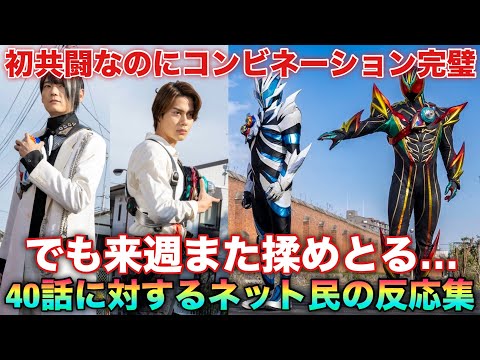
▶ Watch the original YouTube video
Perfect Teamwork Despite First Alliance, Yet Conflict Looms: Analyzing Episode 40’s Complex Character Dynamics
Episode 40 presents a paradoxical narrative: two previously opposing characters execute flawless teamwork in their first collaborative battle, yet preview footage suggests renewed conflict ahead. This contradiction reflects a sophisticated exploration of the difference between tactical synchronization and genuine relationship resolution—a theme increasingly prevalent in modern anime.
- What Happened
- Why It Matters
- Background
- Key Points
- The Psychology of Perfect First Teamwork
- Comparative Analysis: First Alliance and Subsequent Conflict Across Anime
- Viewer Responses: Three Distinct Interpretive Groups
- Industry Context: The Evolution of Conflict Portrayal
- Anticipated Developments and Narrative Implications
- Insights
What Happened
Episode 40 features two characters who have been in conflict throughout the series executing an unexpectedly seamless collaborative battle sequence. Their coordination exceeds viewer expectations, with perfectly synchronized attacks and tactical awareness. However, the next episode’s preview indicates the characters will return to conflict, leaving audiences puzzled by the apparent contradiction between their demonstrated compatibility and imminent disagreement.
Why It Matters
This narrative structure challenges a common anime trope: the assumption that successful teamwork automatically resolves underlying tensions. Episode 40 demonstrates that tactical synchronization and genuine relationship resolution operate on different psychological levels. This distinction reflects a broader industry shift toward more nuanced character development, where conflicts persist despite moments of perfect cooperation. Understanding this dynamic enriches how viewers interpret character arcs and relationship development across modern anime.
Background
The phenomenon of “perfect first alliance” followed by renewed conflict is not unprecedented in anime. Similar patterns appeared in Attack on Titan, where Eren and Levi’s flawless initial coordination preceded significant ideological conflict, and in Jujutsu Kaisen, where characters demonstrate tactical harmony while maintaining fundamental value differences. Episode 40 appears to follow this established pattern, suggesting deliberate creative intent rather than inconsistent writing.
Key Points
- Flawless Initial Coordination: The episode showcases combat synchronization that exceeds viewer expectations, with characters demonstrating intuitive understanding of each other’s movements and strategies.
- Psychological Mechanism: Extended periods of opposition create deep understanding of an opponent’s behavioral patterns, enabling effective tactical coordination despite unresolved personal conflicts.
- Distinction Between Domains: Combat effectiveness and interpersonal compatibility operate independently; characters can synchronize perfectly in battle while maintaining fundamental disagreements about values and goals.
- Viewer Response Diversity: Audience reactions split into three categories: those moved by the teamwork moment, those confused by the subsequent conflict, and those analyzing the psychological sophistication of the narrative structure.
- Industry Trend: Modern anime increasingly depicts “mature conflict”—disagreement rooted in mutual understanding rather than ignorance—reflecting evolved viewer expectations for character complexity.
- Narrative Sophistication: The apparent contradiction between perfect teamwork and renewed conflict represents advanced psychological storytelling rather than narrative inconsistency.
The Psychology of Perfect First Teamwork
The mechanism enabling flawless coordination between previously opposed characters is rooted in psychological principles. During extended conflict, individuals develop detailed understanding of their opponent’s thought patterns, behavioral tendencies, and decision-making processes. This deep familiarity paradoxically facilitates tactical synchronization: each character can predict the other’s movements with precision because they have internalized their opponent’s behavioral patterns.
However, this tactical understanding creates a critical illusion. Viewers—and potentially the characters themselves—mistake combat synchronization for genuine reconciliation. The brain’s reward system activates during shared struggle against a common enemy, temporarily suppressing awareness of fundamental value differences. Once the immediate threat dissipates, this neurochemical state reverses, and underlying ideological conflicts resurface.
This mechanism appears consistently across acclaimed anime. In Demon Slayer, Tanjiro and Giyu demonstrate perfect coordination in combat while maintaining distinct philosophical approaches to demon slaying. In Haikyu!!, team members develop increasingly sophisticated tactical coordination while occasionally disagreeing on strategy and priorities. These examples illustrate that combat effectiveness and interpersonal harmony represent distinct dimensions of character relationships.
Comparative Analysis: First Alliance and Subsequent Conflict Across Anime
| Series | Initial Alliance Quality | Subsequent Development | Narrative Depth |
|---|---|---|---|
| Attack on Titan | Exceptionally high | Ideological conflict intensifies | Profound |
| Haikyu!! | Develops progressively | Teamwork strengthens despite disagreements | Deep |
| Demon Slayer | High | Philosophical differences persist despite cooperation | Moderate |
| Episode 40 (Current Series) | Exceptionally high | Renewed conflict indicated | To be determined |
Viewer Responses: Three Distinct Interpretive Groups
The Emotional Response Group: These viewers focus on the immediate impact of the teamwork sequence. Social media posts emphasize the emotional satisfaction of seeing previously opposed characters work together seamlessly. Comments like “I got tears seeing them finally cooperate” represent this perspective, which values the cathartic release of tension and the apparent resolution of conflict.
The Confusion Response Group: These viewers express puzzlement at the apparent contradiction. Forum discussions feature questions like “Why would they fight again after that perfect coordination?” This group expected the teamwork sequence to function as a definitive relationship turning point, making the preview of renewed conflict feel narratively inconsistent.
The Analytical Response Group: These viewers recognize the psychological sophistication underlying the narrative structure. Comments analyze the distinction between tactical synchronization and genuine reconciliation, demonstrating awareness that the episode intentionally presents a paradox rather than a contradiction. This group appreciates the nuanced character psychology the episode explores.
Industry Context: The Evolution of Conflict Portrayal
Over the past five years, anime production has shifted away from simplified conflict resolution narratives. The traditional pattern—opposition → reconciliation → friendship—has given way to more complex structures: opposition → partial understanding → recognition of fundamental differences → complex coexistence.
This evolution reflects both audience maturation and increased creative sophistication in the industry. Viewers increasingly prefer narratives that acknowledge the possibility of perfect tactical coordination existing alongside unresolved ideological differences. This mirrors real-world experience, where individuals can work effectively together while maintaining distinct values and goals.
Episode 40 positions itself at the forefront of this trend. The deliberate juxtaposition of flawless teamwork with imminent conflict represents contemporary anime’s most advanced approach to character relationship portrayal.
Anticipated Developments and Narrative Implications
If the pattern established by comparable series holds, the conflict emerging in subsequent episodes will differ qualitatively from earlier opposition. Previous disagreements likely stemmed from mutual misunderstanding; the characters did not comprehend each other’s motivations or perspectives. The renewed conflict following Episode 40 should instead represent “mature opposition”—disagreement rooted in mutual understanding.
This distinction carries significant narrative weight. Characters who oppose each other despite understanding are engaged in fundamentally different conflict than characters who oppose each other from ignorance. The former suggests deeper ideological rifts; the latter suggests potential for resolution through communication.
The critical test for the series lies in whether subsequent episodes can sustain this psychological complexity. Depicting perfect teamwork is relatively straightforward; portraying mature conflict—disagreement between characters who genuinely understand each other—requires substantially greater narrative skill.
Insights
Episode 40 represents a sophisticated narrative choice that distinguishes between two commonly conflated concepts: tactical coordination and relational harmony. By presenting perfect teamwork followed by renewed conflict, the episode challenges viewers to recognize that characters can synchronize effectively in limited contexts while maintaining fundamental incompatibilities in broader contexts.
This narrative approach reflects evolved understanding of human psychology and relationship dynamics. The episode implicitly argues that “perfect cooperation in crisis” does not necessarily indicate “perfect compatibility in all contexts.” This recognition elevates the series beyond simplistic character arc patterns into territory occupied by anime’s most psychologically sophisticated works.
The diversity of viewer responses—emotional satisfaction, confusion, and analytical appreciation—indicates that Episode 40 successfully operates on multiple interpretive levels. This accessibility to different viewing approaches suggests strong creative execution.
However, the series now faces a critical challenge: sustaining this psychological complexity in subsequent episodes. The initial setup is compelling, but the follow-through will determine whether Episode 40 represents genuine narrative sophistication or merely clever misdirection. The coming weeks will reveal whether the production team can navigate the difficult terrain of depicting mature conflict between characters who understand each other perfectly.