▶ Watch the original YouTube video
Why Kamen Rider Eternal Never Appeared in the TV Series: Production Decisions and Timeline Explained
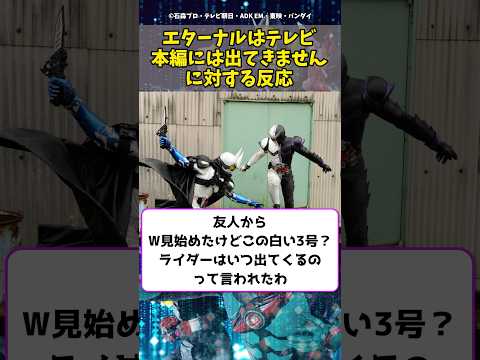
Kamen Rider Eternal, the mysterious white-bodied third rider, never appeared in the television broadcast of Kamen Rider Double despite being prominently featured in the film “Kamen Rider Double: Saga.” This absence reflects a deliberate production strategy and scheduling constraints that marked a turning point in how Toei approached Heisei-era Kamen Rider films.
What Happened
Kamen Rider Eternal debuted in the 2009 film “Kamen Rider Double: Saga” as a white-colored third rider, but never made a direct appearance in the 50-episode television series that ran from 2009 to 2010. While the Eternal Memory was referenced in the TV broadcast, the character itself remained exclusive to the film. This created a unique situation in Kamen Rider history where a major rider form was completely separated from the main television narrative, existing instead in an alternate timeline.
Why It Matters
Eternal’s exclusion from the TV series represents a significant shift in how Japanese tokusatsu productions approached the relationship between television and theatrical releases. Rather than integrating film-exclusive characters into the main narrative—a common practice in earlier Heisei Kamen Rider series—the production team deliberately maintained narrative separation. This decision influenced how subsequent Kamen Rider productions structured their multimedia storytelling, establishing a template where films could exist as independent alternate-timeline stories rather than direct continuations of the television narrative.
Background
Kamen Rider Double aired during 2009-2010, a transitional period in Heisei-era Kamen Rider production. Earlier series like Kamen Rider Agito and Kamen Rider Ryuki typically integrated film-exclusive characters into the main television timeline. However, by the time Double was produced, Toei’s film strategy had begun shifting toward creating independent theatrical narratives. The television series focused on the partnership between Shotaro Hidari and Ryu Terui as the primary narrative core, with the story structure seemingly finalized before the film project was greenlit. The timing of film production decisions relative to television production schedules created practical constraints that made integrating Eternal into the TV narrative impossible.
Key Points
- Eternal appears exclusively in the film “Kamen Rider Double: Saga” and exists in a separate timeline from the television series
- The Eternal Memory is referenced in the TV broadcast, but the rider form itself never manifests in the main narrative
- Television production schedules were already finalized before the film project was developed, making character integration logistically impossible
- The television series maintains narrative focus on two riders (Shotaro and Ryu), with a third rider potentially complicating the core relationship dynamic
- This approach became the template for subsequent Heisei Kamen Rider films, which increasingly adopted alternate-timeline structures
- Viewer expectations for a third rider were deliberately subverted, enhancing the film’s perceived exclusivity and special status
Timeline
- 2009: Kamen Rider Double television series begins broadcast; production team establishes core cast and narrative structure around two primary riders
- During TV broadcast: Film project “Kamen Rider Double: Saga” is greenlit; Eternal character is created as a film-exclusive element
- 2009-2010: Television series continues with references to Eternal Memory but no appearance of the Eternal rider form
- Film release: “Kamen Rider Double: Saga” introduces Eternal as a character existing in an alternate timeline
- Post-broadcast: Subsequent Kamen Rider productions adopt similar alternate-timeline film strategies
Perspectives
From a production standpoint, the decision to exclude Eternal from the television series reflects practical realities of tokusatsu production. Television series require finalized character rosters and casting decisions months before broadcast begins. When the film project was greenlit during the television run, adding a new character to the established narrative would have required script rewrites, additional casting, and schedule adjustments that were logistically unfeasible.
From a narrative perspective, the two-rider dynamic between Shotaro and Ryu forms the emotional and thematic core of the television series. Introducing a third rider could have diluted this central relationship and complicated the story’s focus. By reserving Eternal for the film, the production team preserved the purity and narrative coherence of the television narrative.
From a marketing perspective, the absence of Eternal from television actually enhanced the film’s appeal. Viewers who noticed the Eternal Memory references in the TV series naturally wondered when the third rider would appear. This curiosity drove interest in the theatrical release, making the film feel like a special, exclusive experience rather than a mere extension of the television story.
From a fan perspective, the decision generated significant discussion. Contemporary online forums and social media showed viewers actively debating whether Eternal would eventually appear in the TV series. When the film revealed that Eternal existed in a separate timeline, fan reactions gradually shifted from disappointment to appreciation for the creative separation between media formats.
Insights
Kamen Rider Eternal’s exclusion from the television series marks a pivotal moment in how Japanese tokusatsu productions conceptualized the relationship between television and theatrical storytelling. Rather than treating films as extensions of television narratives, the production team established them as independent alternate-timeline stories. This approach solved practical production constraints while simultaneously creating a new narrative framework that would become standard for subsequent Kamen Rider films.
The decision demonstrates how creative limitations can drive innovation. Faced with scheduling constraints and finalized television production plans, the team transformed a potential problem into a distinctive narrative feature. The “alternate timeline” concept allowed the film to exist as a complete, independent story while maintaining thematic and character connections to the television series.
This production strategy also reflects broader industry trends. As tokusatsu franchises expanded their multimedia presence, maintaining clear separation between television and theatrical narratives became increasingly valuable. It allowed each medium to serve distinct audience segments and consumption patterns—television viewers received a complete, self-contained narrative, while theatrical audiences experienced an exclusive alternate-reality story.
The Eternal case established a template that influenced subsequent Kamen Rider productions. Series like Kamen Rider OOO and later entries increasingly adopted the alternate-timeline film structure, suggesting that Double’s approach represented not an anomaly but a deliberate strategic shift in franchise production philosophy. What began as a practical solution to scheduling constraints evolved into a defining characteristic of modern Kamen Rider multimedia storytelling.