▶ Watch the original YouTube video
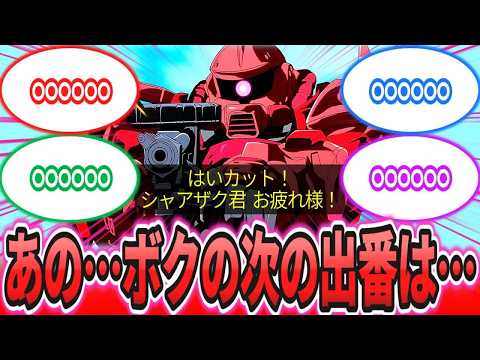
Char’s Custom Zaku, one of the most iconic mobile suits in the original Mobile Suit Gundam series, appears for only a brief moment before being abandoned by its pilot. This analysis explores the production decisions, narrative implications, and character psychology behind one of anime’s most puzzling mechanical abandonments.
What Happened
In the original Mobile Suit Gundam (1979–1980), Char Aznable’s signature red Zaku is discarded shortly after he defeats Garma Zabi. Rather than continuing to pilot this high-performance machine, Char immediately transfers to a newer, more advanced mobile suit. The original Zaku’s fate remains unexplained in the series—whether it was recovered by the Federation, left behind by Zeon forces, or lost to space entirely is never addressed in the canonical narrative.
Why It Matters
The abandonment of Char’s Custom Zaku represents a critical moment in how Mobile Suit Gundam prioritized mechanical spectacle over character development. This decision reflects broader production strategies of early 1980s anime, where introducing new mobile suits each week took precedence over narrative consistency. For fans and scholars of the Gundam franchise, this scene encapsulates the tension between commercial interests and storytelling depth that has defined the series since its inception. Understanding this moment provides insight into both the original series’ production philosophy and Char’s characterization as a pragmatist willing to discard sentiment for tactical advantage.
Background
Mobile Suit Gundam aired during a transformative period for the anime industry. The series was designed to showcase new mechanical designs regularly, maintaining viewer interest through constant visual novelty. Char’s Custom Zaku, despite its high performance and distinctive red coloring, served primarily as an early-series antagonist machine. When the narrative required Char to pilot more advanced units, the original Zaku was simply written out of the story without explanation or resolution.
The series established a pattern of mobile suit obsolescence that would become standard in the Gundam franchise. However, the lack of any follow-up regarding the Zaku’s fate—whether recovery, destruction, or repurposing—created an unusual narrative gap that has puzzled viewers for decades.
Key Points
- Char’s Custom Zaku appears for approximately five minutes of screen time before being abandoned after Garma Zabi’s defeat
- The mobile suit is never mentioned again in the original series, leaving its ultimate fate completely unexplained
- This abandonment reflects 1979–1980 anime production practices prioritizing new mechanical designs over narrative continuity
- The decision serves as character development for Char, demonstrating his pragmatic, goal-oriented nature and willingness to discard sentiment
- Online fan communities have expressed sympathy for the mobile suit, treating its abandonment as a narrative oversight
- Spin-off works like Mobile Suit Gundam MS IGLOO suggest that abandoned Zeon machines were typically recovered and analyzed by Federation forces
Timeline
- 1979–1980: Original Mobile Suit Gundam airs; Char’s Custom Zaku appears and is abandoned
- Post-series: No official explanation provided for the mobile suit’s fate
- Later Gundam works: Spin-off series establish that abandoned mobile suits were typically recovered by opposing forces
- Modern era: Fan communities continue to speculate about the Zaku’s ultimate destiny
Perspectives
Production-Focused Interpretation: The abandonment of Char’s Custom Zaku reflects deliberate production strategy. The anime industry of the early 1980s operated under intense pressure to maintain viewership through constant novelty. Introducing new mobile suits weekly was essential to keeping audiences engaged. From this perspective, the Zaku’s disappearance was not a narrative choice but an industrial necessity—old designs had to make way for new ones to sustain viewer interest.
Character-Driven Interpretation: Char’s decision to abandon the Zaku reveals his essential nature as a ruthlessly pragmatic operator. Unlike other Gundam protagonists whose mobile suit transfers are treated as significant emotional moments, Char’s transition is coldly utilitarian. He views machines as tools rather than companions. This interpretation positions the abandonment as sophisticated character writing that demonstrates Char’s willingness to discard anything—including a high-performance machine—if a better tool becomes available. His ambitions supersede any attachment to equipment.
Narrative Oversight Interpretation: Some analysts argue that the complete absence of explanation regarding the Zaku’s fate represents a genuine narrative gap rather than intentional characterization. The original series simply moved forward without addressing what happened to the machine, suggesting that the production team did not consider the detail important enough to resolve. This perspective treats the abandonment as an unintended consequence of the series’ rapid pacing and weekly production schedule.
Possible Fates of Char’s Custom Zaku
Federal Recovery and Analysis: The most likely scenario, supported by later Gundam works. A high-performance Zeon mobile suit would be too valuable for the Federation to ignore. If discovered, it would certainly be recovered, analyzed, and potentially reverse-engineered. This aligns with depictions in Mobile Suit Gundam MS IGLOO, where Federation forces routinely recover and study enemy machines.
Zeon Recovery and Redeployment: If the Zaku remained in Zeon-controlled territory, the military forces could have recovered and reassigned it to another pilot. However, the series provides no indication of where Char abandoned the machine, making this scenario speculative.
Permanent Loss: The most tragic possibility—that the mobile suit was lost to space during the chaos of the One Year War, its existence forgotten amid the conflict’s larger events. This interpretation appeals to fans who view the Zaku’s abandonment as symbolically tragic.
Comparative Analysis: Mobile Suit Transfers in Gundam
Char’s Custom Zaku abandonment stands in stark contrast to mobile suit transfers in later Gundam series. In Mobile Suit Gundam Wing, Heero Yuy’s transfer from Wing Gundam to subsequent units is treated as a significant narrative moment with emotional weight. In Mobile Suit Gundam SEED, Kira Yamato’s transition from Strike Gundam to Freedom Gundam marks a crucial turning point in both the story and his character development.
The original series, however, treats Char’s transfer as a simple mechanical upgrade—a matter of performance specifications rather than character growth. This difference reflects the original Gundam’s prioritization of mechanical spectacle over psychological depth, a production philosophy that would gradually shift as the franchise matured.
Fan Reception and Online Discussion
Internet communities have expressed considerable sympathy for Char’s Custom Zaku. Social media posts frequently note the machine’s brief appearance and sudden disappearance, with users expressing surprise at how quickly such a prominent design was discarded. Discussion threads on anime forums have criticized the lack of official explanation, with some arguing that the production team’s failure to address the Zaku’s fate represents a missed opportunity for narrative closure.
Humorous commentary has also emerged, with fans joking that if Char’s Custom Zaku were discovered in the modern era of the Gundam universe, it would command premium collector value. These reactions suggest that viewers recognize the Zaku as more than a disposable mechanical design—they view it as a character element deserving of narrative respect.
Insights
The abandonment of Char’s Custom Zaku illuminates a fundamental tension in the original Mobile Suit Gundam: the conflict between commercial production demands and narrative sophistication. The series was engineered to showcase new mobile suit designs, a strategy that required older machines to be written out of the story. This industrial necessity, however, created an unintended consequence—the appearance that Char, as a character, was indifferent to his own equipment, treating machines as disposable tools.
Whether intentional or accidental, this characterization works. Char’s willingness to abandon a high-performance machine the moment a better option appears reinforces his portrayal as an ambitious operator unconstrained by sentiment. His later actions throughout the Gundam franchise—his ruthless pursuit of power, his willingness to sacrifice allies, his constant scheming—all align with this initial demonstration of cold pragmatism.
The Zaku’s disappearance also reflects the evolution of the Gundam franchise itself. Modern Gundam works, particularly spin-offs like MS IGLOO, have retroactively addressed the fate of abandoned machines, suggesting that the original series’ narrative gaps were recognized and eventually remedied. Yet the original mystery remains: Char’s Custom Zaku vanished from the story as suddenly as it appeared, leaving behind only questions and, for many fans, a sense of unresolved sympathy for a machine that deserved better.