▶ Watch the original YouTube video
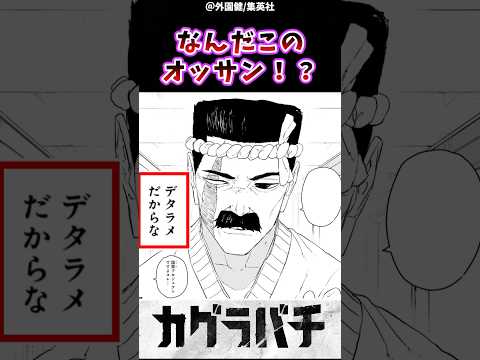
In the anime Kagurabachi, a master sushi chef claims that perfecting the art of sushi-gripping can improve one’s skill in both swordsmanship and blacksmithing. This seemingly fantastical statement actually reflects deep truths embedded in Japanese traditional craftsmanship, revealing how disparate disciplines share fundamental principles.
What Happened
A pivotal scene in Kagurabachi features an experienced sushi craftsman telling the protagonist that mastering the “grip” in sushi preparation translates directly to proficiency in sword techniques and metalworking. Rather than dismissing this as mere fantasy worldbuilding, the statement demonstrates a sophisticated understanding of how Japanese traditional arts operate at their core. The character’s credibility as a master craftsperson—portrayed with the gravitas of a “Living National Treasure”—lends weight to the claim, prompting viewers to reconsider the underlying logic.
Why It Matters
This scene exemplifies how contemporary anime can engage meaningfully with Japanese cultural heritage. The concept challenges viewers to think beyond surface-level skill acquisition and recognize that different disciplines may share universal principles. In an era where anime often treats traditional crafts as mere aesthetic backdrop, Kagurabachi positions them as the narrative’s philosophical core. The scene also reflects broader trends in recent anime that emphasize foundational mastery—from the breathing techniques in Demon Slayer to the quirk development in My Hero Academia—but grounds this theme in historically authentic Japanese artisan culture rather than pure fantasy mechanics.
Background
Japanese traditional craftsmanship operates on a principle known as “修行の転用” (transferability of training), where fundamental body awareness and technique developed in one discipline can be applied to others. Master craftspeople—particularly those recognized as Living National Treasures—are valued not merely for excelling in a single art form, but for understanding the essential principles underlying their craft and applying them across disciplines. The “grip” (握り) serves as a metaphor for this principle: it encompasses finger sensitivity, force calibration, wrist precision, postural balance, and unified mind-body awareness. These elements appear in sushi preparation, sword handling, and hammer work alike.
The anime references three foundational Japanese arts: sushi craftsmanship (a culinary tradition predating the Edo period), swordsmanship (the martial foundation of samurai culture), and blacksmithing (essential to Japanese metalwork traditions). By connecting these three through a single concept, the series demonstrates sophisticated cultural literacy.
Key Points
- The sushi master’s claim that grip mastery improves swordsmanship and blacksmithing reflects actual Japanese artisan philosophy, not arbitrary fantasy logic
- The “grip” encompasses five interconnected elements: sensory perception, force modulation, precision movement, balance maintenance, and mental-physical unity
- Master craftspeople in Japanese tradition are distinguished by their ability to recognize and apply universal principles across different disciplines
- Kagurabachi grounds this concept in three historically authentic Japanese arts rather than invented magical systems
- Viewer reception has been overwhelmingly positive, with audiences recognizing the statement’s cultural authenticity despite initial surprise
- The scene demonstrates how foundational skills—rather than specialized techniques—drive mastery across multiple fields
Comparative Analysis
Similar themes appear in other acclaimed anime, though Kagurabachi executes the concept with particular cultural specificity:
Attack on Titan emphasizes “basic body mechanics” as the foundation for all combat techniques, but frames this within a fictional military context. Haikyu!! demonstrates how fundamental receiving skills underpin all volleyball positions, grounding the concept in sports science. Demon Slayer uses breathing techniques as the universal foundation for swordplay, creating a fantasy-specific system. Kagurabachi, by contrast, directly references documented Japanese artisan practices and historical crafts, lending it greater cultural authenticity and educational value.
Perspectives
The scene operates on multiple interpretive levels. From a narrative standpoint, it establishes the sushi master as a figure of genuine wisdom rather than mere comic relief. From a cultural perspective, it validates Japanese traditional knowledge systems and positions them as worthy of serious dramatic treatment. From a pedagogical angle, it suggests to viewers that mastery in any field requires understanding foundational principles rather than accumulating specialized techniques. The character’s humility—acknowledging that his own craft connects to others—also embodies a key principle of Japanese craftsmanship: the recognition that no single art form is complete unto itself.
Online reception has been notably consistent. Social media responses initially express surprise (“What is this old man saying?”) but quickly transition to acceptance and appreciation. Viewers recognize that a character portrayed as a master craftsperson would speak with authority grounded in genuine expertise. Comments frequently reference the character’s status as a figure equivalent to a Living National Treasure, suggesting audiences intuitively understand that such figures possess knowledge transcending narrow specialization.
Insights
This scene represents a significant moment in how anime engages with Japanese cultural heritage. Rather than treating traditional crafts as exotic window dressing, Kagurabachi positions them as repositories of genuine wisdom applicable to contemporary storytelling. The principle that foundational mastery enables growth across disciplines has real pedagogical value—it suggests that deep learning in any field involves recognizing universal principles beneath surface differences.
The scene also reflects a broader cultural moment. As anime has matured as a medium, creators increasingly draw on authentic cultural knowledge rather than invented fantasy systems. This shift elevates anime from pure entertainment to a vehicle for cultural transmission. The overwhelmingly positive reception suggests audiences hunger for this kind of meaningful engagement with tradition.
The unresolved question—whether the protagonist will actually develop swordsmanship and blacksmithing skills through sushi training—becomes the narrative hook that validates the master’s claim. If the series demonstrates this progression, it transforms the scene from philosophical statement into dramatic proof, deepening the work’s cultural credibility. This approach treats Japanese artisan philosophy not as exotic flavor text but as the foundation of the story itself.