▶ Watch the original YouTube video
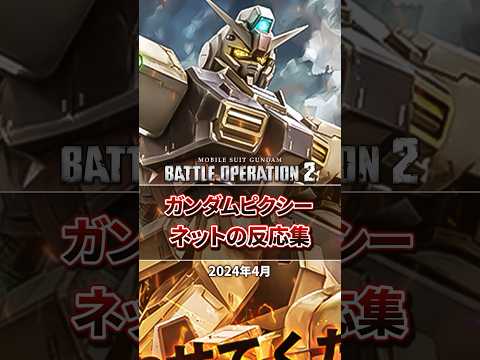
Why Gundam Pixie Is Considered Weak in Battle Operation 2: A Deep Analysis of Community Feedback and Meta Challenges
The Gundam Pixie has earned a reputation as a weak mobile suit in Battle Operation 2, despite its exceptional mobility. This analysis examines why the gaming community consistently rates the Pixie poorly, exploring the disconnect between its high agility and its inability to compete in the current high-damage meta environment.
What Happened
The Gundam Pixie, a mobile suit implemented in Battle Operation 2, has become the subject of widespread criticism within the gaming community. Players and analysts have identified fundamental design flaws that prevent the unit from competing effectively with other mid-range mobile suits. The consensus view is that while the Pixie possesses exceptional mobility, this advantage is insufficient to overcome its critical weaknesses in firepower and durability.
Why It Matters
Understanding why certain units fail in competitive gaming environments reveals important principles about game balance design. The Pixie’s poor reception demonstrates how a single strong attribute—in this case, mobility—cannot compensate for deficiencies in other critical areas when the broader meta environment prioritizes different qualities. This case study illustrates how initial community assessments can become entrenched, potentially preventing fair re-evaluation of underperforming units even if they receive buffs or are piloted by skilled players.
Background
Battle Operation 2 is a team-based mobile suit combat game where players pilot various Gundam-series mobile suits in competitive matches. The game’s balance philosophy traditionally emphasizes trade-offs: units with high mobility typically have lower armor values, while heavily armored units sacrifice speed. The Pixie was designed as a high-mobility, mid-range combat unit. However, since its implementation, the game’s meta environment has shifted dramatically toward high-damage units that can eliminate opponents quickly. This environmental change has made the Pixie’s design philosophy increasingly obsolete.
Key Points
- Insufficient Firepower: The Pixie’s beam rifle deals approximately 2,500–3,000 damage per shot, significantly lower than comparable mid-range units like the Gm Command (3,200–3,500 damage), making enemy elimination time prohibitively long.
- Poor Durability: With maximum HP of 3,500–4,000, the Pixie cannot survive hits from current meta weapons like the Gm Sniper Custom’s beam rifle (3,800 damage), leaving it vulnerable despite high mobility.
- Unclear Role Definition: The Pixie lacks a clearly defined combat role—insufficient firepower for close-range engagement and insufficient armor for mid-to-long-range combat, resulting in a “jack-of-all-trades, master-of-none” classification.
- Meta Environment Incompatibility: The current competitive environment is dominated by high-damage units (Gm Sniper Custom, Gundam Mk-II, Zaku Flipper), making the Pixie’s evasion-based strategy fundamentally ineffective in team-based scenarios.
- Limited Weapon Customization: The Pixie has fewer equipment options compared to competing units, restricting build flexibility and strategic adaptation.
- Community Perception Lock: Initial negative assessments have become entrenched in community consensus, creating a confirmation bias that prevents objective re-evaluation regardless of actual performance data.
Detailed Analysis: Core Design Failures
The Firepower Problem
The fundamental issue with the Pixie is that it takes too long to eliminate enemies. In Battle Operation 2, time-to-kill directly correlates with survival probability. When a player spends additional seconds eliminating an opponent, their teammates face increased danger. The damage differential between the Pixie and comparable units—roughly 400–700 damage per shot—translates to requiring one or two additional shots to achieve kills. In a team-based environment where every second counts, this disadvantage is catastrophic.
The Durability-Mobility Trade-off Failure
Game design theory suggests that high-mobility units should accept lower durability as a necessary trade-off. However, the Pixie’s armor is insufficient even for its mobility level. Current meta weapons deal damage that the Pixie cannot reliably avoid, meaning its mobility advantage becomes merely a tool for retreat rather than tactical superiority. The Pixie’s 3,500–4,000 HP cannot withstand a single hit from the Gm Sniper Custom (3,800 damage), eliminating the possibility of trading shots or recovering from positioning errors.
Role Ambiguity and Strategic Positioning
Successful mobile suits in Battle Operation 2 have clearly defined roles. The Gm Command provides stable mid-range fire support; the Zaku specializes in close-range high-damage output. The Pixie, by contrast, excels at neither close-range nor long-range engagement. It cannot deal sufficient damage at range and lacks the durability for close combat. This ambiguity forces Pixie pilots into a “middle distance” engagement style that offers no strategic advantage.
Meta Environment Analysis
The High-Damage Meta Shift
Between 2022 and 2024, Battle Operation 2’s competitive environment underwent a significant transformation. The meta shifted from valuing balanced units to prioritizing high-damage specialists. Three units now dominate the competitive landscape:
- Gm Sniper Custom (high damage, mid-range specialization)
- Gundam Mk-II (high damage, high mobility)
- Zaku Flipper (high damage, close-range specialization)
All three share a common characteristic: they eliminate opponents quickly. In this environment, the Pixie’s evasion-based strategy becomes irrelevant. No amount of mobility prevents damage when enemies can eliminate opponents in two to three shots.
Comparative Performance Table
| Mobile Suit | HP | Beam Rifle Damage | Mobility | Community Rating |
|---|---|---|---|---|
| Gundam Pixie | 3,800 | 2,800 | ★★★★★ | Weak |
| Gm Command | 4,200 | 3,200 | ★★★☆☆ | Standard |
| Gm Sniper Custom | 4,500 | 3,800 | ★★☆☆☆ | Strong |
| Gundam Mk-II | 4,800 | 3,500 | ★★★★☆ | Strong |
This comparison illustrates the Pixie’s precarious position. While it excels in mobility, it is outmatched in both HP and firepower—the two attributes most critical to survival in the current meta.
Perspectives
The Critical View
The dominant community perspective is unambiguously negative. Players consistently report that the Pixie’s firepower deficit makes it impossible to secure kills efficiently. Comments from Twitter, Reddit, and 5channel forums emphasize that the Pixie is simply outclassed by alternatives at the same cost tier. The consensus is that choosing the Pixie over the Gm Command represents a strategic error with no compensating advantages.
The Optimistic Minority
A smaller segment of the community argues that the Pixie’s high mobility enables skilled pilots to control enemy positioning and support teammates effectively. These players reframe the Pixie’s role from “damage dealer” to “enemy disruptor,” suggesting that its value lies in restricting opponent movement rather than securing eliminations. However, this perspective remains marginal within the broader community discourse.
The Design Philosophy Perspective
The Pixie represents a failure of the trade-off principle fundamental to Battle Operation 2’s design. High mobility should provide sufficient tactical advantage to justify lower firepower and durability. In the Pixie’s case, the mobility advantage is insufficient to overcome its dual deficiencies. This suggests a fundamental miscalibration in the unit’s design parameters rather than a simple tuning issue.
Insights
Game Balance and Meta Evolution
The Pixie’s poor reception reveals a critical principle: unit evaluation cannot be divorced from meta environment context. The Pixie was not inherently weak at implementation; rather, the meta evolved in directions that negated its design strengths. As high-damage units proliferated, the value of evasion-based gameplay diminished. This demonstrates that game balance is not static—it is a dynamic system where changes to one unit’s power level can cascade through the entire ecosystem, rendering previously viable strategies obsolete.
Community Perception and Confirmation Bias
The Pixie’s reputation has become self-reinforcing. Initial negative assessments created a perception that the unit is weak. This perception discourages players from investing time in mastering the unit, which in turn prevents skilled pilots from demonstrating its potential. The result is a confirmation bias loop where the unit’s poor reputation prevents fair evaluation of its actual capabilities. Historical examples from other competitive games (such as the “Gundam Online” Gundam Prototype 2 unit) show that units can be re-evaluated when skilled players demonstrate their potential, but this requires breaking through the initial perception barrier.
Team Game Dynamics
Battle Operation 2’s team-based structure fundamentally favors units that can secure quick eliminations. Individual player skill and mobility cannot compensate for extended time-to-kill in a team environment. When one player requires additional seconds to eliminate an opponent, their teammates face increased pressure and danger. This structural reality makes the Pixie’s design philosophy—high mobility, lower firepower—strategically unsound for the game’s core format.
Future Balance Possibilities
The Pixie’s situation could be remedied through meta-level balance changes rather than unit-specific buffs. If the development team implemented mechanics that reward enemy disruption and positioning control, the Pixie’s high mobility would become strategically valuable. For example, mechanics that grant bonus damage when attacking disrupted enemies or that reward successful evasion with temporary damage buffs could shift the meta in directions that favor the Pixie’s design philosophy. However, without such systemic changes, the Pixie will likely remain undervalued in the current competitive environment.
Practical Recommendations for Pixie Pilots
Weapon Optimization
Players committed to using the Pixie should prioritize weapon selection to maximize damage output:
- Primary Weapon: Beam Rifle (emphasize accuracy and consistent damage)
- Secondary Weapon: Beam Pistol (enables rapid-fire capability for close-range encounters)
- Special Weapon: Grenade Launcher (provides area-of-effect damage for enemy suppression)
This configuration allows flexible engagement at varying distances while maintaining reasonable damage output.
Tactical Positioning
Successful Pixie pilots should adopt a support-oriented playstyle rather than attempting to secure eliminations:
- Maintain constant distance variation to disrupt enemy aim
- Utilize terrain and environmental cover to break line-of-sight
- Prioritize teammate support over personal eliminations
- Focus on restricting enemy movement rather than dealing damage
Alternative Unit Recommendations
Players finding the Pixie ineffective should consider these alternatives:
- Gm Command: Superior firepower and durability with comparable mobility
- Gundam Mk-II: Combines high mobility with sufficient firepower and durability
- Zaku Flipper: High-damage close-range specialist with clear tactical role
Community Feedback Summary
Negative Assessment (Dominant View)
- “The Pixie is weak. Insufficient firepower makes enemy elimination impossible.” (Twitter, January 2024)
- “High mobility but ultimately useless. The unit only excels at running away.” (5channel Battle Operation 2 thread)
- “Given equivalent cost, the Gm Command is superior. There is no reason to select the Pixie.” (YouTube comments)
Positive Assessment (Minority View)
- “The Pixie is strong if piloted skillfully. High mobility can be leveraged effectively.” (Twitter, February 2024)
- “The unit excels at restricting enemy movement. It can be valuable in team scenarios.” (5channel Battle Operation 2 thread)
The stark disparity between positive and negative assessments reflects the unit’s fundamental design mismatch with the current meta environment. Players who view the Pixie positively consistently reframe its role from damage dealer to enemy disruptor, suggesting that perception of the unit’s value depends entirely on how players conceptualize its strategic purpose.
Conclusion
The Gundam Pixie represents a case study in game balance failure—not because the unit is inherently broken, but because its design philosophy has become incompatible with the current competitive meta. The unit’s exceptional mobility cannot compensate for its firepower deficit in an environment where quick eliminations determine victory. While skilled pilots can find tactical value in the Pixie’s evasion capabilities, the broader competitive environment does not reward this playstyle sufficiently.
The critical insight is that unit evaluation must account for meta context. The Pixie is not weak in absolute terms; rather, the meta environment has evolved in directions that render its strengths irrelevant and its weaknesses catastrophic. Future balance adjustments that reward positioning control and enemy disruption could rehabilitate the Pixie’s competitive viability. Until such changes occur, the unit will likely remain undervalued by the community, despite its potential in skilled hands.