▶ Watch the original YouTube video
Jujutsu Kaisen Season 4: Fans Discover Hidden Strength Details in Kashimo’s Anime Portrayal
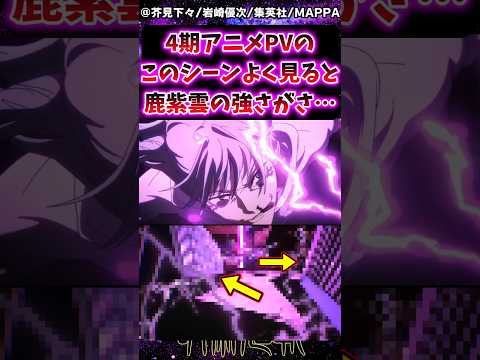
Jujutsu Kaisen Season 4 has sparked widespread fan discussion over a particular scene featuring the character Kashimo, whose subtle strength indicators are revealed through careful observation of animation details. The anime adaptation’s refined portrayal of enemy characters demonstrates how modern anime production uses visual storytelling to engage viewers in active interpretation rather than passive consumption.
What Happened
A scene from Jujutsu Kaisen Season 4 featuring the character Kashimo has generated significant online discussion among fans. The viral moment centers on the phrase “if you look closely,” suggesting that Kashimo’s overwhelming power is conveyed through subtle animation details rather than explicit exposition. Social media platforms including Twitter, YouTube, and forums have filled with fan reactions praising the anime production’s meticulous approach to character portrayal. Viewers report repeatedly rewatching the scene to identify the specific visual cues that communicate Kashimo’s formidable abilities.
Why It Matters
This phenomenon reflects a significant shift in how contemporary anime productions approach character development and audience engagement. Rather than relying on direct exposition or dramatic combat sequences, the Jujutsu Kaisen production team employs sophisticated visual language to convey character strength through movement, spatial positioning, and subtle expression work. This approach rewards attentive viewers and encourages active participation in character interpretation—a strategy that has become increasingly valued in the anime industry. The scene exemplifies how modern anime balances accessibility with narrative depth, allowing both casual viewers and dedicated fans to derive satisfaction from different levels of engagement.
Background
Jujutsu Kaisen debuted as a fall 2020 anime and has consistently demonstrated exceptional quality in animation and character design. The series is particularly noted for its nuanced portrayal of antagonistic characters, avoiding the common anime trope of reducing enemies to one-dimensional obstacles. Instead, the production team invests significant effort in developing enemy characters with distinct personalities, motivations, and visual signatures. This approach has become a defining characteristic of the series and contributes substantially to its critical acclaim. The anime industry as a whole has evolved over the past 15 years toward more sophisticated visual storytelling techniques, moving away from purely explicit power demonstrations toward subtler, more refined character expression methods. This evolution reflects growing audience sophistication and the increasing value placed on rewatchability and analytical depth in anime productions.
Key Points
- Kashimo’s strength in Jujutsu Kaisen Season 4 is conveyed through subtle animation details rather than explicit exposition
- The anime adaptation employs refined visual storytelling techniques that encourage viewer observation and interpretation
- Fan reactions demonstrate that the production team’s meticulous approach successfully communicates character power through movement, positioning, and expression
- This portrayal strategy aligns with broader industry trends toward more sophisticated enemy character development
- The scene generates significant engagement through social media discussion and repeated viewings, indicating successful audience participation
- The approach creates multiple layers of enjoyment, accessible to both casual viewers and dedicated analytical fans
Evolution of Enemy Character Portrayal in Anime
The anime industry has undergone notable transformation in how it depicts antagonistic characters over the past 15 years. Early 2010s productions, exemplified by Attack on Titan (2013), relied on direct visual dominance—showing enemies overwhelming protagonists through dramatic, explicit combat sequences. By the late 2010s, productions like Demon Slayer (2019) began incorporating more nuanced approaches, embedding character strength into subtle details of movement, facial expression, and spatial presence within scenes.
Jujutsu Kaisen represents the current frontier of this evolution. The series employs what might be termed “discovery-based” character portrayal, where viewers actively observe and interpret visual cues rather than receiving direct information. This methodology serves multiple functions: it respects audience intelligence, encourages repeated viewing and analytical discussion, and creates a sense of personal investment when viewers “discover” character details independently.
The psychological mechanism underlying this approach relates to self-efficacy—the satisfaction viewers experience when they independently recognize meaningful details. This differs fundamentally from the passive reception of explicitly stated information. By creating space for viewer discovery, the production team transforms the viewing experience into an active interpretive process, deepening audience engagement with the narrative.
Fan Reception and Social Media Response
Online platforms reveal diverse but converging fan reactions to Kashimo’s portrayal. Twitter discussions under hashtags including #JujutsuKaisen and #Kashimo predominantly feature posts highlighting the character’s subtle strength indicators, with responses confirming observations and expressing surprise at previously unnoticed details. YouTube comments emphasize appreciation for the anime adaptation’s refinement beyond the original manga, noting that animation allows for visual expression impossible in static illustration.
Dedicated fan communities on forums engage in more granular analysis, examining specific elements such as character stance, background positioning, and compositional choices. These discussions reflect the analytical depth that the production team’s approach facilitates and encourages. Notably, a minority of responses express skepticism, suggesting that not all viewers perceive or value these subtle details equally—a natural variation reflecting different viewing habits and analytical frameworks among the audience.
Production Intent and Audience Engagement Strategy
The deliberate choice to embed character strength in subtle visual details rather than explicit exposition suggests intentional production strategy. Contemporary anime creators increasingly recognize that encouraging active viewer participation generates stronger fan engagement than passive consumption. This approach aligns with broader media trends emphasizing user-generated content and community discussion.
By creating scenes that reward close observation, the production team incentivizes repeated viewing, screenshot analysis, and social media discussion. This strategy extends the content’s lifecycle and generates organic promotion through fan communities. The phrase “if you look closely” in fan discussions becomes a social signal—a marker of insider knowledge that motivates others to examine the scene themselves, perpetuating engagement cycles.
This methodology also reflects industry recognition that contemporary audiences possess sophisticated visual literacy developed through extensive media consumption. Modern viewers can interpret complex visual information without explicit verbal explanation, making subtler storytelling approaches both feasible and preferable to audiences seeking narrative depth.
Comparative Analysis: Character Portrayal Across Major Anime
Attack on Titan (2013) — Female Titan: Strength conveyed through overwhelming combat dominance and explicit visual superiority in battle sequences. Direct and immediately comprehensible approach.
Demon Slayer (2019) — Upper Moon Demons: Strength embedded in facial expressions, movement quality, and atmospheric presence. Moderately indirect but visually striking approach.
Jujutsu Kaisen (2020–present) — Kashimo: Strength conveyed through subtle movement details, spatial positioning, and compositional choices. Requires active observation and rewards analytical viewing.
This progression illustrates industry evolution toward increasingly refined visual communication. Each approach reflects its era’s audience expectations and production capabilities, with contemporary productions leveraging advanced animation techniques to achieve sophisticated visual storytelling.
Implications for Future Anime Production
Kashimo’s portrayal suggests that the character will assume significant narrative importance beyond serving as a conventional antagonist. Production teams typically invest meticulous visual development in characters destined for substantial plot involvement. The careful attention to subtle strength indicators suggests the character’s role will expand, potentially involving complex relationships with protagonists or pivotal story moments.
More broadly, Kashimo’s portrayal indicates industry direction toward increasingly sophisticated visual storytelling. As audiences develop greater analytical sophistication, productions that reward close observation and interpretation gain competitive advantage in audience engagement and critical reception. This trend will likely accelerate, with future anime increasingly employing subtle visual communication to convey character information.
Insights
The Kashimo phenomenon demonstrates that contemporary anime audiences actively seek interpretive engagement rather than passive entertainment consumption. The success of subtle character portrayal reflects evolved audience expectations and production sophistication. Jujutsu Kaisen’s approach—embedding character information in visual details requiring observation—creates multiple satisfaction layers: casual viewers enjoy compelling action sequences, while analytical viewers derive additional satisfaction from discovering subtle details.
This multi-layered approach represents optimal contemporary storytelling strategy, accommodating diverse audience types within single content. The viral discussion surrounding Kashimo’s scene illustrates how production quality and thoughtful design generate organic fan engagement, creating community discussion that extends content value beyond initial viewing.
Ultimately, the Kashimo scene exemplifies how modern anime production leverages visual medium capabilities to achieve narrative sophistication. By trusting audience intelligence and encouraging active interpretation, creators build deeper engagement than explicit exposition allows. This represents not merely stylistic preference but fundamental evolution in how sophisticated audiences expect narrative information to be communicated across visual media.