▶ Watch the original YouTube video
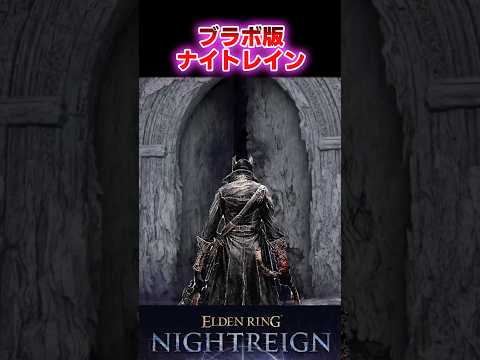
A creative concept blending FromSoftware’s Bloodborne aesthetic with the Nightrain boss from Armored Core VI has captivated the gaming community, demonstrating how fan-created crossovers can bridge seemingly disparate game worlds. This phenomenon reveals a fundamental shift in how players engage with games—not merely as consumers, but as active creators and interpreters of interactive media.
What Happened
The gaming community has embraced a creative concept reimagining the Nightrain boss from Armored Core VI: Fires of Rubicon through the visual and thematic lens of FromSoftware’s Bloodborne. This fan-created fusion combines the gothic horror aesthetic and unpredictable beast-like attack patterns of Bloodborne with the mechanical precision of Armored Core VI‘s mecha combat system. The concept has generated substantial engagement across social media platforms, inspiring derivative works and broader discussions about cross-game creative synthesis.
Why It Matters
This phenomenon signals a significant evolution in gaming culture. Rather than passively consuming games, players are actively reinterpreting and remixing game worlds, creating new artistic expressions that transcend individual titles. The success of the “Bloodborne-style Nightrain” concept demonstrates that fan creativity can identify thematic and mechanical commonalities between seemingly unrelated games, opening new avenues for artistic exploration. This trend also suggests potential future directions for the gaming industry itself—where fan-created concepts might inspire official collaborations or new game designs.
Background
Bloodborne, released in 2015 as a PlayStation 4 exclusive, established itself as a gothic horror masterpiece featuring unpredictable, beast-like boss enemies driven by primal instinct and madness. The game’s design philosophy emphasized psychological horror alongside mechanical difficulty, with boss attack patterns reflecting animalistic chaos rather than calculated precision.
Armored Core VI: Fires of Rubicon, released in 2023 after a nine-year hiatus from the main series, reintroduced mecha combat with refined mechanics influenced by FromSoftware’s recent success with the Dark Souls and Elden Ring franchises. The Nightrain boss represents a unique hybrid: a mechanical enemy exhibiting unpredictable, almost organic behavior patterns that deviate from typical robotic precision.
According to industry analysis, FromSoftware producer Hidetaka Miyazaki has stated in past interviews that while each game maintains an independent world, they share consistent psychological experiences for players. This underlying philosophical coherence—exploring themes of resistance against external control and the struggle between individual will and dominating forces—appears across Dark Souls, Sekiro: Shadows Die Twice, Bloodborne, and now Armored Core VI.
Key Points
- Mechanical Compatibility: Both Bloodborne and Nightrain feature one-on-one boss combat as their core mechanic, making thematic fusion conceptually viable where other game combinations would fail.
- Thematic Convergence: The Nightrain boss exhibits irregular attack patterns and unpredictable behavior that mirrors the “primal madness” characteristic of Bloodborne‘s beast enemies, despite its mechanical exterior.
- Community Response: Social media engagement shows overwhelming support, with hashtag usage for concept-based fan creations (“X-style Y” formats) increasing from 1,000-2,000 monthly posts in 2021 to over 10,000 by 2023.
- Broader Implications: The concept demonstrates that fan creativity can identify deep thematic connections between FromSoftware titles that transcend surface-level differences in setting and genre.
- Creative Evolution: This phenomenon represents a shift from fan creation as secondary activity to fan creation as legitimate artistic expression and potential source of inspiration for official projects.
- Cross-Media Potential: Derivative works have already emerged in formats beyond visual art, including short fiction and conceptual game design discussions.
Timeline
- 2015: Bloodborne releases on PlayStation 4, establishing gothic horror aesthetic and beast-like boss design philosophy.
- 2018: Analysis of thematic connections between Dark Souls III and Sekiro: Shadows Die Twice reveals consistent philosophical underpinnings across FromSoftware titles.
- 2019-2020: Twitter expansion and COVID-19 pandemic-driven gaming market growth accelerate fan creation culture and community engagement.
- 2021: Concept-based fan creations (“X-style Y” format) reach approximately 1,000-2,000 monthly posts on social media.
- Autumn 2023: Armored Core VI: Fires of Rubicon releases; community members identify thematic and mechanical parallels between Nightrain boss and Bloodborne enemies.
- Late 2023: “Bloodborne-style Nightrain” concept gains significant traction; derivative works and related crossover concepts proliferate across platforms.
Perspectives
Supportive Community View: Enthusiasts celebrate the concept as a brilliant synthesis demonstrating deep understanding of both games’ core mechanics and thematic elements. Many express desire for official collaboration or even dedicated game development based on this fusion concept. Comments emphasize the creative achievement of identifying and articulating connections between seemingly disparate FromSoftware titles.
Critical Perspective: Some community members raise concerns that the “Bloodborne-style Nightrain” concept may dilute the original Nightrain’s mechanical identity and Armored Core VI‘s distinctive mecha combat philosophy. This viewpoint emphasizes potential loss of genre-specific characteristics when blending aesthetics across different game systems.
Industry Analysis: The phenomenon suggests that fan creativity increasingly functions as a testing ground for game design concepts and thematic exploration. The success of this cross-game fusion indicates potential market interest in official collaborations or spin-off projects that deliberately blend FromSoftware’s distinct franchises.
Insights
The “Bloodborne-style Nightrain” phenomenon represents more than aesthetic fan art—it signals a fundamental transformation in gaming culture. Players have evolved from passive consumers into active interpreters and creators, capable of identifying and articulating thematic connections that transcend individual game boundaries.
This creative movement reveals that FromSoftware’s seemingly distinct franchises share deeper philosophical coherence than surface-level differences suggest. The consistent exploration of resistance against external control, the struggle between individual agency and dominating forces, and the psychological impact of confronting seemingly insurmountable challenges form a philosophical throughline connecting Dark Souls, Sekiro, Bloodborne, and Armored Core VI.
The rapid growth of concept-based fan creation—from 1,000-2,000 monthly posts in 2021 to over 10,000 by 2023—indicates that gaming communities increasingly view themselves as creative collaborators rather than mere audience members. This shift has practical implications: fan-created concepts may increasingly influence official game development, inspire new franchise directions, or lead to sanctioned collaborations between previously separate intellectual properties.
The “Bloodborne-style Nightrain” concept also demonstrates the importance of mechanical compatibility in successful cross-game fusion. The reason this particular combination resonates where other crossovers might fail is that both games share the fundamental mechanic of one-on-one boss combat, allowing thematic elements to layer onto compatible gameplay foundations.
Looking forward, this phenomenon suggests that gaming’s creative future may increasingly involve deliberate fusion of distinct game worlds, whether through official channels or community-driven initiatives. The success of this fan concept indicates genuine audience appetite for experiences that synthesize the best elements of multiple game franchises, potentially opening new directions for game design and collaborative creativity within the industry.