▶ Watch the original YouTube video
Why Final Fantasy XI’s Legacy Endures: Veteran Gamers Reflect on 20+ Years of Community and Connection
A video compilation of veteran gamers sharing their memories of Final Fantasy XI has sparked widespread reflection on why this 2002 MMORPG continues to captivate players two decades later. Rather than celebrating cutting-edge graphics or innovative mechanics, these testimonies reveal that FF11’s true strength lies in the human connections and shared experiences it fostered—a lesson increasingly relevant as modern MMORPGs prioritize accessibility over community bonds.
What Happened
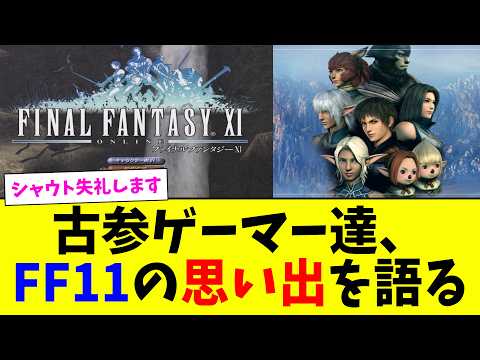
A video featuring longtime Final Fantasy XI players recounting their experiences with the game has generated significant discussion across gaming communities. The testimonies highlight how FF11 shaped players’ lives through meaningful friendships, collaborative gameplay, and shared memories spanning over two decades. Despite being released in 2002, FF11 remains actively supported with new content, and continues to attract both returning veterans and new players—an unusual achievement in the MMORPG landscape.
Why It Matters
FF11’s enduring appeal challenges conventional wisdom about what makes games successful. In an era when most MMORPGs have either shut down or experienced significant player decline, FF11 stands as a rare example of sustained engagement and community loyalty. The game demonstrates that player retention and satisfaction are not primarily driven by graphical fidelity or mechanical innovation, but rather by the strength of community bonds and the meaningful relationships players develop. This insight is particularly relevant as the gaming industry increasingly moves toward casual, solo-friendly designs that may inadvertently undermine the social foundations that made early MMORPGs transformative experiences.
Background
Final Fantasy XI launched in 2002 as Japan’s first major MMORPG, arriving when online gaming was still a novel concept for most players. The game was built on a philosophy emphasizing party play and cooperative gameplay—a deliberate design choice by producer Hiromichi Tanaka, who prioritized shared achievement over individual progression. Unlike contemporary MMORPGs that have since shifted toward solo-friendly content, FF11 has maintained its core design principle: high-level content requires coordinated group play.
The game’s longevity is remarkable. While competitors like EverQuest (1999) have declined to niche status and World of Warcraft (2004) has experienced significant player attrition, FF11 maintains an estimated player base of tens of thousands to over 100,000 active players. Square Enix continues to release expansion packs and new content, treating FF11 as a stable revenue source rather than a legacy title awaiting shutdown.
Key Points
- Community Over Content: Veterans emphasize that FF11’s greatest asset is the lasting friendships and guild relationships formed during gameplay, many of which persist 20+ years later.
- Mandatory Cooperation: FF11’s design requires party play for meaningful progression, forcing players to build relationships rather than enabling isolated advancement.
- Time as Investment: Leveling required hundreds of hours of play, but veterans describe this time not as wasted but as meaningful investment in both personal growth and community bonds.
- Intergenerational Appeal: New players increasingly include children of original FF11 players, suggesting the game has become a multi-generational shared experience.
- Stability and Trust: FF11’s player base consists of economically stable, mature individuals with high subscription retention rates, providing sustainable revenue for continued operation.
- Resistance to Casualization: Unlike modern MMORPGs, FF11 has resisted pressure to add solo-friendly content, maintaining its original design philosophy as a competitive advantage.
Timeline
- 1999–2001: EverQuest and Ultima Online establish the MMORPG genre internationally, but fail to gain mainstream traction in Japan.
- 2002: Final Fantasy XI launches in Japan; industry skepticism is widespread, but the game becomes a cultural phenomenon.
- 2003–2008: FF11’s golden era; the game defines online gaming for an entire generation of Japanese players and establishes the template for party-based MMORPG design.
- 2004: World of Warcraft launches, introducing more casual-friendly MMORPG design that becomes the industry standard.
- 2010–Present: Final Fantasy XIV launches and becomes highly successful, yet FF11 continues to operate and maintain its dedicated player base.
- 2020s: FF11 experiences a resurgence as veteran players return and new players discover the game through word-of-mouth and family connections.
Perspectives
The Veteran Player Perspective: Long-time FF11 players view the game as inseparable from their personal identity and life history. They describe their in-game experiences—grinding levels in specific dungeons, defeating challenging bosses, and supporting guild members—as formative life events. For many, FF11 represents their first experience with meaningful online relationships and collaborative achievement. The game’s slow progression and mandatory group play, which modern design would consider flaws, are instead valued as features that deepened social bonds.
The Industry Perspective: From a business standpoint, FF11 represents an anomaly. Most MMORPGs follow a predictable lifecycle: rapid growth, peak popularity, gradual decline, and eventual shutdown. FF11 defies this pattern through conservative design choices—maintaining subscription fees, avoiding aggressive monetization, and preserving the core gameplay loop that attracted original players. Square Enix’s willingness to support a “legacy” title with ongoing content updates suggests confidence in the game’s sustainable profitability.
The Modern MMORPG Perspective: Contemporary MMORPGs like FFXIV, Guild Wars 2, and New World have adopted accessibility-first design, allowing solo progression and reducing mandatory group content. This approach attracts larger initial player bases but appears to sacrifice the deep community bonds that FF11 fostered. The trade-off between accessibility and community cohesion remains unresolved in modern MMORPG design.
Critical Perspective: Some observers argue that FF11’s appeal is primarily nostalgic rather than substantive. They point to outdated graphics, slower gameplay pacing, and higher barriers to entry compared to modern alternatives. From this view, FF11’s continued operation reflects sunk-cost fallacy among veteran players rather than genuine superiority in design.
Comparative Analysis
When evaluated across key MMORPG dimensions, FF11 demonstrates distinct strengths and weaknesses compared to major competitors:
Community Cohesion: FF11 ranks exceptionally high due to mandatory party play and stable, mature player demographics. WoW has experienced declining community satisfaction, while FFXIV maintains moderate cohesion through optional group content.
Time Value: FF11 players perceive their playtime as meaningful investment in both progression and relationships. Modern MMORPGs emphasize efficiency, reducing the perceived value of extended play sessions.
Long-term Viability: FF11’s subscription model and conservative design ensure predictable revenue. Newer games rely on battle passes and cosmetic monetization, creating pressure for constant content cycles.
New Player Accessibility: FF11 has higher barriers to entry, requiring significant time investment before meaningful progression. Modern MMORPGs prioritize rapid advancement and immediate gratification.
Insights
The enduring appeal of Final Fantasy XI reveals a fundamental truth about online gaming that the industry has largely overlooked: players value meaningful social connection more than technological advancement. While modern game design has optimized for accessibility, retention metrics, and monetization efficiency, FF11 succeeded by prioritizing the conditions under which genuine human relationships could flourish.
The game’s design forced cooperation—not as a feature, but as a requirement. Players could not progress without coordinating with others, without learning to trust teammates, without investing time in shared goals. This friction, which contemporary design would eliminate, became the foundation for lasting bonds. Twenty years later, veterans do not reminisce about FF11’s combat mechanics or quest design; they remember the people they played with and the challenges they overcame together.
FF11 also demonstrates that “legacy” does not necessarily mean “declining.” The game has successfully attracted new players while retaining veterans, suggesting that authentic community and stable design can compete with cutting-edge technology and aggressive marketing. This challenges the industry assumption that players inevitably migrate to the newest, most visually impressive titles.
However, FF11’s model may not be replicable. The game benefited from launching at a unique historical moment when online gaming was novel and players were willing to invest hundreds of hours in a single game. Modern players, fragmented across numerous platforms and titles, may lack the conditions necessary to develop equivalent bonds. FF11’s success may represent a specific convergence of technological, cultural, and temporal factors rather than a universally applicable design principle.
Ultimately, FF11’s legacy suggests that the most valuable aspect of any game is not what it contains, but what it enables—the relationships, memories, and shared experiences that players carry with them long after they stop playing. In an industry increasingly focused on engagement metrics and monetization optimization, FF11 reminds us that the deepest player loyalty stems from games that facilitate genuine human connection.