▶ Watch the original YouTube video
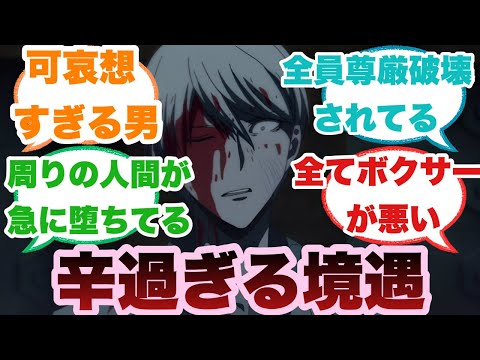
Why Danganronpa’s Kyosuke Munakata Gets Beaten Down: A 15-Year Fan Analysis
Kyosuke Munakata, a central character in the Danganronpa series, undergoes a dramatic character arc that transforms him from a despised figure into a sympathetic character. This analysis explores how the revelation of his hidden identity and the pressures of social repression drive his descent into despair, making him one of anime’s most complex and tragic characters.
- What Happened
- Why It Matters
- Background
- Key Points
- Character Analysis: The Structure of Munakata’s Tragedy
- The Power Paradox: Redefining “Ultimate” Strength
- Social Repression and Personal Choice
- The Paradox of Being “Beaten Down”
- Alternate Narratives: Stage Adaptations and Redemption
- Internet Reception and Meme Culture
- Beyond Hope and Despair: A Synthesis
- Insights
What Happened
Kyosuke Munakata, the student council president of Hope’s Peak Academy in Danganronpa, initially appears as an arrogant boxer who shows no remorse for his actions. However, the anime’s “Despair Arc” reveals a devastating truth: Munakata cooperated with the forces of despair to conceal his sexual orientation. This revelation fundamentally reframes his character from a villain to a tragic figure trapped by social pressure and personal shame.
Why It Matters
Munakata’s character arc represents a sophisticated exploration of how social repression can drive individuals toward destructive choices. His story raises important questions about the nature of hope and despair, personal agency, and the consequences of hiding one’s true self. For anime fans and critics, his character demonstrates how modern anime can tackle complex psychological and social themes through character development and narrative subversion.
Background
The Danganronpa series, which began in 2012, has become known for its shocking plot twists and complex character development. Munakata’s role as student council president initially positions him as a figure of authority and hope. His status as the “Ultimate Boxer” suggests exceptional physical prowess, yet his actual combat capabilities appear surprisingly ordinary compared to other talented students in the series. This disconnect between expectation and reality becomes central to understanding his character.
Key Points
- Initial Reception: Munakata is introduced as an unrepentant boxer, earning negative evaluations from viewers for his apparent lack of remorse.
- The Revelation: The Despair Arc reveals that Munakata concealed his sexual orientation and cooperated with despair to hide this truth, transforming viewer perception entirely.
- Power Paradox: Despite being the Ultimate Boxer, Munakata’s combat abilities appear surprisingly conventional compared to other talented students, suggesting his true strength lies in political influence rather than physical prowess.
- Symbolic Role: As student council president, Munakata embodies institutional power and the concept of hope, making his fall into despair particularly impactful.
- Alternate Versions: In stage adaptations, Munakata survives and plays a more active role, contrasting sharply with his fate in the anime.
- Internet Culture: Munakata became a meme character in online communities, with viewers retrospectively noting hints about his hidden identity that were present from the beginning.
Character Analysis: The Structure of Munakata’s Tragedy
Munakata’s character design operates on multiple levels. On the surface, he functions as the arrogant boxer who commits murder without apparent guilt. However, the Despair Arc reveals a more nuanced reality: his apparent indifference masks profound internal conflict. The revelation that he concealed his sexual orientation and ultimately cooperated with despair to maintain that concealment creates a character whose “weakness” is actually a form of moral complexity.
This narrative technique mirrors similar character reversals in other acclaimed anime, such as Shirley’s death in Code Geass or the revelation of Eren’s true nature in Attack on Titan. However, Munakata’s case is distinctive because it centers on contemporary social repression as the driving force behind his moral compromise. The choice to hide his identity rather than face social consequences leads directly to catastrophic outcomes, raising uncomfortable questions about the cost of conformity.
The Power Paradox: Redefining “Ultimate” Strength
A critical observation about Munakata is the apparent mismatch between his title as the Ultimate Boxer and his actual combat effectiveness. Unlike other talented students whose abilities are portrayed as superhuman or exceptional, Munakata’s fighting prowess appears remarkably ordinary. This is likely intentional on the part of the creators.
Munakata’s true strength derives not from physical combat but from institutional power. As student council president, he wields influence and authority that transcend physical capability. This represents a different approach to character design than protagonists like Lelouch from Code Geass or Eren from Attack on Titan, who combine physical and political power. Munakata’s emphasis on political influence over physical dominance creates a more psychologically complex character whose vulnerability is paradoxically tied to his position of authority.
Social Repression and Personal Choice
The core of Munakata’s tragedy lies in how the anime frames his decision to cooperate with despair. Rather than presenting this as a simple moral failing, the narrative suggests it as a response to impossible social pressure. His choice to hide his identity and, ultimately, to align with despair represents a commentary on how social repression can distort individual agency and lead to destructive outcomes.
This thematic approach reflects broader shifts in anime storytelling during the 2010s, where the revelation of socially marginalized identities became a vehicle for exploring psychological complexity rather than simple shock value. Munakata’s story suggests that his cooperation with despair is not an act of villainy but a desperate response to unbearable social pressure.
The Paradox of Being “Beaten Down”
Throughout the narrative, Munakata is consistently portrayed as being “beaten down”—by viewers initially, by other characters subsequently, and ultimately by the abstract force of despair itself. However, this repeated victimization serves a specific narrative function. Unlike typical supporting characters who are beaten down by external forces, Munakata participates in his own destruction through his choices.
This self-destructive pattern aligns Munakata with other psychologically complex anime protagonists like Shinji Ikari from Neon Genesis Evangelion or Shirou Emiya from Fate/stay night. These characters are defined not by external oppression but by internal conflict and the consequences of their own decisions. Munakata’s repeated “beating” becomes a manifestation of his internal struggle rather than mere victimization.
Alternate Narratives: Stage Adaptations and Redemption
Notably, stage adaptations of Danganronpa present a markedly different version of Munakata’s story. In these versions, he survives and actively participates in events, suggesting that his tragic fate in the anime is not inevitable but rather a consequence of the specific narrative constraints of the anime format.
This distinction highlights how different media formats impose different narrative possibilities. The anime’s “Despair Arc” framework creates a deterministic structure where Munakata’s fall becomes inevitable. Stage productions, with greater narrative flexibility, offer him the possibility of redemption and active agency. This suggests that Munakata’s tragedy is not inherent to his character but rather a product of the narrative structure in which he is placed.
Internet Reception and Meme Culture
Online communities quickly transformed Munakata into a meme character, with viewers retrospectively noting that hints about his hidden identity were present from the beginning. Comments like “We were joking about him being gay before it was actually true” reflect the internet’s ability to detect narrative patterns and foreshadowing.
However, beneath the meme status lies genuine affection and sympathy. Viewers express appreciation for Munakata’s humanity and complexity, with comments noting that despite his flaws, they want him to survive. This suggests that the internet’s mockery of Munakata coexists with authentic emotional investment in his character and fate.
Beyond Hope and Despair: A Synthesis
Fundamentally, Munakata represents a character who transcends the binary opposition of hope and despair that defines the Danganronpa series. He is neither purely hopeful nor purely despairing but rather embodies a simultaneous existence of both states. He maintains hope for his own survival while cooperating with despair to conceal his identity. This contradiction is not a flaw in his characterization but rather its essential feature.
This complexity makes Munakata a significant achievement in anime character design. He demonstrates how modern anime can explore psychological depth through narrative subversion and thematic sophistication rather than simple plot mechanics.
Insights
Kyosuke Munakata’s character arc represents a sophisticated exploration of how social repression, personal agency, and narrative structure intersect to create tragedy. His repeated “beating down” is not a sign of weakness but rather a manifestation of his humanity and moral complexity. The transformation of viewer perception from contempt to sympathy demonstrates anime’s capacity to challenge audience expectations and explore nuanced psychological themes.
Munakata’s story raises enduring questions about the cost of conformity, the nature of hope and despair, and the consequences of hiding one’s true self. His character suggests that tragedy often results not from external villainy but from the impossible choices individuals face when confronted with social pressure and personal shame. As anime continues to explore contemporary social issues, characters like Munakata demonstrate the medium’s growing sophistication in addressing complex psychological and social themes through character-driven narratives.