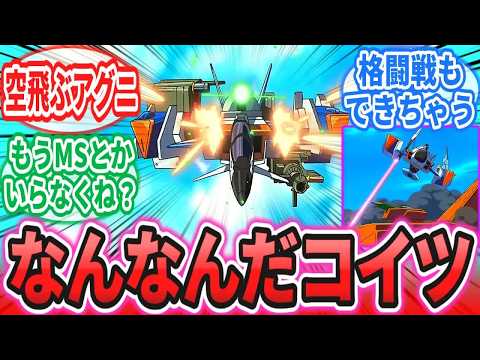
▶ Watch the original YouTube video
Sky Grasper: How a Support Mobile Suit Became the Unexpected Star of Gundam SEED FREEDOM
The Sky Grasper, a support fighter in Mobile Suit Gundam SEED FREEDOM, has sparked widespread online discussion for its unexpectedly powerful performance in combat. Rather than serving as a mere auxiliary unit, the machine—piloted by Tolle Koenig—demonstrates tactical independence and combat effectiveness that challenges traditional expectations of support-class mobile suits in the Gundam franchise.
What Happened
Following the theatrical release of Mobile Suit Gundam SEED FREEDOM, the Sky Grasper has become a focal point of fan discussion across social media platforms including Twitter, 5channel, and YouTube. Viewers were surprised by the machine’s combat capabilities and the depth of its pilot’s character development. The hashtag #SkyGrasper trended rapidly, with audiences expressing astonishment at how a support-class mobile suit could demonstrate such significant battlefield impact. Comments ranged from emotional praise—”I cried watching the Sky Grasper’s performance”—to analytical discussions questioning whether the machine should still be classified as a support unit at all.
Why It Matters
The Sky Grasper represents a significant evolution in how the Gundam franchise conceptualizes support units. Traditionally, support mobile suits in Gundam have been either non-combat vessels like the White Base or the Archangel, or secondary combat units with limited narrative prominence. The Sky Grasper breaks this pattern by combining genuine combat capability with a support role while maintaining story-critical importance. This shift reflects a broader thematic change in modern Gundam storytelling—moving away from the “protagonist machine as ultimate power” trope toward a narrative emphasizing collaborative strength and role fulfillment. The machine’s success with audiences suggests that contemporary viewers resonate with characters and units that maximize their assigned roles rather than transcending them entirely.
Background
The Gundam franchise has a 40-year history of depicting support units as essential to combat operations. The original Mobile Suit Gundam featured the White Base as a command and supply vessel; Gundam SEED introduced the Archangel as a more combat-capable support ship; and Gundam 00 presented the Seraphim Gundam as a high-performance support mobile suit. Each iteration increased the combat capability of support units while maintaining their auxiliary function. The Sky Grasper continues this progression under director Kazuyuki Fukuda, known for his philosophy that “battles featuring only a single protagonist machine are tedious.” This directorial approach emphasizes multi-unit coordination and distributed tactical responsibility. The machine’s design philosophy represents a conceptual shift from “ship-based support” to “mobile suit-based support,” bringing tactical support functions directly into the combat zone.
Key Points
- Unexpected Combat Effectiveness: The Sky Grasper demonstrated combat performance that exceeded viewer expectations for a support-class mobile suit, with independent tactical decision-making and enemy engagement capabilities.
- Pilot Character Development: Tolle Koenig’s psychological portrayal transcends typical support pilot characterization, showing a character who accepts his role while maximizing his potential within it—a nuanced emotional arc rarely seen in anime.
- Tactical Positioning: The machine’s support functions are integrated into active combat scenarios rather than relegated to rear-area operations, making it essential to protagonist success in multiple critical scenes.
- Series Tradition Recontextualized: The Sky Grasper reestablishes the importance of support systems seen in the original Gundam and SEED eras, but through a modern lens emphasizing direct combat participation.
- Expectation Management Effect: Much of the machine’s perceived strength derives from viewers’ low initial expectations for support units being dramatically exceeded, creating a psychological “delight” response that amplifies perceived capability.
- Thematic Alignment with Modern Values: The machine embodies contemporary values emphasizing role fulfillment and maximizing potential within assigned constraints, resonating with younger audiences.
Comparative Analysis: Support Units Across Gundam
Original Mobile Suit Gundam (White Base): Non-combat support vessel with minimal firepower; story-critical importance extremely high; represents the foundational concept of support infrastructure.
Gundam SEED (Archangel): Enhanced support ship with moderate combat capability; maintains story-critical role through command and tactical support functions.
Gundam 00 (Seraphim Gundam): High-performance mobile suit with support capabilities; positioned as a primary protagonist unit rather than auxiliary support.
SEED FREEDOM (Sky Grasper): Combat-capable support fighter with extremely high tactical importance; establishes a new category of “combat support mobile suit” that maintains support function while demonstrating independent combat effectiveness.
Perspectives
Positive Reception: The majority of online responses praised the Sky Grasper’s performance and Tolle Koenig’s character development. Viewers appreciated the machine’s role in enabling protagonist success and saw it as a refreshing departure from protagonist-centric storytelling. Many noted that the film’s narrative would be fundamentally compromised without the Sky Grasper’s contributions.
Critical Perspective: Some viewers expressed concern that the support unit overshadowed protagonist mobile suits, arguing that the Sky Grasper exceeded its intended role boundaries. These critics maintained that support machines should remain subordinate to primary units, viewing the Sky Grasper’s prominence as a narrative imbalance.
Analytical Interpretation: Discussion forums on 5channel and YouTube featured technical analyses suggesting that the Sky Grasper represents a deliberate directorial choice to address “protagonist mobile suit power creep”—a trend where successive protagonist units become increasingly overpowered. By elevating support unit capability and importance, the film’s creators may be intentionally rebalancing the franchise’s power dynamics.
Thematic Significance
The Sky Grasper’s prominence addresses a fundamental challenge facing modern Gundam storytelling: how to maintain narrative tension when protagonist units possess overwhelming power. Rather than further escalating protagonist machine specifications, SEED FREEDOM distributes tactical importance across multiple units, with the Sky Grasper serving as a crucial force multiplier. This approach echoes the original Gundam’s narrative structure, where the RX-78 Gundam’s effectiveness depended entirely on the White Base’s support infrastructure.
Tolle Koenig’s character arc demonstrates psychological complexity rarely afforded to support characters. He maintains clear self-awareness of his role while exercising independent judgment within that role—a sophisticated emotional state reflecting contemporary values emphasizing personal fulfillment through role optimization rather than role transcendence. This characterization parallels similar arcs in other anime, such as Sei Asuno from Gundam Build Fighters Try, who maximizes his effectiveness as a builder rather than pursuing pilot status.
The machine’s design philosophy—emphasizing collaborative strength over individual dominance—suggests a potential direction for future Gundam narratives. Rather than depicting warfare as determined by the most powerful individual unit, SEED FREEDOM presents combat as a function of coordinated capability distribution. This thematic shift aligns with contemporary social values emphasizing teamwork, role specialization, and collective achievement.
Insights
The Sky Grasper’s unexpected prominence reveals several important truths about contemporary anime audiences and storytelling. First, viewers respond powerfully to expectation-defying performances—the machine’s perceived strength derives partly from exceeding low initial expectations rather than from absolute capability metrics. Second, audiences increasingly value character depth in supporting roles, with Tolle Koenig’s psychological complexity generating as much discussion as the machine’s combat performance. Third, the franchise appears to be consciously addressing protagonist power inflation by redistributing narrative importance across multiple units and characters.
The Sky Grasper’s success suggests that future Gundam productions may prioritize collaborative storytelling over protagonist-centric narratives. This represents not a departure from Gundam tradition but rather a return to foundational principles established in the original series, where no single unit could achieve victory without comprehensive support infrastructure. The machine embodies a modern reinterpretation of this principle, bringing support functions directly into combat scenarios while maintaining their essential role.
Director Kazuyuki Fukuda’s consistent emphasis on multi-unit coordination appears validated by audience response. The Sky Grasper demonstrates that support units can generate compelling narrative and emotional resonance when designed with genuine tactical importance and paired with psychologically complex pilots. This success may influence future Gundam productions to invest more substantially in support unit characterization and capability.
Ultimately, the Sky Grasper addresses a question central to modern Gundam storytelling: “What does it mean to fulfill one’s role excellently?” Rather than pursuing transcendence or exceptional status, the machine and its pilot demonstrate that maximum effectiveness within assigned constraints can be equally compelling and narratively significant. This message resonates particularly with younger audiences navigating a world where specialization and role optimization often matter more than individual exceptionalism.