▶ Watch the original YouTube video
What Is the Greatest Super Robot Wars Game? A 15-Year Fan Analysis of Online Debates
After 15 years and 30+ games in the Super Robot Wars franchise, fans continue debating which entry represents the series’ pinnacle. This analysis examines online discussions, compares candidate titles, and explores whether a single “masterpiece” can truly be defined for a franchise built on merging incompatible anime universes.
What Happened
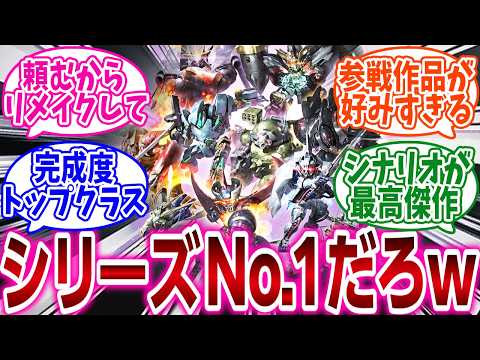
The Super Robot Wars community remains divided over which game in the long-running tactical RPG series deserves the title of greatest entry. Online platforms including Twitter, Reddit, and 4chan host ongoing debates between advocates of Super Robot Wars α, Super Robot Wars Z, Super Robot Wars α Gaiden, and other notable entries. These discussions reveal generational preferences and fundamentally different criteria for evaluating what makes a Super Robot Wars game exceptional.
Why It Matters
Super Robot Wars represents a unique achievement in gaming: the integration of 30+ anime franchises—each with distinct worlds, characters, and narratives—into a single coherent story. Understanding which games best accomplish this feat reveals how game design evolves, how licensing challenges shape creative decisions, and what players value most in cross-media collaborations. The debate also reflects how different player generations experience the same franchise through different lenses.
Background
The Super Robot Wars franchise began in 1991 and has evolved across multiple hardware generations, from PlayStation 1 and 2 to mobile platforms. The series’ core premise—merging incompatible anime properties into unified narratives—required unprecedented coordination between developers and licensing holders. The franchise’s history can be divided into three eras: the experimental period (1991–early 2000s), the golden age (mid-to-late 2000s on PS2), and the diversification era (2010s onward with mobile and specialized releases).
A veteran player who began with Super Robot Wars Z in 2008 and has since played over 30 entries in the series offers a unique perspective on how the franchise evolved. This player’s 15-year journey provides insight into how each game tackled the central challenge: making 30+ worlds feel like one story.
Key Points
- Top candidates for “greatest”: Super Robot Wars α (PS1) pioneered story integration; Super Robot Wars Z (PS2) scaled the concept to 30+ franchises; Super Robot Wars α Gaiden perfected mechanical difficulty and strategic depth; Super Robot Wars: Second Z refined narrative coherence; and Super Robot Wars OG demonstrated freedom without anime licensing constraints.
- Generational divide: Players who started with Z tend to favor it; earlier players prefer α. This reflects how each game defined the series for its generation.
- Evaluation criteria matter: Story unity, character consistency, game balance, player choice variety, and cultural relevance all factor into assessments—but different players weight these differently.
- No single masterpiece exists: Each game tackled different challenges in different eras. α pioneered integration; Z scaled it; α Gaiden perfected mechanics. Comparing them requires acknowledging their distinct historical contexts.
- Online discussions lack definitional rigor: Fan debates rarely define what “greatest” means. Players implicitly use “most personally memorable” as their criterion, explaining why consensus remains elusive.
- The franchise’s unique position: Unlike Super Smash Bros. (which unifies mechanics) or Monster Hunter collaborations (which add content), Super Robot Wars attempts narrative-level integration of incompatible worlds—a more ambitious undertaking.
Timeline
- 2008: Player first encounters the series via Super Robot Wars Z, beginning 15+ years of engagement.
- 2009: Super Robot Wars Z released; player begins recognizing complexity in managing 30+ franchises within one story.
- 2010: Player experiences Super Robot Wars α for the first time, discovering its pioneering narrative innovations despite its age.
- 2011: Player tackles Super Robot Wars α Gaiden, encountering its notably high difficulty and strategic depth.
- 2010s onward: Series enters diversification era with mobile games and specialized releases; emphasis shifts from quantity of franchises to quality of storytelling.
Perspectives
The Z Advocates: These players emphasize scale and ambition. Super Robot Wars Z brought together 30+ anime franchises at a technical and narrative scale previously thought impossible. For them, the game’s ability to make Tengen Toppa Gurren Lagann, Mobile Suit Gundam SEED, and Mazinkaiser coexist convincingly represents the series’ peak achievement.
The α Purists: These players, often longer-term fans, credit Super Robot Wars α with solving the fundamental problem: how to integrate multiple anime worlds at the narrative level rather than merely as roster additions. They view α as the true masterpiece because it established the template all successors followed.
The α Gaiden Specialists: A smaller but vocal group argues that mechanical perfection matters most. Super Robot Wars α Gaiden presents each stage as a strategic puzzle, forcing players to think deeply about unit deployment and positioning. For them, this represents the series’ highest achievement in game design.
The OG Advocates: These players value creative freedom. By using original characters instead of licensed anime properties, Super Robot Wars OG series demonstrate what becomes possible without licensing constraints. Character depth reaches new heights when writers aren’t bound by source material fidelity.
The Contextualists: A growing perspective holds that each game should be evaluated within its historical moment. Z’s achievement in 2009 was different from α’s in 1999. Comparing them directly misses the point—each represents the best possible execution given its era’s technical and licensing constraints.
Insights
After analyzing 15 years of fan experience and online discourse, a clear pattern emerges: no single “greatest” Super Robot Wars game exists. This is not a limitation but a feature of the franchise itself.
Super Robot Wars succeeds because it serves different audiences differently. A player who loves Gundam experiences the series one way; a Mazinger fan experiences it another. The franchise’s genius lies in accommodating these divergent preferences while maintaining narrative coherence. Each entry represents a different solution to the core challenge: making incompatible worlds feel unified.
The online debate’s lack of consensus reflects this reality. When fans argue about the “greatest” entry, they’re implicitly asking: “Which game best delivered the experience I personally wanted?” This is why generational divides persist—players who discovered the series through Z have different foundational expectations than those who started with α.
What remains constant across all entries is the franchise’s commitment to taking its central premise seriously. Unlike collaborations that simply add external content, Super Robot Wars genuinely attempts to weave incompatible narratives into coherent wholes. This ambition, executed with varying degrees of success across different eras, defines the series more than any single masterpiece.
For newcomers, Super Robot Wars Z offers the clearest entry point—its scale and accessibility balance complexity with approachability. For veterans seeking deeper mechanical challenges, Super Robot Wars α Gaiden provides unmatched strategic depth. For those curious about what the series becomes without anime licensing constraints, Super Robot Wars OG series reveal new possibilities.
The real masterpiece may be the franchise itself—a 30+ year commitment to solving an impossible problem: making us believe that Gundam, Mazinger, Evangelion, and Gurren Lagann belong in the same story. Each game’s answer to that question deserves recognition, even if no single answer can claim supremacy.