▶ Watch the original YouTube video
Attack on Titan: Analyzing Eren’s Iconic Smirk and Fan Reactions to the Anime Expo Illustration
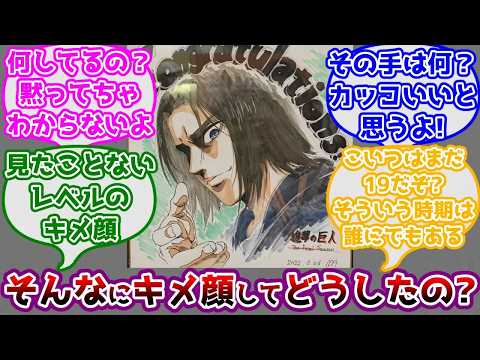
A controversial illustration of Eren Yeager unveiled at Anime Expo 2022 has sparked intense debate among Attack on Titan fans. Created by official animator Akita Busa, the image depicts the protagonist with an uncharacteristic confident smirk that diverges sharply from his emotional, rage-driven expressions throughout the series. The illustration has divided the fanbase between those praising its aesthetic appeal and those questioning whether it aligns with Eren’s established character.
What Happened
At Anime Expo 2022, an illustration of Eren Yeager was publicly revealed featuring the protagonist with a composed, confident facial expression—a stark departure from the angry, anguished expressions that have defined his character throughout Attack on Titan. The artwork was created by Akita Busa, a professional animator involved in the production of the Final Season. This official illustration has generated significant online discussion, with viewers expressing polarized reactions ranging from admiration to skepticism about whether this expression authentically represents Eren’s character arc.
Why It Matters
Character expression is fundamental to anime storytelling, serving as a visual language that communicates a character’s psychological state and development. Eren’s expression has been deliberately consistent throughout most of the series—raw, emotional, and transparent. This new illustration raises important questions about character consistency, narrative evolution, and how visual representation shapes audience perception. For long-time fans invested in Eren’s journey, this image represents either a natural progression of his character or a fundamental misrepresentation of his essence. The debate reflects broader discussions within anime fandom about how characters should evolve and whether departures from established visual identity serve the narrative or undermine it.
Background
Attack on Titan debuted in 2013, introducing Eren Yeager as a protagonist consumed by rage and grief following his mother’s death. Throughout the first three seasons, Eren’s facial expressions remained relatively simple and emotionally direct—his face reflected his immediate feelings without artifice or calculation. As the narrative progressed into the Final Season, Eren’s character underwent significant transformation, gaining knowledge of the world’s secrets and developing complex strategic thinking. This evolution suggested his expressions might become more nuanced and controlled. The Anime Expo illustration appears to visualize this potential transformation, presenting an Eren who has achieved psychological maturity and certainty in his convictions. Akita Busa’s involvement as an official production staff member indicates this is not fan speculation but an intentional creative choice by the series’ production team.
Key Points
- The illustration was created by Akita Busa, an official animator involved in Attack on Titan’s Final Season production, making it an official work rather than fan art
- Viewer reactions split sharply between positive responses praising the aesthetic appeal (“incredibly handsome,” “cool in an unsettling way”) and negative responses questioning character authenticity (“doesn’t feel like Eren,” “out of character”)
- The expression represents a significant departure from Eren’s established visual identity, characterized by emotional transparency and rage rather than composed confidence
- Some viewers interpreted the illustration as resembling a live-action actor or cosplayer, suggesting it represents an entirely different interpretation of the character
- The illustration may symbolize Eren’s psychological evolution from an emotionally reactive youth to a strategically decisive young adult
- The image raises questions about character consistency versus character growth, and whether visual departures serve narrative purposes or contradict established characterization
Timeline
- 2013: Attack on Titan anime debuts; Eren established as emotionally transparent, rage-driven protagonist
- 2013-2019: Seasons 1-3 air; Eren’s expressions remain consistently simple and emotionally direct
- 2020-2023: Final Season airs; Eren’s character undergoes significant transformation and psychological complexity increases
- 2022: Anime Expo features official illustration of Eren with uncharacteristic composed expression
Perspectives
Supportive Interpretation: The illustration represents Eren’s natural character evolution. As he gains knowledge and makes critical decisions, his psychological maturity should manifest visually. The composed expression reflects a character who has transcended reactive emotionalism and achieved certainty in his convictions. This interpretation views the image as a legitimate progression of his character arc, showing what Eren becomes when he fully embraces his role and responsibilities.
Critical Interpretation: The illustration contradicts Eren’s established character identity. His emotional transparency and inability to mask his feelings have been core to his appeal and characterization. A composed, calculated expression suggests a character fundamentally different from the Eren audiences have followed. This perspective questions whether the illustration represents authentic character development or a misguided aesthetic choice that undermines his established persona.
Analytical Interpretation: The illustration functions as a psychological marker rather than a definitive character state. It visualizes a potential version of Eren—what he might become under certain circumstances. Rather than representing his actual appearance in the narrative, it explores the psychological space between his current self and his ultimate destiny. This reading treats the image as thematic rather than literal.
Insights
The Anime Expo illustration reveals fundamental tensions in how anime audiences engage with character development. Viewers form strong cognitive frameworks around characters based on consistent visual representation. When official sources introduce expressions that violate these established patterns, it creates cognitive dissonance—not necessarily negative, but disorienting. The illustration demonstrates that character growth in anime is not merely narrative but visual and psychological. Eren’s potential composed expression suggests a character who has moved beyond emotional reactivity into calculated decision-making, which aligns with the Final Season’s narrative direction but challenges the visual identity that made him recognizable.
The production team’s deliberate choice to present this image at an official event suggests intentional communication about Eren’s character trajectory. Rather than a casual artistic exercise, the illustration appears designed to prepare audiences for a more complex, less emotionally transparent version of the protagonist. This reflects broader trends in contemporary anime toward depicting characters with greater psychological depth and internal contradiction—characters who contain multitudes rather than embodying single emotional states.
The debate itself is valuable, indicating that Attack on Titan has successfully created a character whose visual identity carries significant meaning. The intensity of fan reaction underscores how thoroughly the series has established Eren’s character through consistent expression. Whether the illustration ultimately proves prophetic or contradictory, it has accomplished its apparent goal: prompting audiences to reconsider what they think they know about Eren Yeager and to anticipate further evolution in his character presentation.