▶ Watch the original YouTube video
Dr. Stone defies the typical science manga formula by prioritizing character design and animation quality alongside scientific content. An analysis of the series reveals how deliberate visual storytelling transforms female characters into narrative powerhouses that rival the show’s educational elements.
What Happened
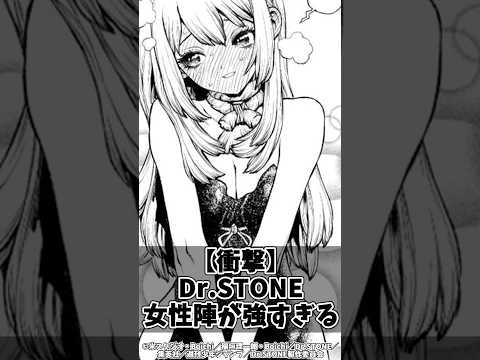
Dr. Stone, an anime adaptation that premiered in July 2019, has garnered significant attention for its exceptional character animation—particularly the visual presentation of female characters like Kohaku, Nikki, and Ruri. Rather than treating animation as a secondary element in a science-focused narrative, the series elevates visual character design to equal importance with scientific content and plot development. This approach has generated widespread viewer commentary on social media, with audiences noting that the animation quality of female characters is so compelling it rivals the show’s scientific exposition.
Why It Matters
Dr. Stone represents a paradigm shift in how science-focused anime are produced and received. Traditionally, educational or knowledge-driven manga adaptations prioritize clarity and information accuracy over visual aesthetics. By demonstrating that animation quality and scientific storytelling can coexist as equally valued elements, Dr. Stone establishes a new template for the genre. This approach has broader implications for anime production, suggesting that viewer engagement increasingly depends on multidimensional character appeal rather than content type alone. The series’ commercial and critical success validates this strategy, influencing how future science-themed adaptations will be developed.
Background
Dr. Stone is a manga series adapted into anime that combines scientific knowledge with character-driven storytelling. The narrative follows protagonists navigating a post-apocalyptic world using scientific principles. The anime adaptation, which began airing in 2019, has been noted for its consistently high animation standards across multiple seasons. The series features an ensemble cast, with female characters receiving particular visual emphasis through detailed character design, expressive facial animation, and refined anatomical rendering that evolves throughout the narrative.
Key Points
- Dr. Stone prioritizes character animation quality equally with scientific content, breaking the traditional science manga formula that subordinates visual design to educational material
- Female characters like Kohaku demonstrate visual “strength” through refined proportions, expressive facial work, and consistent character design that reinforces their narrative importance
- Character animation evolves intentionally throughout the series—notably with Nikki, whose visual presentation becomes progressively refined, paralleling her character development
- Male characters, including Stanley, receive equivalent visual treatment with deliberate emphasis on physical presence and aesthetic appeal, indicating a studio-wide commitment to character-driven animation
- The animation strategy functions as a narrative tool itself, with visual character strength creating comedic and dramatic impact that supplements plot development
- This approach redefines the science manga genre from “knowledge-first” to “knowledge-plus-character-appeal,” establishing a new industry standard for educational anime
Animation Strategy and Character Design
The core of Dr. Stone’s visual approach lies in treating character animation as narrative substance rather than decoration. Kohaku, positioned as the series’ strongest character, receives animation that visually reinforces her narrative role. Her character design—including proportions, line work, and facial expression variation—is rendered with precision that commands viewer attention even during exposition-heavy scenes. This is not merely “making characters attractive,” but rather using visual language to communicate character strength and importance.
Nikki’s visual evolution demonstrates intentional design progression. Early episodes present her with simpler linework and limited expression variation. As the narrative progresses, her animation becomes increasingly sophisticated, with expanded facial expressions and refined anatomical detail. This evolution mirrors her character arc, creating visual-narrative synchronization where animation quality becomes a form of character development storytelling.
The treatment of male characters like Stanley indicates this is not a gender-specific strategy but a studio-wide philosophy. Stanley’s visual presentation emphasizes physical presence and aesthetic appeal through body language, facial detail, and compositional prominence. This suggests Dr. Stone’s production team views character appeal as a fundamental narrative tool applicable across the entire cast.
Comparative Context
Compared to other acclaimed anime series, Dr. Stone’s approach is distinctive. Attack on Titan, despite its scientific worldbuilding, does not align visual character strength with narrative importance—protagonist Eren is narratively powerful but visually presented as an ordinary youth. Jujutsu Kaisen and Demon Slayer prioritize character appeal but within action-focused frameworks where visual impact serves combat sequences. Dr. Stone uniquely applies character animation quality to dialogue scenes, exposition, and character interaction, making visual design functional across all narrative contexts rather than reserved for action moments.
Viewer Reception and Industry Implications
Social media responses reveal viewers consciously registering animation quality as a primary viewing experience. Comments like “the animation is so strong I can’t focus on the science” and “the female characters are visually overpowering” indicate audiences recognize the deliberate animation strategy. Notably, these observations are predominantly positive—viewers frame strong animation as an asset rather than distraction. This reception validates the production approach and suggests industry-wide recognition that animation quality directly impacts viewer satisfaction and engagement.
The success of Dr. Stone’s animation-first strategy has implications for future science-focused anime development. Studios may increasingly recognize that educational content requires compelling visual presentation to maintain audience engagement, particularly as viewer expectations for animation quality continue rising across all genres.
Insights
Dr. Stone demonstrates that science manga anime need not choose between educational rigor and visual appeal—these elements can function synergistically. The series redefines the genre by establishing that character animation quality is not supplementary to scientific content but rather essential to it. Strong character animation creates emotional investment that sustains viewer attention through exposition-heavy sequences, while scientific content provides narrative substance that justifies the visual investment.
The broader implication is that modern anime production increasingly recognizes visual storytelling as equal to narrative storytelling. Animation becomes a language through which character importance, emotional state, and narrative weight are communicated. Dr. Stone’s success suggests future anime will continue integrating animation quality as a primary narrative tool rather than treating it as cosmetic enhancement.
This approach also reflects evolving audience expectations. Contemporary viewers engage with anime across multiple dimensions simultaneously—they process plot, character development, visual design, and thematic content in parallel. Productions that excel across all dimensions, rather than specializing in one area, achieve greater cultural impact and commercial success. Dr. Stone’s balanced approach to scientific content, character narrative, and animation quality represents the emerging standard for ambitious anime production.