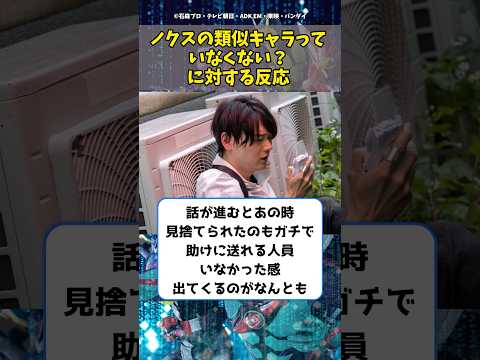
▶ Watch the original YouTube video
Kamen Rider Noxus: Analyzing the Contradiction Between Luigi Character Evaluation and Inconsistent Actions
A deep analysis of Kamen Rider Noxus reveals a character whose internal consistency masks a fundamentally problematic nature. Despite receiving “Luigi character” praise for being a fresh take, Noxus embodies one of the series’ most morally troubling protagonists, whose handsome appearance and former police background create cognitive dissonance with his ruthless behavior.
- What Happened
- Why It Matters
- Background
- Key Points
- Character Comparison Analysis
- The Core Contradiction: Appearance and Expectation
- The Consistency Paradox
- Redemption Through Backstory: Limited Effectiveness
- Industry Trends: The Rise of Gray-Zone Characters
- Fan Reception: Multiple Interpretive Communities
- Viewing Recommendations: Understanding Noxus
- Broader Implications: Character Design and Moral Philosophy
- Conclusion: The Value of Uncomfortable Characters
What Happened
Kamen Rider Noxus has sparked significant debate within the fan community regarding his character design and moral standing. The character, introduced in 2023, presents a paradox: while praised for narrative consistency and originality, he simultaneously functions as an increasingly frustrating presence throughout the series. His actions—particularly his willingness to eliminate obstacles, including allies—contradict his background as a former police officer, creating a fundamental tension that defines his character arc.
Why It Matters
Noxus represents a significant shift in how the Kamen Rider franchise approaches morally complex characters. Rather than presenting clear-cut heroes and villains, the series increasingly explores “gray zone” characters who challenge viewers’ moral judgment. Understanding Noxus’s appeal and rejection simultaneously reveals how modern audiences engage with nuanced character writing and what constitutes acceptable character motivation in long-form storytelling.
Background
The Kamen Rider franchise has traditionally relied on clear moral distinctions between heroes and antagonists. However, recent series have increasingly featured characters whose motivations blur these lines. Noxus emerges from this trend as a character with sympathetic backstory elements—specifically, being abandoned during his police career—yet whose present actions remain consistently problematic. His former police background creates an additional layer of contradiction, as law enforcement training typically emphasizes restraint and justice, values Noxus explicitly rejects.
Key Points
- The “Luigi Character” Misconception: Noxus is not simply a fresh character type but rather one of the series’ most morally corrupt riders, whose consistency of character masks genuine malevolence
- Appearance-Based Cognitive Dissonance: His handsome appearance and initial presentation as a righteous fighter amplify viewer discomfort when his true nature emerges, creating stronger rejection than similar characters with less appealing aesthetics would generate
- The Police Background Paradox: His former police status creates significant narrative friction with his “eliminate obstacles” philosophy, contradicting fundamental law enforcement principles and intensifying audience alienation
- Consistency as a Problem: Rather than endearing him to viewers, Noxus’s unwavering commitment to his personal vendetta demonstrates how logical consistency can paradoxically increase a character’s perceived toxicity
- Limited Redemption Through Backstory: Revelations about why he was abandoned fail to justify his escalating actions, suggesting the narrative acknowledges his behavior remains fundamentally unjustifiable despite sympathetic context
- Absence of Growth: Unlike comparable characters from previous series, Noxus shows no signs of development or self-reflection, maintaining his destructive stance throughout
Character Comparison Analysis
| Character | Series | Background | Consistency Level | Audience Reception | Core Issue |
|---|---|---|---|---|---|
| Noxus | Kamen Rider Noxus | Former police, abandoned past | Extremely High | Frustrating Presence | Personal vendetta disguised as principle |
| Ryosuke Fuwa | Kamen Rider Zero-One | Police background, strong justice sense | Moderate | Complex but Favorable | Occasional excess, but demonstrates growth |
| Ryugo Banjo | Kamen Rider Build | Ordinary youth, values friendship | Extremely High | Highly Favorable | Minimal issues |
| Tetsuo Daishinji | Kamen Rider Saber | Middle-aged educator | High | Divided Opinion | Authoritarian teaching methods |
The Core Contradiction: Appearance and Expectation
A critical factor in Noxus’s negative reception involves the mismatch between his physical presentation and his actions. Characters with conventionally unattractive or menacing appearances often receive more tolerance for morally questionable behavior—audiences unconsciously accept such actions as consistent with their visual presentation. Noxus, however, presents as an idealized hero figure, creating cognitive dissonance when he advocates violence against allies. This expectation gap generates stronger negative reactions than similar behavior from less conventionally attractive characters would produce.
The police background amplifies this effect. Law enforcement professionals are culturally coded as representatives of order and justice. When a former officer explicitly rejects these principles—declaring “eliminate anyone who interferes”—the contradiction strikes viewers as particularly egregious. This represents not merely character inconsistency but a fundamental betrayal of institutional values.
The Consistency Paradox
Noxus’s unwavering commitment to his personal mission creates an unusual situation: his consistency, typically a virtue in character writing, becomes a liability. While characters like Ryugo Banjo earn audience affection through consistent adherence to universal values (protecting friends), Noxus’s consistency serves purely selfish ends. His personal grievance—being abandoned during his police career—provides understandable motivation but fails to justify escalating destructive actions.
The character demonstrates logical coherence: every action flows rationally from his core motivation. Yet this very coherence highlights the fundamental problem: his motivation itself is insufficient to justify his methods. The narrative appears to acknowledge this through later revelations that his abandonment resulted from genuine resource constraints rather than deliberate betrayal, yet Noxus continues unchanged. This suggests intentional design: the character serves as a cautionary example of how personal trauma, when unprocessed, justifies increasingly destructive behavior.
Redemption Through Backstory: Limited Effectiveness
As the narrative progresses, viewers learn that Noxus’s abandonment stemmed from legitimate operational limitations rather than malicious intent. This revelation represents a standard narrative technique: providing sympathetic context for antagonistic behavior. However, in Noxus’s case, this context fails to rehabilitate his character in audience perception. The reason lies in his refusal to integrate this information into personal growth. Unlike characters who receive similar revelations and subsequently evolve, Noxus weaponizes his backstory, using it to justify continued destructive actions.
This pattern—accepting sympathetic context while refusing behavioral change—represents a psychologically dangerous pattern. It demonstrates how trauma can become a tool for self-justification rather than a catalyst for healing.
Industry Trends: The Rise of Gray-Zone Characters
Noxus exists within a broader franchise trend toward morally ambiguous characters. Since 2018’s Kamen Rider Build, the series has progressively featured characters existing in ethical gray zones rather than clear moral categories. This shift reflects evolving audience sophistication: modern viewers reject simplistic good-versus-evil narratives in favor of complex moral landscapes.
Noxus represents the frontier of this trend. He is neither villain nor hero but a character whose sympathetic elements coexist with genuinely harmful behavior. The franchise appears to pose a deliberate question: does understanding a character’s motivation obligate moral acceptance of their actions? Noxus’s consistent rejection of this equation suggests the intended answer is no.
Fan Reception: Multiple Interpretive Communities
Online discourse reveals three distinct audience segments regarding Noxus. The first acknowledges his character quality while rejecting his behavior—”well-written but frustrating.” The second expresses simple dislike without deeper analysis. The third, most sophisticated group, articulates the core tension: “I understand his perspective, but I cannot accept his actions.”
This third group most accurately reflects apparent narrative intent. The character’s design seems specifically calibrated to generate this response: sufficient sympathetic elements to enable understanding, but insufficient justification for acceptance. This represents intentional moral complexity rather than accidental character failure.
Viewing Recommendations: Understanding Noxus
For viewers encountering Noxus for the first time, several analytical approaches enhance understanding. First, note his police background during initial episodes—this context proves essential for interpreting subsequent actions. Second, observe the emotional temperature of his threats; his “eliminate obstacles” declarations carry cold certainty rather than passionate anger, revealing calculated ruthlessness beneath surface motivation.
Third, compare Noxus directly with Ryosuke Fuwa from Kamen Rider Zero-One. Both share police backgrounds and strong justice orientations, yet diverge dramatically in character arc and audience reception. This comparison illuminates how character choices determine narrative trajectory.
Finally, reassess Noxus’s character after learning about his abandonment. This knowledge should complicate rather than resolve your judgment, creating productive tension between empathy and accountability.
Broader Implications: Character Design and Moral Philosophy
Noxus’s character raises fundamental questions about narrative responsibility. When a series creates a sympathetic character whose actions remain unjustifiable, what message does this communicate? The apparent answer: understanding does not equal acceptance, and personal suffering does not authorize harm to others.
This represents a significant statement in contemporary storytelling. As social discourse increasingly emphasizes trauma-informed perspectives, Noxus serves as a counterpoint: acknowledging trauma while maintaining moral accountability for resulting actions. The character embodies a mature ethical position: compassion for suffering need not extend to acceptance of destructive behavior.
Conclusion: The Value of Uncomfortable Characters
Noxus ultimately provides significant value to the Kamen Rider franchise precisely through his capacity to generate discomfort. He forces viewers to confront the distinction between understanding and acceptance, between sympathy and justification. In an era of increasingly complex moral landscapes, such characters serve essential functions.
The franchise’s willingness to maintain Noxus’s problematic nature throughout his arc—rather than engineering redemption—suggests confidence in audience sophistication. Modern viewers can simultaneously appreciate character quality and reject character behavior, holding both judgments in productive tension.
As the Kamen Rider series continues exploring gray-zone characters, Noxus establishes an important precedent: complexity need not resolve into redemption, and consistency need not generate affection. Sometimes the most valuable characters are those who challenge us most directly.