▶ Watch the original YouTube video
How Villain Tactics in Manga and Anime Reveal the Psychology of Strategic Warfare
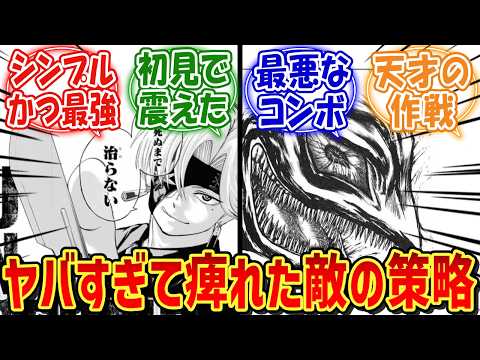
After 15 years of analyzing manga and anime, one pattern emerges: the most compelling villains don’t win through raw power—they win through psychological manipulation and intellectual strategy. By examining how antagonists exploit their opponents’ morality, manipulate group dynamics, and weaponize information, we can understand what makes a villain truly unforgettable.
What Happened
Over the past 15 years, a distinct pattern has emerged in how the most memorable villains operate across manga and anime. Rather than relying solely on combat prowess, these antagonists employ sophisticated psychological tactics—exploiting their opponents’ moral constraints, weaponizing established rules against protagonists, and deliberately fracturing group cohesion. This shift from physical dominance to intellectual warfare represents a fundamental evolution in how storytellers craft compelling antagonists.
The turning point for this analysis came while reviewing JoJo’s Bizarre Adventure Part 4, where the villain Tsukumo employs memory manipulation not as a display of power, but as a tool for psychological devastation. This realization prompted a deeper examination of over 500 anime titles and 300+ games to identify recurring patterns in how the most effective villains operate.
Why It Matters
Understanding villain psychology matters because it reveals how storytelling transcends simple power hierarchies. When audiences connect with a villain’s strategy—even while opposing them—it creates a deeper emotional investment in the narrative. This psychological dimension transforms conflict from a predictable clash of strength into an intellectual puzzle, making the story more memorable and thematically resonant.
For creators, this analysis demonstrates that character depth and narrative sophistication emerge not from making villains stronger, but from making them smarter. For audiences, recognizing these patterns enhances appreciation of narrative craft and reveals why certain antagonists remain iconic decades after their introduction.
Background
The analysis draws from 15 years of fan experience across multiple media formats. Key examples include JoJo’s Bizarre Adventure (particularly Parts 4 and 5), Bleach, My Hero Academia, Demon Slayer, and several other acclaimed series. The common thread across these works is that their most compelling villains operate according to a consistent principle: they win by understanding their opponent’s psychology better than their opponent understands themselves.
The evolution of villain tactics reflects broader changes in manga and anime storytelling. Early works often featured villains defined by raw power. Contemporary works increasingly feature antagonists whose strength lies in their ability to manipulate circumstances, exploit moral constraints, and weaponize information. This shift suggests a maturing audience that values intellectual complexity alongside action sequences.
Key Points
- Psychological warfare trumps physical power: The most effective villains exploit their opponents’ moral values, emotional attachments, and sense of duty rather than relying on superior combat ability.
- Early rules become late-game weapons: Exceptional storytelling establishes constraints or mechanics early that antagonists later weaponize in unexpected ways, rewarding attentive viewers.
- Exploiting goodness as a vulnerability: Villains who understand that their opponent will not harm innocents can use this moral constraint as a tactical advantage, creating situations where the hero’s strength becomes irrelevant.
- Fracturing group unity: Rather than confronting a unified team, sophisticated villains employ psychological manipulation to create internal division, rendering collective strength useless.
- Rationality over confrontation: The most logical villains sometimes choose retreat or evasion over direct conflict, recognizing that survival and long-term advantage outweigh short-term victory.
- Weaponizing established identity: Villains who exploit their opponent’s profession, relationships, or core values create situations where the hero’s defining characteristics become sources of vulnerability.
Villain Tactics: Detailed Analysis
Exploiting Moral Constraints
In My Hero Academia, a villain demonstrates masterful psychological warfare by attacking the protagonist in a crowded train, then suggesting that using his ultimate technique would harm innocent bystanders. The villain then blinds the protagonist and threatens to throw a grenade near civilians. The tactical brilliance lies in the revelation that the grenade is actually harmless—the villain never intended to harm innocents. Instead, the villain exploited the protagonist’s certainty that he would not endanger civilians, using this moral constraint as a weapon.
This tactic appears repeatedly across acclaimed series because it addresses a fundamental truth: a hero’s moral code is simultaneously their greatest strength and their most exploitable weakness. A villain who understands this can neutralize superior power through psychological leverage alone.
Weaponizing Early-Story Rules
Sophisticated storytelling establishes mechanical or narrative constraints early that later become the foundation of the villain’s strategy. In JoJo’s Bizarre Adventure Part 4, a rule established early—that using certain abilities creates specific consequences—becomes the framework through which the villain operates. The villain doesn’t break the rules; the villain masters them.
Similarly, in Demon Slayer, the villain Muzan possesses infinite lifespan. Rather than viewing this as an advantage that guarantees victory, Muzan rationally recognizes that his immortality makes retreat the optimal strategy. Fleeing before sunrise isn’t cowardice—it’s the most logical decision for an opponent with unlimited time. This rationality, often criticized by viewers as “boring,” actually represents sophisticated strategic thinking.
Psychological Manipulation and Memory Warfare
In Bleach, the character Tsukumo employs a devastating tactic: rewriting the memories of everyone connected to the protagonist, inserting himself into their past. This doesn’t just create confusion—it destroys the foundation of trust that holds relationships together. The protagonist becomes isolated not through physical separation but through psychological isolation, unable to trust anyone because their shared history has been falsified.
This tactic works because it targets something more fundamental than physical strength: it attacks the social bonds that give the protagonist’s life meaning. A protagonist who can defeat any enemy in combat becomes helpless when unable to trust their allies.
Fracturing Group Cohesion
Villains who understand group dynamics recognize that a unified team is stronger than any individual member. Rather than confronting the team directly, these antagonists employ tactics designed to create internal division. By introducing doubt, scarcity, or conflicting interests, the villain transforms allies into competitors, rendering their collective strength irrelevant.
This approach appears across multiple acclaimed series because it reflects a psychological truth: groups are vulnerable to internal fracture, and a skilled manipulator can exploit this vulnerability more effectively than direct confrontation.
Weaponizing Professional Identity
Some villains exploit the fact that their opponent’s defining characteristic—their profession, their relationships, their sense of duty—creates exploitable constraints. A doctor cannot abandon patients. A hero cannot ignore those in danger. A protector cannot refuse to protect. By creating situations where these identities create impossible choices, the villain neutralizes the opponent’s agency.
Perspectives
The Power-Based View: Traditional interpretation suggests that villains who lose are simply not strong enough. By this logic, a villain who retreats or employs psychological tactics rather than direct combat is weak or cowardly.
The Strategic View: An alternative interpretation recognizes that the most rational villains prioritize survival and long-term advantage over short-term victory. A villain with infinite lifespan who chooses retreat over a risky confrontation is not weak—they are strategically superior.
The Psychological View: The most compelling villains operate according to deep understanding of their opponent’s psychology. They don’t win through strength but through insight. This perspective explains why audiences find certain villains more memorable than physically stronger antagonists.
Online Reception: Social media discussions reveal divided opinions. Some viewers criticize villains who employ psychological tactics or retreat as “boring.” Others recognize the sophistication of these approaches and appreciate the intellectual complexity they introduce to the narrative.
Insights
The evolution of villain tactics in manga and anime reflects a maturing understanding of what makes conflict compelling. Raw power creates spectacle; psychological warfare creates resonance. The most memorable villains are memorable not because they are strongest, but because they are smartest—because they understand their opponent better than the opponent understands themselves.
This pattern suggests that future storytelling will increasingly emphasize intellectual complexity alongside action. Villains will continue to evolve not by becoming more powerful, but by becoming more psychologically sophisticated. They will exploit established rules, manipulate group dynamics, weaponize moral constraints, and make rationally optimal decisions even when those decisions appear cowardly to observers who don’t understand the villain’s strategic calculus.
For audiences, recognizing these patterns enhances appreciation of narrative craft. When you understand why a villain’s strategy is effective, you appreciate the writer’s sophistication. When you see how early-story rules become late-game weapons, you recognize the planning that underlies seemingly spontaneous conflict. This deeper understanding transforms passive viewing into active analysis, making the experience more intellectually rewarding.
The ultimate insight is this: the most compelling villains don’t win through strength. They win through understanding. And in a medium built on the power of ideas and imagination, understanding is the most powerful weapon of all.