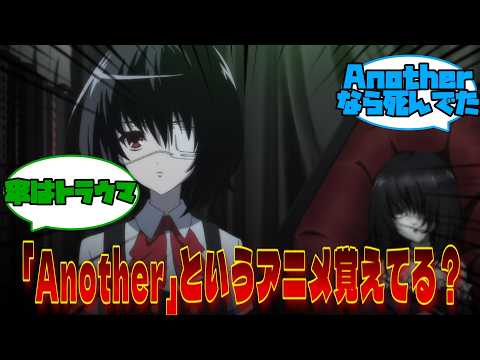
▶ Watch the original YouTube video
Why ‘Another’ Remains a Timeless Horror Masterpiece 12 Years Later
A decade after its 2012 premiere, the psychological horror anime ‘Another’ continues to captivate audiences with its unforgettable depiction of inexplicable death and inescapable dread. Recent viral discussions about the series reveal that its impact has not diminished—instead, the work’s universal themes of human vulnerability and existential fear prove increasingly relevant across generations.
What Happened
Online communities recently resurged in discussing ‘Another,’ the 2012 psychological horror anime adaptation of Yoko Ogawa’s 2009 novel. A viral video compilation of viewer reactions on YouTube sparked renewed interest in the series, with audiences sharing their memories of the show’s shocking character deaths and psychological tension. The resurgence demonstrates that despite over a decade passing since its original broadcast, the series maintains a powerful grip on viewers’ memories and continues to attract new audiences who experience the same visceral impact as original viewers.
Why It Matters
‘Another’ represents a significant milestone in anime horror storytelling. The series successfully translated Japanese literary horror traditions into visual media, establishing a template for psychological horror that transcends generational and technological boundaries. In an era where visual effects and animation quality have advanced dramatically, ‘Another’ proves that atmospheric tension and narrative structure matter more than technical spectacle. The series’ enduring relevance challenges assumptions about how quickly entertainment media becomes dated, suggesting that works addressing fundamental human anxieties—mortality, helplessness, and the fragility of everyday safety—maintain their power indefinitely.
Background
‘Another’ premiered in January 2012, adapted from Yoko Ogawa’s 2009 novel of the same name. The series was produced by P.I.C.S., a relatively small studio at the time, yet the production achieved critical acclaim within the industry. The anime aired during a transformative period for Japanese society—following the 2008 financial crisis and preceding the 2011 Tōhoku earthquake and tsunami. This historical context shaped the work’s thematic preoccupation with death and societal anxiety.
The original novel had already established a devoted readership before the anime adaptation, but the visual medium amplified the story’s psychological impact through cinematography, sound design, and color palette manipulation. The anime’s success demonstrated that smaller studios could produce high-quality, thematically sophisticated works that rivaled larger production houses.
Key Points
- ‘Another’ employs psychological horror rather than jump-scares, building dread through atmospheric tension and the accumulation of unsettling details within a familiar school setting
- The series’ single-protagonist narrative perspective allows viewers to experience the mystery’s unfolding alongside the main character, intensifying emotional investment
- Viewer reactions across social media reveal that specific death scenes and story developments remain vividly memorable more than 12 years after broadcast
- New audiences continue discovering the series and experiencing comparable shock and fear, indicating the work’s horror transcends temporal trends
- The anime’s success stemmed from meticulous production choices: restrained color palettes, unsettling camera work, and persistent anxiety-inducing background music
- The series explores philosophical questions about mortality and human vulnerability, elevating it beyond conventional horror entertainment
Timeline
- 2006: ‘Higurashi: When They Cry’ establishes psychological horror as a viable anime genre, influencing subsequent works
- 2009: Yoko Ogawa publishes the ‘Another’ novel, gaining recognition among literary audiences
- 2012: P.I.C.S. releases the ‘Another’ anime adaptation, achieving critical acclaim and cultural impact
- 2012-2024: The series maintains consistent viewership and continues attracting new audiences through streaming platforms
- 2024: Viral video compilations of viewer reactions renew public discussion about the series’ lasting impact
Perspectives
Nostalgic Appreciation: Original viewers express emotional resonance with the series, describing specific scenes as unforgettable and acknowledging the work’s formative impact on their anime consumption. Comments emphasize how the series’ fear factor prevented some viewers from watching during late-night hours, indicating genuine psychological impact.
Contemporary Relevance: New viewers encountering ‘Another’ in 2024 report experiencing comparable shock and fear despite modern animation’s technical superiority. This observation suggests that narrative structure and thematic depth supersede visual fidelity in determining horror effectiveness.
Critical Analysis: Some viewers note that the series’ second half accelerates its pacing, potentially sacrificing narrative nuance for plot resolution. This perspective acknowledges the work’s strengths while identifying areas where extended development could have enhanced the overall experience.
Comparative Context: When compared to contemporaneous horror anime like ‘Higurashi: When They Cry’ (2006), ‘Another’ distinguishes itself through its focus on inexplicable, inescapable death rather than human-driven psychological manipulation. Where ‘Higurashi’ explores human madness and agency, ‘Another’ emphasizes helplessness against supernatural forces beyond individual control.
Production and Creative Intent
The production team’s approach to ‘Another’ prioritized translating the novel’s psychological horror into visual language. Key creative decisions included employing muted color palettes to establish visual unease, utilizing camera angles that emphasize isolation and vulnerability, and maintaining persistent background music that prevents viewer comfort. These choices collectively create an atmosphere of sustained tension rather than relying on momentary shock.
The decision to adapt the material through a single protagonist’s perspective—rather than the multi-perspective approach used in ‘Higurashi’—ensures viewers experience the mystery’s revelation alongside the main character. This structural choice intensifies emotional engagement and prevents narrative distance.
Thematic Significance: Death and Human Vulnerability
‘Another’ addresses mortality not as a dramatic plot device but as an inescapable reality woven into daily existence. The series reflects traditional Japanese philosophical perspectives on death as a natural transition rather than an absolute ending. This thematic approach resonates across cultural boundaries because it addresses fundamental human anxieties about mortality and powerlessness.
The series’ preoccupation with death gains additional significance when contextualized within early 2010s Japanese society. The novel’s 2009 publication and anime’s 2012 premiere coincided with periods of significant social anxiety—economic instability and natural disaster. The work’s exploration of inexplicable tragedy and collective helplessness reflected contemporary societal concerns.
Comparative Analysis with Related Works
‘Another’ occupies a distinct position within psychological horror anime. ‘Higurashi: When They Cry’ (2006) employs multiple narrative perspectives to construct mystery, emphasizing human agency and psychological breakdown. ‘Another’ maintains singular perspective and emphasizes supernatural inevitability. Where ‘Higurashi’ asks “what drives humans to madness,” ‘Another’ asks “how do humans confront forces beyond their control.”
The distinction proves crucial: ‘Higurashi’ characters possess agency within their circumstances, while ‘Another’ characters face genuinely inescapable supernatural forces. This fundamental difference creates distinct emotional experiences—’Higurashi’ generates horror through understanding human capacity for cruelty, while ‘Another’ generates horror through recognizing human helplessness.
Recommendations for Viewers
For first-time viewers, approaching ‘Another’ as a mystery to solve rather than pure horror enhances engagement. Each episode introduces new information that gradually constructs the narrative’s complete picture. Attention to character psychology—how each person confronts the supernatural curse—reveals thematic depth beyond surface-level scares.
Experiencing both the anime and original novel provides comprehensive understanding, as the source material contains psychological nuances absent from the adaptation. Pairing ‘Another’ with related works like ‘Higurashi: When They Cry’ and ‘Steins;Gate’ contextualizes its position within anime’s broader exploration of human vulnerability against inexplicable forces.
Insights
‘Another’ demonstrates that horror’s effectiveness depends not on technical sophistication but on thematic resonance and narrative structure. The series’ continued impact across generational and technological divides suggests that works addressing universal human anxieties—mortality, helplessness, and the fragility of safety—transcend temporal limitations.
The viral resurgence of ‘Another’ discussions reflects broader patterns in entertainment consumption: audiences increasingly value works offering psychological and philosophical depth over spectacle. In an era of advanced visual effects, ‘Another’ proves that restraint, atmosphere, and narrative precision create more lasting impressions than technical display.
The series also illustrates how smaller production studios can achieve cultural significance through focused creative vision. P.I.C.S.’ success with ‘Another’ challenged industry assumptions about production scale and resource requirements, demonstrating that artistic intent and technical competence matter more than budget size.
Looking forward, the ‘Another’ universe contains unexplored narrative potential. Spin-off works exploring supernatural curses in different institutional settings or deeper historical investigations into the curse’s origins could expand the franchise while maintaining thematic coherence. The enduring audience interest suggests substantial appetite for additional stories within this world.
Ultimately, ‘Another’ represents a watershed moment in anime horror—a work that successfully elevated the genre through psychological sophistication and thematic depth. Twelve years after its premiere, the series remains essential viewing for understanding how visual media can translate literary horror traditions while creating something distinctly cinematic. For both original viewers and new audiences, ‘Another’ continues to deliver the experience it promised: a profound confrontation with human vulnerability and the inescapable reality of death.