▶ Watch the original YouTube video
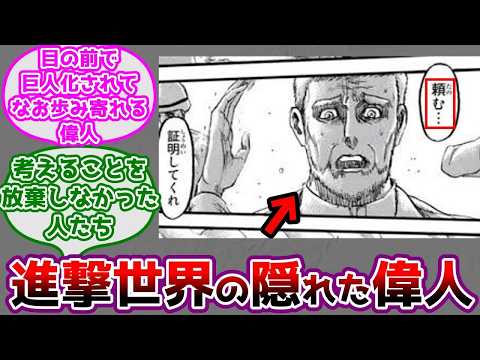
Attack on Titan’s Hidden Great: Why Commander Muller Deserves Recognition
After 15 years of anime analysis, one critic argues that Commander Muller—a seemingly minor military figure in Attack on Titan—is actually a hidden protagonist whose unwavering rationality and consistent judgment fundamentally shape the series’ narrative. Despite minimal screen time and internal monologue, Muller’s decisions prove pivotal to the story’s direction, making him one of anime’s most underappreciated characters.
- What Happened
- Why It Matters
- Background
- Key Points
- Comparative Analysis: Muller Among Anime Authority Figures
- Muller’s Strategic Decisions and Their Consequences
- Thematic Significance: Rationality vs. Emotion
- Fan Reception and Interpretation
- Production and Voice Acting
- Insights and Future Implications
- Recommendations for Deeper Understanding
- Conclusion
What Happened
Commander Muller is a military leader in Attack on Titan who operates within the Survey Corps hierarchy, making critical decisions about resource allocation, personnel management, and the handling of key figures like Eren Yeager. While other characters like Eren and Levi drive the narrative through emotional intensity and combat prowess, Muller operates in the background, making calculated, rational decisions that repeatedly prove consequential to the story’s trajectory. His most significant action involves placing Eren under military control—a decision that appears to stem from logical assessment rather than personal ambition.
Why It Matters
Muller represents a rare archetype in anime: the completely rational authority figure whose internal motivations remain deliberately obscured. Unlike comparable characters in other series—such as Guilford from Code Geass or Colonel Mustang from Fullmetal Alchemist—Muller never reveals his emotional drivers or personal ambitions. This absence of internal monologue forces viewers to interpret his actions purely through outcomes and logic, creating a character whose true nature remains ambiguous even after the series concludes. Understanding Muller’s role illuminates Attack on Titan’s central thematic tension between emotional impulse (Eren) and rational restraint (Muller), making him essential to comprehending the work’s philosophical framework.
Background
Attack on Titan began airing in April 2013 and concluded in 2023, spanning production across multiple studios: WIT Studio (seasons 1-3) and MAPPA (final season). Throughout this decade-long production, Muller’s characterization remained remarkably consistent despite studio changes, suggesting strong authorial intent from creator Hajime Isayama. Voice actor Jun Fukuyama has stated in interviews that he deliberately portrayed Muller with emotional restraint, emphasizing the suppression of internal conflict to create an impression of pure logic. This consistent approach across production teams indicates that Muller’s inscrutability is intentional rather than accidental.
Key Points
- Muller embodies rational judgment as opposed to the emotional decision-making of protagonists like Eren and Levi, serving as the series’ philosophical counterweight
- His decisions function as narrative turning points, yet remain undervalued by fans and critics who focus on more visible characters
- Minimal psychological exposition forces viewers to infer his motivations, creating interpretive ambiguity that deepens his complexity
- Muller treats power as a means to maintain systemic stability rather than as an end in itself, distinguishing him from other authority figures like Zackly
- His final-arc decisions demonstrate that his consistent logic ultimately proves strategically sound, validating his methodical approach
- Unlike comparable characters in other anime, Muller exhibits no character growth or emotional revelation, maintaining unwavering consistency throughout the narrative
Comparative Analysis: Muller Among Anime Authority Figures
To understand Muller’s uniqueness, examining similar characters across anime reveals his distinctive positioning:
| Series | Character | Defining Trait | Contrast with Muller |
|---|---|---|---|
| Attack on Titan | Zackly | Explicit power hunger, emotionally volatile | Muller views power instrumentally; maintains emotional control |
| Code Geass | Guilford | Clear loyalty to Lelouch; internal motivations revealed | Muller’s loyalties remain ambiguous; minimal internal exposition |
| Fullmetal Alchemist | Colonel Mustang | Ambition and justice coexist; character development shown | Muller exhibits no growth; maintains static logical framework |
| Attack on Titan | Levi | Suppresses emotion but internal conflict is depicted | Muller processes emotion logically without visible internal struggle |
This comparison reveals that Muller occupies a singular position: he is the only major authority figure whose emotional landscape remains completely opaque, forcing interpretation based solely on observable behavior and logical outcomes.
Muller’s Strategic Decisions and Their Consequences
Muller’s most significant action—placing Eren under military control during Season 3—appears to reflect prophetic rationality. Without complete information, Muller identifies Eren as a destabilizing force and acts to contain him. Subsequent narrative developments validate this assessment, suggesting that Muller possesses an intuitive grasp of systemic risk derived from experience and logical analysis rather than emotional perception. This pattern repeats throughout the series: his decisions consistently prove strategically sound, even when his reasoning remains unexplained.
In the final arc, Muller makes choices that appear to sacrifice his position and authority. However, these decisions align with a higher-order logic focused on systemic preservation rather than personal survival. This demonstrates that his rationality extends beyond immediate self-interest to encompass broader structural concerns—a rare quality among anime authority figures.
Thematic Significance: Rationality vs. Emotion
Attack on Titan’s central conflict pits emotional impulse against rational restraint. Eren represents the former: his actions are driven by passion, conviction, and moral certainty. Muller represents the latter: his actions derive from logical assessment and systemic thinking. This dichotomy is not incidental but foundational to the series’ philosophical inquiry. While contemporary anime typically emphasize emotional character growth, Attack on Titan uniquely explores the value and danger of unwavering rationality. Muller never changes, never doubts, never reveals internal conflict—and this immutability becomes his defining strength and potential weakness.
The series asks implicitly: Is Muller’s consistency a form of wisdom, or does it represent emotional damage and stunted humanity? The text provides no definitive answer, leaving this interpretation to viewers.
Fan Reception and Interpretation
Online discourse regarding Muller reveals significant interpretive diversity. Twitter users frequently argue that his coldness reflects necessary pragmatism for maintaining social order. YouTube commenters note that his true value becomes apparent only after completing the final arc. Conversely, some forum discussions characterize him as a straightforward antagonist motivated by power hunger, with critics arguing that his lack of internal portrayal represents creative neglect rather than intentional ambiguity.
This interpretive plurality itself validates Muller’s complexity. A one-dimensional character would generate consensus; Muller’s ability to sustain contradictory readings demonstrates his narrative sophistication. He functions as a Rorschach test, reflecting viewers’ own assumptions about rationality, authority, and morality.
Production and Voice Acting
Voice actor Jun Fukuyama’s performance significantly contributes to Muller’s characterization. Fukuyama has emphasized in interviews that he consciously avoided emotional inflection, instead delivering lines with measured precision. This vocal approach reinforces the character’s logical framework while simultaneously creating an uncanny quality—Muller sounds less like a human and more like a rational system given voice. This artistic choice deepens the character’s inscrutability and prevents viewers from accessing emotional cues that might clarify his motivations.
Insights and Future Implications
Muller’s consistent rationality throughout Attack on Titan’s narrative suggests that the series values logical consistency as a form of integrity. In an environment of chaos, uncertainty, and moral ambiguity, Muller’s unwavering adherence to rational principles becomes a form of heroism—not the heroism of emotional conviction or physical prowess, but the heroism of systematic thinking applied to impossible circumstances.
As fan discourse continues post-conclusion, Muller’s reputation appears likely to undergo significant reassessment. Viewers who initially dismissed him as a minor bureaucrat now recognize his decisions as strategically prescient. This delayed recognition reflects the series’ own structure: like Muller himself, the narrative’s deeper logic only becomes apparent upon reflection and re-examination.
The absence of Muller’s backstory remains intriguing. Whether his rationality stems from training, trauma, or temperament remains unanswered. Future supplementary materials or fan analysis may explore whether his emotional restraint represents choice or compulsion—a distinction that would fundamentally alter his characterization.
Recommendations for Deeper Understanding
For first-time viewers: Pay particular attention to Muller’s scenes in Season 3, Episodes 1-4, during the military reorganization arc. Watch these episodes multiple times: first for surface narrative, second for facial expressions and vocal tone, and third to infer the logical reasoning behind his decisions.
For re-viewers: Trace how Muller’s decisions cascade through subsequent plot developments. Map the causal chain from his actions to later consequences, revealing the rationality underlying his choices.
For comparative study: Examine Muller alongside Zackly, Levi, and Eren to understand how the series constructs different approaches to authority and decision-making. This comparison illuminates Attack on Titan’s thematic preoccupations with rationality versus emotion.
Related works for context: Code Geass explores authority figure complexity; Fullmetal Alchemist depicts character growth in military hierarchies; the Attack on Titan manga may contain additional Muller characterization not present in the anime adaptation.
Conclusion
Commander Muller represents one of anime’s most sophisticated explorations of rational authority. His consistent logic, emotional restraint, and strategic prescience make him a hidden protagonist whose influence exceeds his screen time. While other characters drive Attack on Titan’s emotional narrative, Muller structures its logical framework—making him indispensable to the series’ philosophical inquiry into the relationship between reason and humanity. As fan discourse matures, Muller’s reputation will likely shift from minor bureaucrat to recognized great, validating the series’ subtle suggestion that consistency and rationality constitute their own form of heroism.