▶ Watch the original YouTube video
Why Char Aznable Is Misunderstood: Analyzing Internet Culture’s Misinterpretation of Gundam’s Most Complex Villain
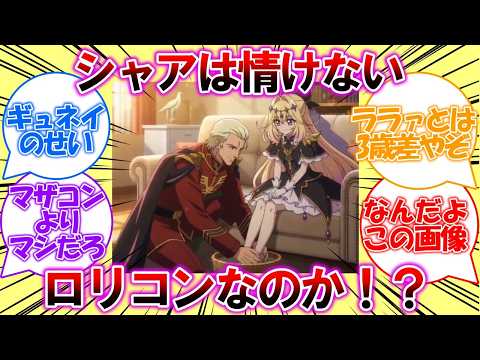
Over the past decade, Char Aznable, one of the Mobile Suit Gundam franchise’s most iconic antagonists, has been reduced to a crude internet caricature as a “pathetic pedophile.” A deep analysis of 15 years of fandom evolution reveals how complex character interpretation has been oversimplified by internet culture, misrepresenting both the character and the source material.
What Happened
Char Aznable, the primary antagonist of the original Mobile Suit Gundam series and a central figure in Char’s Counterattack, has become the subject of widespread internet mockery characterizing him as a “pathetic lolicon” (pedophile). This negative characterization stems primarily from his relationship with Quess Paraya, a young Newtype pilot in Char’s Counterattack, though the actual narrative evidence for romantic interest is minimal. The label has become so entrenched in online fandom discourse that it now overshadows more nuanced interpretations of the character’s motivations and psychological complexity.
Why It Matters
This phenomenon illustrates a broader problem in internet culture: the tendency to reduce complex fictional characters to simplistic, often inaccurate labels. When millions of fans encounter these oversimplified interpretations on social media platforms like Twitter, Reddit, and YouTube, they internalize these readings without engaging with the source material critically. This not only distorts understanding of the Gundam franchise but also demonstrates how collective online narratives can override textual evidence and authorial intent. For anime fans and media critics, understanding this dynamic reveals important truths about how internet culture shapes fandom discourse and collective memory.
Background
Char Aznable first appeared in the original Mobile Suit Gundam (1979) as a skilled Zeon pilot and rival to protagonist Amuro Ray. His character arc continued through multiple sequels, most notably Char’s Counterattack (1988), where he leads the Neo Zeon movement and pursues an ambitious plan to alter Earth’s trajectory. Throughout the 1980s and 1990s, Char was widely regarded as one of anime’s greatest antagonists—a charismatic, ideologically driven villain with clear motivations and tragic dimensions.
The shift in perception began in the 2010s as internet culture evolved. The rise of social media platforms, increased accessibility to anime, and the emergence of “character criticism” as a form of online entertainment created new dynamics in fandom discourse. Simultaneously, new Gundam works like Mobile Suit Gundam Unicorn and Mobile Suit Gundam Narrative offered additional context and reinterpretations of Char’s character, yet paradoxically, online discourse became increasingly reductive rather than more sophisticated.
Key Points
- The Quess Paraya Misinterpretation: Char’s relationship with Quess is characterized as manipulative and tactical rather than romantic. The film contains minimal evidence of genuine romantic interest; instead, Char exploits her psychological vulnerabilities and Newtype potential for his military objectives.
- Oversimplification of Complex Dynamics: Internet culture has reduced Char’s multifaceted character—a man struggling against destiny and attempting to control his own fate—to crude labels like “pathetic” and “pedophile,” ignoring psychological and narrative complexity.
- Comparative Character Analysis: When compared to similar antagonists like Treize Khushrenada from Gundam Wing, who shares comparable narrative structures and relationships with younger characters, Char receives disproportionately negative evaluation while Treize is praised as an “idealistic romantic.”
- Evolution of Fandom Discourse: Between the early 2000s and 2010s, Char’s reputation shifted from “greatest Gundam villain” to “pathetic and contemptible,” correlating with the rise of social media-driven character criticism as entertainment.
- Source Material vs. Fan Interpretation: The gap between what Char’s Counterattack actually depicts and how online fandom interprets it has widened significantly, suggesting that internet consensus now operates independently from textual evidence.
- Broader Implications for Media Literacy: This case study demonstrates how collective online narratives can override individual critical engagement with source material, raising questions about fandom culture and media interpretation in the digital age.
Timeline
- 1979–1990s: Char Aznable established as one of anime’s most respected antagonists; widely praised for complexity and charisma.
- Early 2000s: Gundam fandom remains largely positive toward Char; appreciation for his role as a tragic, ideologically-driven villain.
- 2010–2012: Critical re-examination of Char’s Counterattack begins online; discussions of plot inconsistencies and character motivations emerge.
- 2012–2015: “Character bashing” becomes normalized on social media; Char increasingly labeled as “pathetic” and “incompetent.”
- 2015–Present: The “Char is a lolicon” label becomes entrenched in online discourse; oversimplified interpretations dominate social media conversations.
Perspectives
The Textual Evidence: A careful viewing of Char’s Counterattack reveals that Char’s interactions with Quess are primarily manipulative and tactical. He recognizes her Newtype potential and psychological instability, which he exploits for his military campaign. The film contains no scenes where Char explicitly expresses romantic feelings toward Quess. His behavior reflects a pattern of using talented individuals as instruments for his ambitions—a characteristic consistent throughout his character arc.
The Internet Interpretation: Online fandom has reframed this relationship as romantic or sexual, leading to the “lolicon” label. This interpretation appears to stem from a conflation of psychological manipulation with romantic interest, and possibly from the visual proximity and emotional intensity of their scenes together. Once this interpretation gained traction on social media, it became self-reinforcing through repetition and meme culture.
The Comparative Context: When examined alongside other Gundam antagonists, Char’s treatment appears inconsistent. Treize Khushrenada from Gundam Wing pursues idealistic goals and maintains a complex relationship with Relena Peacecraft, a young female character. Yet Treize is celebrated as a “beautiful idealist,” while Char is condemned as “pathetic.” This disparity suggests that factors beyond textual evidence—such as aesthetic presentation, narrative framing, and fandom demographics—influence character evaluation.
The Psychological Interpretation: Char’s true character arc, as developed across multiple works including Gundam Unicorn and Gundam Narrative, portrays him as a tragic figure struggling against predetermined destiny. His pursuit of power and manipulation of others reflects not pedophilia but rather a desperate attempt to assert agency in a world that has assigned him a predetermined role. His relationship with Quess mirrors his own experience: both are Newtypes burdened by extraordinary abilities they did not choose.
Insights
The Char Aznable case study reveals several critical truths about contemporary fandom and internet culture. First, collective online narratives can become so dominant that they effectively replace engagement with source material. Most fans who describe Char as a “pathetic lolicon” have likely not recently watched Char’s Counterattack; they are repeating an internet consensus that has calcified into assumed fact.
Second, the simplification of complex characters into crude labels serves a social function within online communities. Reducing Char to a one-dimensional villain makes him an easier target for mockery and creates a sense of shared understanding among participants in online discourse. This dynamic prioritizes entertainment and community bonding over accuracy and critical engagement.
Third, the inconsistent treatment of similar characters (Char vs. Treize) suggests that aesthetic and cultural factors significantly influence fandom evaluation. Treize’s aristocratic presentation and explicit philosophical articulation may make him more palatable to Western audiences than Char’s more ambiguous, psychologically complex portrayal.
Finally, this phenomenon demonstrates the need for greater media literacy within fandom spaces. As online communities become primary sources of cultural interpretation, the gap between textual evidence and collective narrative grows increasingly consequential. The Char Aznable case suggests that future fandom discourse would benefit from renewed emphasis on close reading, comparative analysis, and resistance to oversimplification—practices that honor both the complexity of source material and the sophistication of fan communities.