▶ Watch the original YouTube video
Zenless Zone Zero’s Lucia Break Recovery Mechanic Sparks Strategic Revolution Among Players
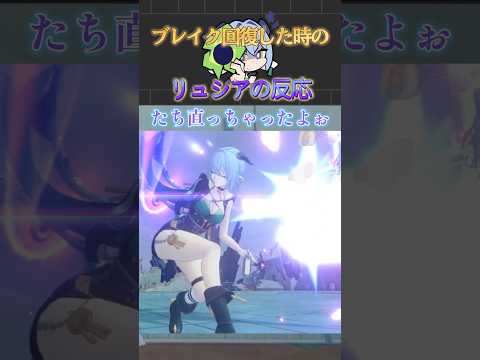
Lucia, a new character in HoYoverse’s action game Zenless Zone Zero, has introduced a break recovery ability that inverts conventional combat strategy. The mechanic—which restores enemy break states rather than exploiting them—has generated significant debate within the player community, with initial skepticism gradually shifting toward recognition of its deep tactical value.
What Happened
Zenless Zone Zero, released by HoYoverse in July 2024, features a break system where enemies enter a vulnerable state with reduced defensive capabilities. Lucia, a newly implemented character, possesses an ability that recovers enemy break states—seemingly counterintuitive to established combat doctrine. This mechanic has triggered widespread discussion across the gaming community, with players reassessing whether the ability represents a design flaw or a sophisticated strategic tool.
Why It Matters
The introduction of Lucia’s break recovery ability challenges fundamental assumptions about game balance and character design. Rather than providing direct damage or healing benefits, the ability operates through indirect tactical control—managing enemy behavior patterns and combat states. This represents a broader shift in modern game design philosophy, where strategic depth and contextual value supersede intuitive power levels. Understanding this mechanic illuminates how contemporary games reward sophisticated player analysis over surface-level ability evaluation.
Background
Zenless Zone Zero is HoYoverse’s latest action title, following the studio’s established design philosophy of implementing character abilities that subvert player expectations. The break system functions as a core combat mechanic, allowing players to exploit enemy vulnerabilities. Traditionally, maintaining enemy break states has been considered optimal strategy in high-difficulty content. Lucia’s introduction disrupts this paradigm by introducing a mechanic that appears to work against established best practices.
HoYoverse, known for titles including Genshin Impact and Honkai: Star Rail, has demonstrated a consistent design approach: implementing seemingly weak abilities that reveal profound tactical applications within specific contexts. This design philosophy emphasizes situational strength over absolute power scaling.
Key Points
- Break Recovery Mechanic: Lucia’s ability restores enemy break states, inverting conventional wisdom about maintaining enemy vulnerability
- Tactical Control: The ability enables players to deliberately trigger specific enemy attack patterns, allowing for advanced strategic preparation
- Community Perception Shift: Initial player assessment dismissed the ability as detrimental; subsequent analysis reveals significant strategic applications
- Contextual Strength: Lucia’s value emerges in high-difficulty content and boss encounters where enemy behavior patterns become critical factors
- Meta Evolution: The mechanic represents a potential turning point in Zenless Zone Zero’s competitive and cooperative gameplay environments
- Design Philosophy: The implementation reflects modern game design prioritizing contextual tactical value over intuitive power expression
Timeline
- July 2024: Zenless Zone Zero launches with established break system mechanics
- Post-Launch (Initial Phase): Lucia’s break recovery ability generates skepticism and criticism within player community
- Mid-Analysis Phase: Advanced players begin recognizing tactical applications in high-difficulty content
- Current State: Community perception shifts toward positive reassessment of Lucia’s strategic value
Perspectives
Initial Player Assessment: Upon Lucia’s release, the majority of players viewed break recovery as a liability. Social media platforms including Twitter featured predominantly critical commentary questioning the design decision. This perspective treated the ability through a lens of direct combat effectiveness, where restoring enemy advantages appeared objectively detrimental.
Advanced Player Analysis: Experienced players and content creators began demonstrating Lucia’s application in high-difficulty encounters. Their analysis revealed that break recovery enables deliberate enemy behavior manipulation—forcing specific attack patterns that skilled players can anticipate and counter. This perspective emphasizes contextual tactical value over surface-level ability evaluation.
Design Philosophy Interpretation: From a game design perspective, Lucia’s mechanic reflects HoYoverse’s established pattern of implementing abilities whose value emerges through sophisticated play. This approach mirrors historical precedents in other titles, where initially underestimated mechanics eventually became recognized as strategically essential.
Comparative Analysis: Historical Precedents in Game Design
Lucia’s break recovery ability parallels several significant game design moments across the industry:
Overwatch’s Ana Character: Ana functioned as a healer while simultaneously preventing enemy healing through sleep darts. Initial evaluation underestimated the ability’s strategic value; subsequent competitive play established Ana as a top-tier character. The mechanic’s power derived not from direct damage but from controlling enemy team resources.
Dark Souls III Buff Removal: Spell-based buff removal appeared weak in isolation but proved essential for managing specific boss attack patterns. Advanced players recognized that preventing enemy buffs provided superior tactical control compared to direct damage optimization.
Pokémon’s Trace Ability: This ability copies opponent abilities, appearing situational and weak. Within specific team compositions, however, it enables complete strategic reversal, transforming opponent strengths into vulnerabilities.
Lucia follows this established pattern: an ability whose true value emerges through sophisticated contextual application rather than intuitive power expression.
Strategic Applications of Lucia’s Break Recovery
Enemy Behavior Control: By deliberately recovering enemy break states, players trigger specific attack patterns. This enables advanced players to prepare defensive positioning and ability timing, converting apparent disadvantage into tactical advantage.
Timing Optimization: Break recovery timing allows players to control when enemies execute powerful attacks, creating preparation windows and enabling coordinated team responses.
Multi-Enemy Management: In encounters featuring multiple enemies, selective break state management enables difficulty modulation and strategic prioritization.
Boss Encounter Specialization: Lucia’s value concentrates in boss fights and high-difficulty encounters where enemy behavior patterns determine success or failure. Standard enemy encounters provide minimal tactical benefit.
Practical Implementation Guidance
Optimal Usage Timing: Lucia’s break recovery proves most effective immediately after enemies enter break states. This timing triggers specific powerful attack patterns, which skilled players can predict and counter effectively.
Party Composition Synergy: Lucia functions optimally within specific team configurations. Pairing her with characters capable of predicting enemy behavior patterns or responding to powerful attacks maximizes her tactical contribution.
Content Application: Lucia excels in boss encounters and complex multi-enemy scenarios. Standard enemy encounters provide insufficient tactical depth to justify her inclusion.
Related Character Knowledge: Maximizing Lucia’s effectiveness requires comprehensive understanding of other characters’ abilities, particularly those designed to exploit or respond to enemy state conditions.
Community Response and Perception Evolution
Initial community response on Twitter and YouTube emphasized skepticism and criticism. Players questioned the design decision, characterizing break recovery as objectively detrimental. This perspective dominated early discussions.
As advanced players published high-difficulty content demonstrations featuring Lucia, community perception gradually shifted. Recognition of tactical applications increased, with players acknowledging potential strategic value. Current discourse increasingly features positive reassessment and theoretical analysis of optimal usage scenarios.
This perception evolution mirrors established patterns in gaming communities, where initial surface-level evaluation gradually yields to deeper strategic understanding as meta-game development progresses.
Insights
Lucia’s break recovery mechanic represents a significant moment in contemporary game design philosophy. The ability exemplifies the principle that character strength operates contextually rather than absolutely. The same mechanic functions as weakness or strength depending on player skill, team composition, enemy type, and tactical context.
This reflects what might be termed “contextual relativity” in game design: ability value derives entirely from application context rather than inherent mechanical properties. The same break recovery ability possesses vastly different value to novice players versus advanced strategists, against standard enemies versus boss encounters, and within different team compositions.
HoYoverse’s design approach demonstrates confidence in player sophistication and willingness to implement mechanics requiring deep understanding. Rather than optimizing for immediate intuitive comprehension, the studio prioritizes long-term strategic depth and meta-game evolution.
Looking forward, Lucia’s implementation suggests that future game design will increasingly feature abilities whose value emerges through sophisticated analysis rather than surface-level evaluation. Players will face growing expectations to develop deeper mechanical understanding and contextual strategic thinking.
Zenless Zone Zero appears positioned as a pioneer in this design direction. Lucia’s break recovery mechanic functions not merely as a character ability but as a symbol of evolving game design philosophy—one that rewards analytical thinking, contextual understanding, and sophisticated tactical application over intuitive power expression.