▶ Watch the original YouTube video
Why Yakuza 6’s Final Boss Is Considered a Letdown: A 15-Year Fan’s Analysis
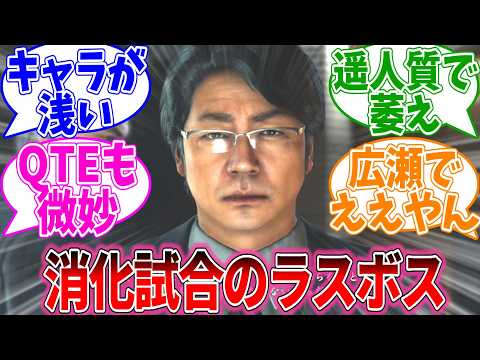
Yakuza 6’s final boss, Iwami Tsuneo, has drawn widespread criticism from players who describe the climactic battle as anticlimactic and narratively unconvincing. After 15 years of following the series and playing over 300 games, one longtime fan breaks down why the game’s ending fails to deliver the emotional and mechanical payoff players expect from a series finale.
What Happened
Yakuza 6, released in 2016, concludes with a final battle against Iwami Tsuneo, a character designed to symbolize the decline of yakuza society and the theme of seeking parental approval. However, players and critics have consistently noted that the final confrontation feels hollow compared to the preceding boss fight against Somiya Seiichirou. The battle lacks the mechanical complexity, dramatic presentation, and narrative weight expected from a series finale, leading many to describe it as a “formality” rather than a climactic showdown.
Why It Matters
The quality of a final boss directly shapes how players remember an entire game. In long-running franchises like Yakuza, the ending boss encounter serves as the culmination of years of storytelling and character development. When a final boss fails to deliver—either mechanically or narratively—it undermines the entire experience and raises questions about game design priorities. This issue highlights the tension between thematic ambition and entertainment value in modern game development.
Background
The Yakuza series, which began in 2005 on PlayStation 2, has built its reputation on compelling antagonists and dramatic final confrontations. Early entries like Yakuza 1 and 2 featured final bosses with clear narrative justification and memorable combat encounters. However, by Yakuza 5 (2012), cracks began to show in the formula. Yakuza 6 represents the culmination of these design problems, prioritizing thematic messaging over player engagement.
The game’s central themes—parental relationships and the decline of organized crime—are ambitious and appropriate for a series finale. Iwami Tsuneo embodies these themes as a character who simply wants parental recognition, representing a diminished version of the legendary yakuza protagonist Kiryu Kazuma once faced. Yet this thematic choice created a fundamental mismatch between concept and execution.
Key Points
- Narrative Unconvincingness: Iwami Tsuneo lacks the gravitas expected of a final boss. The preceding antagonist, Somiya Seiichirou, demonstrates greater strength, cunning, and dramatic presence, making him feel like the “true” final boss in players’ minds.
- Mechanical Simplicity: The final battle against Iwami is straightforward and relies heavily on quick-time events, while Somiya’s fight features multiple health bars, varied attack patterns, and elaborate combat choreography.
- Repetitive Narrative Devices: The hostage plot—where Iwami threatens Kiryu’s daughter Haruka—has been used multiple times throughout the series (Yakuza 4 and 5), eliminating any sense of novelty or tension.
- Thematic vs. Entertainment Imbalance: While Iwami effectively symbolizes the series’ thematic concerns, he fails to function as a satisfying opponent. The game prioritizes message over gameplay, leaving players feeling unfulfilled.
- Character Development Disconnect: Iwami’s psychological profile—a man seeking parental validation—is established but never deeply explored during the final encounter, wasting narrative potential.
- Structural Precedent: Later entries like Yakuza 8 Gaiden demonstrate how to balance thematic depth with player satisfaction, suggesting Yakuza 6’s approach was a misstep rather than an inevitable choice.
Timeline
- 2005: Original Yakuza released; establishes the series’ tradition of compelling final bosses.
- 2006: Yakuza 2 continues the pattern with a narratively justified final antagonist.
- 2012: Yakuza 5 shows early signs of formula fatigue; final boss design becomes less convincing.
- 2015: Yakuza 0 successfully balances thematic depth with engaging boss encounters, proving the formula can work.
- 2016: Yakuza 6 releases; final boss receives widespread criticism for feeling anticlimactic.
- Post-2016: Yakuza 8 Gaiden addresses these criticisms and demonstrates improved design philosophy.
Perspectives
The Player Experience Perspective: From a pure gameplay standpoint, Iwami Tsuneo fails as a final boss. Players expect escalating difficulty, mechanical complexity, and dramatic presentation. The contrast between Somiya’s multi-phase fight and Iwami’s simplistic encounter creates a sense of anticlimax that no amount of thematic messaging can overcome.
The Thematic Perspective: From a narrative standpoint, Iwami represents a bold creative choice. Making the final boss a “small man” rather than a “big boss” symbolizes yakuza society’s decline. This inversion of player expectations could be intentional—a commentary on how the legendary Kiryu’s final enemy is not a worthy adversary but a desperate, broken man seeking validation.
The Design Intent Perspective: The development team likely intended to create a thought-provoking ending that challenges genre conventions. However, the execution suggests a failure to reconcile artistic ambition with entertainment value. The game sacrifices player satisfaction on the altar of thematic purity.
The Comparative Perspective: When compared to Yakuza 0, which successfully delivers both thematic depth and engaging boss fights, Yakuza 6’s approach appears unnecessarily restrictive. The earlier game proves that complex, memorable antagonists can embody series themes without compromising gameplay.
Insights
Yakuza 6 represents a critical lesson in game design: thematic ambition and player engagement are not mutually exclusive, but they require careful balance. The game’s failure stems not from its themes but from its execution—the decision to make Iwami the final boss, combined with minimal combat complexity and reliance on recycled narrative devices, creates a hollow ending.
The hostage plot, used repeatedly across the series, particularly undermines Iwami’s credibility. By the third iteration, this narrative device reads as lazy rather than dramatic, making the antagonist appear incompetent rather than threatening.
A more effective structure might have positioned Iwami as a mid-game boss, allowing his character arc to complete earlier while reserving the final battle for an opponent who embodies both thematic significance and mechanical challenge. Yakuza 8 Gaiden’s approach suggests the franchise learned from this mistake.
Ultimately, Iwami Tsuneo succeeds as a thematic symbol but fails as a final boss encounter. This distinction matters because games are interactive media—the final boss must function on both narrative and mechanical levels. When one element dominates at the expense of the other, the result feels incomplete, regardless of artistic intention.
For players seeking to engage with Yakuza 6 more meaningfully, reframing the final boss as a thematic conclusion rather than a climactic battle may help. However, this requires players to accept a compromise that earlier entries in the series did not demand—a telling sign that something in the design philosophy shifted, not necessarily for the better.