▶ Watch the original YouTube video
How Blue Archive’s Fan-Made “Glitching Teacher” Video Reveals the Evolution of Fan Animation and Character Psychology
A fan-created animated reaction video featuring Blue Archive characters responding to their teacher’s unusual behavior has become a case study in how fan-created content is evolving into sophisticated psychological storytelling. The video demonstrates how modern fan animations use visual narrative techniques to explore character depth in ways that surpass traditional text-based fan fiction.
- What Happened
- Why It Matters
- Background
- Key Points
- The Evolution of Fan-Created Reaction Content
- The Teacher Character’s Unique Role
- Character Psychology Through Comparative Response
- Technical Execution and Visual Storytelling
- Community Reception and Viewer Psychology
- Broader Implications for Fan Culture
- Recommendations for Deeper Engagement
- Conclusion
What Happened
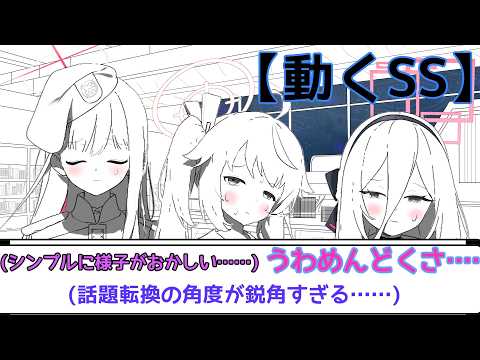
A fan-created video titled “Students’ Reactions to the Strange Teacher” has gained attention within the Blue Archive community for its portrayal of multiple student characters reacting to their teacher—the player character—exhibiting unusual behavior. The video uses animated screenshots (a format known as “moving SS”) combined with sound design and visual effects to depict how each student responds differently to the teacher’s condition. Rather than simply listing character reactions, the video constructs a narrative that reveals each character’s psychological relationship with the teacher through their individual responses.
Why It Matters
This video exemplifies a significant shift in fan-created content: the transition from entertainment-focused fan works to psychologically sophisticated character studies. The work demonstrates that fan creators now possess the technical skills and narrative understanding to explore character psychology in ways that rival official media. For game communities and fan culture broadly, this represents the maturation of fan creation as a legitimate form of artistic expression. The video also highlights how the “reaction compilation” format—showing multiple characters responding to a single scenario—has evolved into a powerful tool for character analysis and emotional storytelling.
Background
Blue Archive is a 2021 mobile game that centers on the relationship between a player-controlled teacher character and various student characters. The teacher is intentionally designed as a blank slate for player projection, with minimal dialogue, allowing players to imagine themselves in the role. This narrative structure creates a unique dynamic where student characters’ emotional investment in the teacher becomes a central element of the game’s appeal. The game has spawned a robust fan creation community, with thousands of fan works appearing on platforms like Pixiv and Twitter within just a few years of release. The “moving SS” format—animated screenshots with effects and sound—emerged approximately three years ago but has only recently achieved the level of sophistication demonstrated in this video.
Key Points
- The video uses the “moving SS” (animated screenshot) format to visualize character reactions that text-based fan fiction cannot fully convey, including facial expressions and emotional timing
- Each student character’s response to the teacher’s unusual behavior reflects their individual personality and psychological relationship with the teacher, demonstrating deep character understanding
- The reaction compilation format functions as a psychological analysis tool, allowing viewers to compare responses and infer character motivations
- The video respects official character canon while exploring “what if” scenarios not present in the official game narrative
- Modern fan animation has evolved from simple text accompaniment to complex multimedia storytelling combining animation, sound design, and visual composition
- The video’s reception indicates that contemporary fan communities prioritize psychological depth and character authenticity over pure entertainment value
The Evolution of Fan-Created Reaction Content
Fan-created reaction compilations have undergone significant evolution over the past decade. In the early 2010s, reaction content consisted primarily of text-based compilations listing character dialogue. By the mid-2010s, image-based reaction compilations emerged, using official artwork or game screenshots combined with text overlays. The current generation of video-format reaction compilations represents the third evolution, incorporating animation, sound effects, and temporal pacing to convey emotional nuance. This progression reflects both technological advancement and the increasing sophistication of fan creator skill sets.
The advantages of video-format reactions over earlier formats include the ability to show emotional progression over time, the use of audio design to enhance emotional impact, and the capacity to convey complex information more efficiently. Compared to other fan communities—such as Hololive fan animations, which prioritize comedic reactions, or Uma Musume fan works, which must maintain historical accuracy—Blue Archive fan creators emphasize psychological authenticity and narrative coherence.
The Teacher Character’s Unique Role
The teacher character in Blue Archive occupies an unusual position in game design. Unlike traditional protagonists with defined personalities and goals, the teacher is deliberately designed as a projection vessel for the player. This mirrors design philosophies found in games like The Idolmaster and Love Live! School Idol Festival, where the player character serves primarily as a focal point for other characters’ emotional investment. The teacher’s minimal dialogue and undefined personality allow players to imagine themselves in the role, creating a direct emotional connection between player and student characters.
This design choice creates a unique narrative opportunity: when the teacher’s behavior becomes abnormal, it triggers genuine concern from student characters, and their varied responses reveal the depth of their individual relationships with the teacher. The video leverages this mechanic to explore character psychology, using the teacher’s altered state as a lens through which to examine each student’s emotional dependency and attachment patterns.
Character Psychology Through Comparative Response
The reaction compilation format functions as a sophisticated psychological analysis tool. By presenting multiple characters’ responses to identical circumstances, viewers can compare reactions and infer underlying motivations, attachment styles, and personality traits. A character who immediately expresses concern reveals emotional investment; one who maintains composure suggests different coping mechanisms; one who attempts humor may indicate discomfort with vulnerability. This comparative approach allows viewers to understand character psychology through behavioral observation rather than explicit exposition.
This technique parallels methods used in acclaimed anime such as Attack on Titan, where characters’ different reactions to identical events reveal their psychological profiles and past traumas. The video demonstrates that fan creators have internalized these sophisticated narrative techniques and apply them effectively in their own work.
Technical Execution and Visual Storytelling
The video’s technical quality reflects careful attention to visual communication of emotion. Character expressions, body language, and reaction timing are rendered with precision, suggesting the creator understands that visual language must carry narrative weight. The integration of sound design—music and effects that enhance emotional resonance—demonstrates awareness that multimedia storytelling requires coordination across multiple sensory channels. These technical choices elevate the work beyond simple entertainment into the realm of intentional artistic expression.
Community Reception and Viewer Psychology
YouTube comments on the video frequently praise the authenticity of character reactions relative to official canon. This indicates that viewers evaluate fan works not merely on entertainment value but on fidelity to established character psychology. Twitter responses reveal that viewers experience genuine emotional concern for the teacher character, suggesting the video successfully triggers empathetic engagement. Requests for longer videos demonstrate viewer investment in the scenario and desire for expanded exploration of the narrative premise.
These responses reflect a broader trend within the Blue Archive community: preference for psychologically sophisticated fan works over purely comedic or aesthetic content. This suggests that fan communities have matured in their critical standards and creative expectations.
Broader Implications for Fan Culture
This video represents a significant milestone in fan-created content evolution. Fan creation has transitioned from supplementary entertainment to independent artistic expression capable of exploring narrative and psychological themes with sophistication comparable to official media. The technical skills required—animation, sound design, narrative structure, character analysis—have become increasingly accessible, enabling creators to realize complex creative visions.
The video also demonstrates that fan creators can deepen audience understanding of official works by exploring scenarios and psychological dimensions not addressed in canon. By respecting established character parameters while expanding narrative possibilities, fan creators contribute meaningfully to the cultural conversation surrounding their source material.
One notable narrative choice is the video’s failure to explain why the teacher’s behavior has become abnormal. This ambiguity may be intentional, designed to stimulate viewer speculation and anticipation for potential sequels. If subsequent videos reveal the cause and depict student responses to that revelation, the creator would have constructed a sophisticated multi-part narrative arc—a significant achievement in fan-created storytelling.
Recommendations for Deeper Engagement
For viewers seeking to appreciate this video more fully, progressing through at least the first three chapters of Blue Archive’s official story is recommended. This provides context for student characters’ backgrounds and their relationship development with the teacher, enriching interpretation of their reactions. Exploring other Blue Archive reaction compilations on Pixiv reveals how different creators interpret character psychology, exposing the range of possible character interpretations. Engaging actively with the video—predicting character reactions before they appear and comparing predictions to actual responses—enhances enjoyment and deepens understanding of character psychology.
Comparative viewing of fan works from other communities—such as Hololive or Uma Musume—illuminates how different source materials and design philosophies shape fan creation approaches.
Conclusion
This fan-created video exemplifies the maturation of fan-created content into sophisticated artistic expression. By combining technical skill, narrative understanding, and psychological insight, the creator has produced a work that transcends simple fan entertainment and contributes meaningfully to character analysis and emotional storytelling. The video demonstrates that fan creators, working within the constraints and possibilities of established fictional universes, can achieve artistic sophistication comparable to professional media. As fan creation tools and communities continue to develop, works of this caliber will likely become increasingly common, establishing fan creation as a recognized form of contemporary artistic expression.