▶ Watch the original YouTube video
How Kamen Rider OOO’s ‘Rekucore’ Became a Streaming Phenomenon on Amazon Prime Video
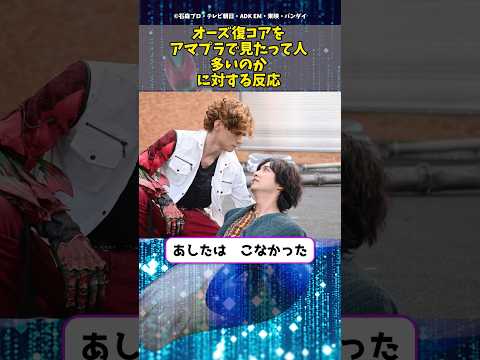
After 13 years off the air, Kamen Rider OOO has found new life on Amazon Prime Video, sparking renewed interest in the series’ pivotal ‘Rekucore’ storyline among both longtime fans and new viewers. The resurgence reflects a broader shift in how streaming services are reshaping fan culture and enabling audiences to rediscover classic tokusatsu content with fresh perspectives.
- What Happened
- Why It Matters
- Background
- Key Points
- Timeline
- Perspectives
- Comparative Analysis: OOO’s Transformation System Versus Other Kamen Rider Series
- The Streaming Era’s Impact on Fan Culture
- Viewing Recommendations for New and Returning Audiences
- Social Media Response and Engagement Metrics
- Insights: The Rekucore as Cultural Metaphor
What Happened
Kamen Rider OOO, which originally aired from September 2010 to August 2011, has become the subject of renewed discussion following its availability on Amazon Prime Video. Viewers, particularly those who watched the series during its original run, are revisiting the show and sharing reactions to key story elements, especially the ‘Rekucore’ concept—a narrative device in which previously used transformation cores reappear with new significance. This resurgence has generated substantial engagement on social media platforms, with hashtags like #OOZ再視聴 (OOZ Rewatch) accumulating hundreds of tweets daily since the streaming launch in mid-2023.
Why It Matters
The renewed interest in OOO represents a significant shift in how streaming services are reshaping fan culture and content consumption. For over a decade, accessing classic tokusatsu series required purchasing expensive physical media or waiting for irregular television reruns. The democratization of access through affordable subscription services has fundamentally altered the viewing experience, enabling both nostalgic rewatching and discovery by new generations of fans. This phenomenon illustrates how streaming platforms are not merely distributing content but actively facilitating the reinterpretation and revaluation of older works. The ‘Rekucore’ storyline, once subject to mixed reception during its original broadcast, is now being recognized as a sophisticated narrative device reflecting the protagonist’s psychological development—a nuance that becomes apparent only through deliberate, repeated viewing made possible by streaming services.
Background
Kamen Rider OOO introduced an innovative transformation system based on the combination of ‘O Medals,’ allowing the protagonist Eiji Hino to assume different rider forms with distinct abilities. The series was notable for its character-driven narrative, focusing on Eiji’s internal conflict between his desire to help others and his personal limitations. The ‘Rekucore’ concept emerged in the series’ middle episodes, representing the reappearance of previously used transformation cores. Rather than serving as a simple power-up mechanic, the Rekucore functioned as a metaphor for Eiji’s psychological journey and his confrontation with his past.
During its original broadcast, OOO received mixed critical reception. While praised for its narrative depth and character development, some viewers criticized the pacing and direction of later episodes. However, the passage of time and the availability of the complete series on streaming platforms have enabled audiences to reassess the work within a broader context, revealing layers of storytelling that were less apparent during weekly episodic viewing.
Key Points
- Amazon Prime Video’s distribution of Kamen Rider OOO has triggered significant social media engagement, with viewers sharing reactions to the ‘Rekucore’ storyline and other narrative elements.
- The streaming availability has enabled both original viewers and new audiences to experience the series at their own pace, facilitating deeper analysis and appreciation of the show’s narrative structure and character development.
- The ‘Rekucore’ concept functions as both a narrative device and a metaphor for the protagonist’s psychological growth, distinguishing OOO from other Kamen Rider series that prioritize combat-oriented power progression.
- Streaming services have fundamentally altered the economics and accessibility of tokusatsu content, replacing the previous model of expensive physical media purchases and irregular reruns.
- The revaluation of OOO reflects a broader industry trend of ‘classic content reassessment,’ where older works gain critical recognition through streaming availability and contemporary fan analysis.
- The simultaneous experience of nostalgia and new discovery creates a unique viewing phenomenon where longtime fans encounter fresh interpretations of familiar material.
Timeline
- September 2010 – August 2011: Kamen Rider OOO airs on television with mixed reception.
- 2011: Theatrical film ‘Kamen Rider OOZ: 100 Movie Stars and Kamen Rider’ releases, expanding the OOO universe.
- 2012–2013: Subsequent Kamen Rider series (Wizard, Fourze) build upon OOO’s transformation system innovations.
- 2019: Renewed interest in OOO following theatrical re-releases and retrospective content.
- 2020 onwards: Streaming services begin comprehensive distribution of classic tokusatsu and anime titles.
- Mid-2023: Amazon Prime Video launches OOO streaming, triggering immediate social media engagement and viewer discussion.
- June–July 2023: Social media activity peaks, with hundreds of daily posts discussing OOO and the Rekucore storyline.
Perspectives
The Nostalgia-Driven Perspective: For viewers who experienced OOO during its original broadcast, streaming availability represents an opportunity to reconnect with formative entertainment experiences. This perspective emphasizes the emotional resonance of revisiting familiar characters and storylines, with the passage of time adding layers of personal meaning as viewers reflect on how they themselves have changed since 2010–2011.
The Critical Revaluation Perspective: Scholars and engaged fans recognize that streaming enables a more comprehensive and deliberate analysis of narrative structure, character development, and thematic coherence. This perspective views the Rekucore not merely as a plot device but as a sophisticated metaphor for psychological growth, a reading that becomes apparent only through repeated, intentional viewing. The availability of complete series on-demand facilitates this analytical approach, contrasting sharply with the constraints of weekly episodic viewing.
The Generational Discovery Perspective: Younger viewers encountering OOO for the first time through streaming platforms experience the series without the temporal fragmentation of weekly broadcasts. This unmediated access allows new audiences to form independent judgments unconstrained by the original broadcast’s reception, potentially leading to more favorable assessments than contemporary viewers might have rendered.
The Industry Trend Perspective: The resurgence of interest in OOO exemplifies a broader pattern in which streaming services function as vehicles for content revaluation. Works previously dismissed or underappreciated during their original runs gain critical recognition through streaming availability, suggesting that temporal distance and comprehensive accessibility fundamentally alter how audiences assess creative works.
Comparative Analysis: OOO’s Transformation System Versus Other Kamen Rider Series
The Rekucore concept distinguishes OOO from contemporaneous and subsequent Kamen Rider series. While Wizard (2012–2013) introduced new magical rings as incremental power additions and Fourze (2011–2012) utilized switches primarily as tactical options, OOO’s Rekucore functions as a narrative symbol of the protagonist’s internal development. This distinction reflects different philosophical approaches to transformation mechanics: OOO prioritizes psychological resonance, while other series emphasize combat versatility or systematic progression. This thematic difference becomes particularly apparent during comprehensive rewatching enabled by streaming platforms, allowing viewers to recognize the narrative intentionality underlying OOO’s design choices.
The Streaming Era’s Impact on Fan Culture
The availability of complete series on-demand has fundamentally restructured how fans engage with tokusatsu content. Previously, rewatching required purchasing expensive physical media (typically ¥5,000–¥8,000 per volume) or waiting for irregular television reruns. The current model, offering unlimited access for approximately ¥600 monthly, has democratized content consumption and enabled viewing patterns previously impossible. This accessibility has generated several observable phenomena:
Simultaneous Nostalgia and Discovery: Viewers experience concurrent emotional and analytical responses to familiar material. The passage of 13 years creates psychological distance that enables viewers to recognize narrative subtleties—voice acting nuances, background art details, scriptwriting structure—that escaped notice during original broadcast viewing. This dual consciousness represents a novel form of engagement distinct from both initial viewing and traditional reruns.
Multi-Generational Fandom: Streaming platforms have enabled the formation of fan communities spanning multiple age groups and viewing contexts. Original viewers reconnect with the series while simultaneously encountering younger fans experiencing OOO for the first time, creating opportunities for cross-generational interpretation and discussion.
Content Revaluation as Industry Standard: The resurgence of interest in OOO reflects a broader pattern observable across anime and tokusatsu industries. Works receiving lukewarm reception during original broadcast—including OOO itself, which faced criticism during its later episodes—are experiencing critical reassessment through streaming availability. This suggests that temporal distance and comprehensive accessibility function as necessary conditions for accurate aesthetic evaluation.
Viewing Recommendations for New and Returning Audiences
For First-Time Viewers: Begin with episodes 1–5 to establish the foundational character dynamics and thematic framework. The series’ opening arc presents Eiji Hino’s core conflict—the tension between personal limitations and the desire to assist others—which structures the entire narrative. Subsequently, progress to episodes 20–25, where the Rekucore concept emerges and Eiji’s psychological development becomes most explicit. Finally, after completing the series, revisit episode 1 to recognize how the narrative’s conclusion recontextualizes its beginning.
For Returning Viewers: Approach rewatching as an opportunity for analytical rediscovery rather than nostalgic consumption. Attend specifically to voice acting subtleties, background art details, and scriptwriting structure. The series’ pacing and narrative choices, once subject to criticism, reveal themselves as deliberate artistic decisions reflecting the creators’ thematic intentions. Comparative viewing of multiple episodes in succession—enabled by streaming—facilitates recognition of character development arcs invisible within weekly episodic viewing.
Related Content Viewing Order: After completing OOO, consider viewing the theatrical film ‘Kamen Rider OOZ: 100 Movie Stars and Kamen Rider’ (2011), which explores Eiji’s playful aspects absent from the television series. Subsequently, watch Kamen Rider Fourze (2011–2012) and Wizard (2012–2013) to observe how the transformation system concept evolved and how protagonist characterization shifted across consecutive series.
Social Media Response and Engagement Metrics
Since Amazon Prime Video’s distribution launch, social media platforms have documented substantial engagement with OOO content. Twitter analysis reveals that the hashtag #オーズ再視聴 (OOZ Rewatch) accumulated hundreds of daily posts during June–July 2023, coinciding precisely with the streaming launch. This temporal correlation suggests that streaming availability directly catalyzes fan engagement rather than representing organic nostalgic interest.
Comment analysis across YouTube and Twitter reveals a significant shift in discourse quality. While early responses emphasized emotional nostalgia—”I remember watching this as a child”—subsequent engagement increasingly reflects analytical observation: “The scriptwriting structure is remarkably sophisticated” and “The narrative choices that seemed questionable during broadcast now reveal themselves as intentional.” This progression suggests that streaming accessibility enables audiences to transition from passive consumption to active critical engagement.
Notably, contemporary social media discussion frequently references aspects of OOO that received criticism during original broadcast. The series’ middle episodes, once criticized for pacing issues, are now recognized as necessary narrative development. This revaluation pattern—where previous criticisms are reinterpreted as intentional artistic choices—exemplifies how temporal distance and comprehensive accessibility facilitate more nuanced aesthetic judgment.
Insights: The Rekucore as Cultural Metaphor
The Rekucore concept, initially presented as a narrative device within OOO’s fictional universe, has acquired unexpected resonance as a metaphor for contemporary fan culture and streaming-era content consumption. Just as the Rekucore represents the reappearance and recontextualization of previously utilized transformation cores, streaming services enable the repeated “resurrection” of past content, allowing it to encounter new audiences and generate fresh interpretations among existing fans.
This parallel extends further: the Rekucore’s narrative function—symbolizing the protagonist’s psychological growth through the reintegration of past experiences—mirrors how audiences experience rewatching through streaming platforms. Viewers simultaneously access their past selves’ original viewing experience and their present selves’ mature analytical perspective, creating a form of temporal self-dialogue impossible within traditional broadcast or physical media consumption models.
The broader implication concerns how streaming services are fundamentally restructuring not merely content distribution but the nature of fan engagement itself. The simultaneous availability of new and archival content, combined with the elimination of temporal constraints on viewing, has created conditions under which past works can be continuously recontextualized and reinterpreted. OOO’s resurgence exemplifies this phenomenon: a series that concluded 13 years ago has acquired new cultural significance not through creative revision but through the simple act of becoming accessible.
This suggests that streaming platforms function as more than distribution mechanisms; they operate as vehicles for cultural revaluation, enabling audiences to recognize artistic merit and narrative sophistication that may have been obscured by the constraints of original broadcast viewing. The Rekucore’s return, both within OOO’s narrative and through streaming availability, symbolizes this broader transformation in how contemporary audiences engage with and interpret creative works.