▶ Watch the original YouTube video
Why Kamen Rider Accel’s “This Guy Will Never Die” Became a Cultural Phenomenon Among Fans
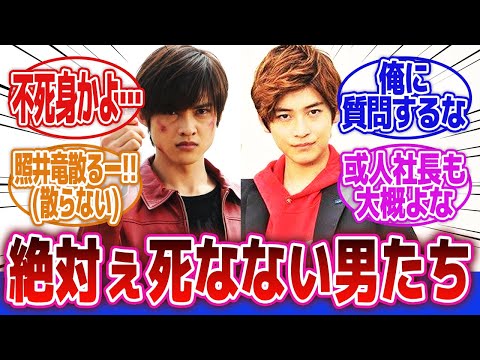
A powerful line from Kamen Rider W’s Terui Ryu has resonated deeply across online communities, inspiring viewers with its message of unwavering determination. This analysis explores why the character’s declaration “This guy will absolutely never die” transcends typical superhero dialogue to become a universal statement about perseverance and hope.
What Happened
The phrase “This guy will absolutely never die” (“こいつ、絶対死なねぇ”), spoken by Kamen Rider Accel (Terui Ryu) from the 2009 series Kamen Rider W, has become a significant topic of discussion across social media platforms including Twitter, 5channel, and YouTube. The line has generated widespread fan engagement, with viewers sharing how the statement has influenced their personal lives and worldview. What began as a memorable character moment has evolved into a cultural touchstone within the tokusatsu (live-action special effects) community and beyond.
Why It Matters
This phenomenon reveals how character-driven storytelling in tokusatsu productions can deliver profound philosophical messages that resonate across age groups and life circumstances. The line’s popularity demonstrates that audiences increasingly seek narratives addressing existential themes—particularly the meaning of perseverance in the face of despair. In an era marked by social uncertainty, economic stagnation, and global crises, such messages of resilience have become culturally significant. The response to Terui Ryu’s declaration illustrates how entertainment media serves as a vehicle for processing collective anxieties and finding sources of inspiration.
Background
Kamen Rider W aired in 2009 and introduced Terui Ryu as a police officer who independently researched memory devices (Gaia Memories) and operated as Kamen Rider Accel. Unlike traditional heroic archetypes, Terui Ryu occupies a moral gray area—a law enforcement officer who operates outside official channels using experimental technology. His character arc involves confronting the psychological toll of his choices while maintaining commitment to his convictions. The phrase in question emerges from moments when Terui Ryu faces seemingly insurmountable odds, yet refuses to surrender. This context—his struggle with the side effects of memory devices, his internal conflicts, and his unwavering determination—gives the line its emotional weight and philosophical depth.
Key Points
- The phrase “This guy will absolutely never die” represents more than bravado; it encapsulates a philosophy of perseverance through despair and commitment to survival as a form of victory
- Terui Ryu’s character development from supporting role to central figure creates a narrative arc that resonates with viewers seeking evidence that personal transformation is possible
- The line functions on multiple semantic levels: literal (physical survival), psychological (refusing to surrender to despair), and philosophical (the triumph of human will)
- Online communities have transformed the phrase into a “meme” and shared cultural reference, enabling its application across diverse personal struggles
- Fan responses indicate the statement has provided genuine emotional support during difficult life circumstances including academic challenges, career transitions, and relationship difficulties
- The phrase’s appeal transcends age demographics, with viewers reporting that the line’s meaning deepens with maturity and life experience
Timeline
- 2009: Kamen Rider W airs; Terui Ryu introduced as Kamen Rider Accel
- 2010s: Series gains retrospective appreciation; tokusatsu fandom expands online
- 2015 onwards: Increased discussion of the series among adult audiences discovering it for the first time
- 2010s-2020s: The phrase gains traction as a motivational reference across social media platforms
- Recent years: The line becomes a recognized cultural reference within anime, manga, and tokusatsu communities
Perspectives
Fan Interpretation: Viewers emphasize the personal impact of the line, describing it as a source of courage during difficult periods. Many report that recalling Terui Ryu’s determination has provided motivation to persevere through challenges. This perspective treats the phrase as a genuine philosophical statement about human resilience.
Analytical Perspective: Deeper examination reveals the line functions as the culmination of Terui Ryu’s character arc. His journey from conflicted officer to determined warrior gives the statement legitimacy—he has earned the right to make such a declaration through repeated failures and recoveries. This interpretation emphasizes narrative structure and character development as essential to the line’s power.
Cultural Context: The phrase’s resonance reflects broader societal needs. Following the 2011 Tōhoku earthquake, economic uncertainty, and the COVID-19 pandemic, audiences increasingly sought narratives addressing survival and hope. Terui Ryu’s unwavering commitment to living resonates as a response to collective trauma and uncertainty.
Linguistic Perspective: The phrase’s apparent roughness and simplicity paradoxically strengthen its impact. The colloquial language creates accessibility and authenticity, distinguishing it from more formal heroic declarations. This directness makes the statement feel genuine rather than performative.
Insights
The phenomenon surrounding “This guy will absolutely never die” demonstrates that tokusatsu productions, often dismissed as children’s entertainment, contain sophisticated philosophical content addressing universal human concerns. Terui Ryu’s character represents an evolution in superhero storytelling—he is not a flawless champion but a flawed individual who persists despite doubt, injury, and failure. This portrayal offers viewers something more valuable than simple escapism: evidence that survival itself constitutes victory.
The line’s cultural penetration reveals how specific character moments can transcend their original context to become shared language within communities. By functioning as both literal statement and metaphorical philosophy, the phrase accommodates diverse interpretations while maintaining coherent meaning. Viewers apply it to academic struggles, professional challenges, and personal crises, each finding relevance in its core assertion: continuation is possible.
Furthermore, the response illustrates how audiences across generations engage with tokusatsu differently than previous decades. Adult viewers discovering Kamen Rider W years after its original broadcast bring mature perspectives to character analysis, recognizing psychological complexity and philosophical depth that younger audiences might initially overlook. This creates a layered appreciation where the same line carries different meanings depending on the viewer’s life experience.
The phrase’s evolution into internet culture demonstrates how character-driven narratives create durable cultural artifacts. Unlike plot-dependent references that fade as details are forgotten, Terui Ryu’s declaration remains potent because it expresses a fundamental human aspiration: the refusal to surrender. In this sense, the line transcends its origin as tokusatsu dialogue to become a statement about human dignity and resilience applicable across contexts and cultures.