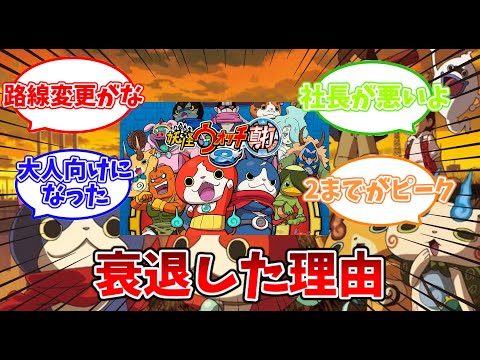
▶ Watch the original YouTube video
Why Yo-Kai Watch Declined: A Deep Analysis of Fan Reactions and Strategic Failures
Yo-Kai Watch experienced a meteoric rise to cultural phenomenon status between 2015 and 2016, rivaling Pokémon in popularity. However, the franchise collapsed rapidly after 2017 due to strategic missteps, creative direction shifts, and a disconnect between anime and game content. This analysis examines the structural reasons behind the decline based on fan feedback and comparative industry trends.
What Happened
Yo-Kai Watch emerged as a cultural phenomenon in 2015-2016, achieving sales and merchandise popularity comparable to Pokémon. Yo-Kai medals sold out in stores, and the franchise dominated children’s entertainment. However, starting in 2017, the franchise underwent a dramatic creative shift toward the darker “Shadowside” storyline. This abrupt tonal change, combined with inconsistent media strategy and delayed hardware adaptation, triggered a rapid decline in viewership and engagement. By the early 2020s, Yo-Kai Watch had transitioned from a dominant franchise to a nostalgic relic of the mid-2010s.
Why It Matters
The Yo-Kai Watch case study provides crucial lessons for media franchises, game developers, and entertainment executives about the dangers of abandoning core brand identity. Unlike Pokémon, which successfully maintained multi-generational appeal, Yo-Kai Watch’s collapse demonstrates how a single franchise can squander market dominance through poor strategic decisions. The franchise’s failure illustrates the importance of brand consistency, hardware adaptation timing, and understanding audience expectations. For creators and studios, this serves as a cautionary tale about the risks of chasing industry trends at the expense of established fan loyalty.
Background
Yo-Kai Watch debuted as an anime in autumn 2014 and quickly became a phenomenon. The franchise’s initial success stemmed from its lighthearted, slice-of-life approach featuring charming mascot characters like Jibanyan and Komasan. The game versions, particularly Yo-Kai Watch 2, achieved critical acclaim for their storytelling depth and character development, with players investing over 200 hours in gameplay. The franchise successfully operated across multiple media: anime, games, trading cards, and merchandise.
Between 2015 and 2018, the anime and game industry experienced a significant trend shift toward darker, more serious content. Franchises like “Attack on Titan,” “Demon Slayer,” and “Jujutsu Kaisen” gained massive popularity with mature themes and complex narratives. The Yo-Kai Watch creative team, observing this industry trend, made the strategic decision to shift toward the Shadowside storyline—a darker, more serious direction targeting older audiences.
Key Points
- Creative Direction Failure: The abrupt shift to the Shadowside storyline alienated existing fans who valued the franchise’s lighthearted, slice-of-life identity. Multiple fans noted that “Shadowside itself isn’t bad, but it isn’t Yo-Kai Watch.”
- Brand Identity Loss: The franchise abandoned its core mascot-driven strategy by introducing more human-like characters and reducing focus on beloved mascots like Jibanyan and Komasan, which had been central to the franchise’s appeal.
- Media Fragmentation: A significant disconnect emerged between the anime’s comedic direction and the game versions’ serious storytelling. Fans expressed desire for game-based movie adaptations rather than anime content.
- Hardware Strategy Misstep: The franchise delayed Nintendo Switch adaptation despite the console’s explosive growth in 2017. Pokémon’s rapid Switch transition (with “Let’s Go” releases) contrasted sharply with Yo-Kai Watch’s continued 3DS focus.
- Leadership Inconsistency: Multiple fans attributed the decline to the franchise creator’s “restlessness” and tendency to pursue new projects rather than sustain existing ones, indicating a lack of long-term vision.
- Fan Base Fragmentation: The creative shift split the audience between traditional lighthearted-content fans and new mature-content fans, rather than expanding the overall audience.
Timeline
- Autumn 2014: Yo-Kai Watch anime debuts; initial positive reception begins.
- 2015-2016: Franchise reaches peak popularity; becomes cultural phenomenon comparable to Pokémon. Yo-Kai Watch 2 releases to critical acclaim.
- 2017: Shadowside storyline launches; creative direction shifts toward darker, mature content. Nintendo Switch releases and gains market dominance.
- 2017-2018: Viewership and engagement decline rapidly. Fan base fractures between traditional and new direction supporters.
- 2019 onwards: Franchise transitions to nostalgic status; new releases fail to recapture momentum. Yo-Kai Watch 4 releases with mixed reception.
Perspectives
Fan Perspective: The dominant fan narrative attributes the decline to poor leadership decisions and creative missteps. Fans consistently cite the Shadowside shift as the turning point, arguing that the franchise abandoned its identity. Many express nostalgia for the 2015-2016 era and suggest that game-based content would have been more successful than anime-focused direction.
Industry Analysis Perspective: From a broader industry standpoint, Yo-Kai Watch’s decline reflects a common pattern: franchises that chase trending genres without maintaining core brand identity often fail. Unlike “Demon Slayer,” which gradually introduced darker elements through character development, Yo-Kai Watch implemented an abrupt tonal shift. The franchise also failed to adapt quickly to hardware transitions, a critical factor in handheld gaming success.
Comparative Success Model: Pokémon’s sustained success demonstrates an alternative approach. Pokémon maintained its core identity while simultaneously developing content for multiple audience segments. The franchise released both child-friendly and mature-oriented games, anime, and merchandise, allowing diverse fan bases to coexist. Yo-Kai Watch attempted a single-direction pivot instead of multi-track expansion.
Insights
The Yo-Kai Watch decline reveals several critical principles for long-term franchise sustainability:
Brand Identity Consistency: Successful franchises maintain recognizable core characteristics while evolving. Yo-Kai Watch’s sudden tonal shift violated audience expectations established over multiple years. Fans had internalized the franchise as “lighthearted and comforting,” making the Shadowside transition feel like betrayal rather than evolution.
Multi-Platform Coherence: The disconnect between anime and game content fragmented the franchise experience. Fans who loved game narratives found anime content disappointing, and vice versa. Successful franchises like Pokémon maintain narrative and tonal consistency across media.
Hardware Adaptation Timing: The delay in Nintendo Switch adaptation proved fatal during a critical market transition period. When Pokémon rapidly released Switch titles in 2018-2019, Yo-Kai Watch remained 3DS-focused, ceding market share to competitors and appearing outdated.
Audience Expansion vs. Replacement: Rather than expanding the existing fan base, Yo-Kai Watch attempted to replace it with a new mature audience. This strategy eliminated the franchise’s competitive advantage—its established, passionate fan community—without successfully attracting the target mature audience, who had already invested in competing franchises.
Leadership Continuity: The franchise’s creator’s documented tendency toward new projects rather than sustained development created strategic inconsistency. Long-term franchise success requires consistent creative vision and willingness to nurture existing properties through multiple development cycles.
For future creators and studios, Yo-Kai Watch serves as a reminder that market dominance is fragile. A franchise can lose relevance within 2-3 years through strategic missteps, regardless of prior success. The path forward for Yo-Kai Watch likely involves acknowledging fan feedback, returning to core identity elements, and developing content that respects the franchise’s established brand promise rather than abandoning it for trend-chasing.