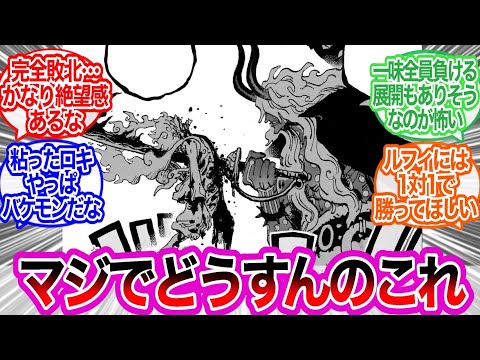
▶ Watch the original YouTube video
One Piece Episode 1188: Why Fans Say It Echoes the Legendary Crocodile Battle
One Piece Episode 1188 has sparked widespread discussion among fans, with many comparing the despair depicted in the episode to the iconic Crocodile battle from the Alabasta arc. After 15 years of following the series, viewers report experiencing the same emotional intensity they felt over a decade ago, suggesting the show’s creators deliberately crafted this moment to resonate with long-time fans through memory and narrative callback.
What Happened
Episode 1188 of One Piece presents a battle scenario where the protagonist Luffy finds himself in an apparently hopeless situation. Viewers flooded social media platforms with comments stating that the episode’s sense of despair reminded them of the Crocodile battle from the Alabasta arc, which aired in 2011. The overwhelming consensus among fans is that the episode successfully recreates the emotional weight of that earlier confrontation, despite 13 years separating the two events.
Why It Matters
This episode represents a significant achievement in long-form storytelling. The ability to evoke the same emotional response across a 13-year gap demonstrates sophisticated narrative design and an understanding of viewer psychology. For a series that has maintained a dedicated fanbase for nearly two decades, the capacity to reconnect audiences with past experiences while adding new layers of complexity speaks to the creative team’s mastery of their craft. The episode’s reception also reflects broader trends in anime production, where intentional callbacks to earlier moments have become a deliberate storytelling technique.
Background
The Crocodile battle occurred during the Alabasta arc, one of the earliest major story climaxes in One Piece. In that confrontation, Luffy faced an opponent whose abilities seemed to render the protagonist’s attacks ineffective, combined with a physical threat (poison) that created a time-limit element to the conflict. The battle became memorable not merely for its action sequences, but for the psychological despair it conveyed—the question of whether Luffy could possibly overcome such odds haunted viewers.
Episode 1188 reportedly employs a similar narrative structure: overwhelming opponent power, psychological pressure on the protagonist, and the absence of a clear path to victory. However, the current episode operates within a more complex narrative context, incorporating 13 years of character development, world-building, and thematic evolution.
Key Points
- Structural Similarity: Both the Crocodile battle and Episode 1188 employ three core elements—overwhelming power disparity, time-based pressure, and psychological uncertainty—to generate despair.
- Intentional Callback: The creative team appears to have deliberately designed Episode 1188 to echo the Crocodile battle, utilizing viewer memory as a narrative tool rather than relying solely on new plot developments.
- Evolved Emotional Depth: While the Crocodile battle represented youthful desperation, Episode 1188 operates on a more mature level, reflecting both character growth and audience maturation over 13 years.
- Industry Trend: The episode exemplifies a broader anime industry trend of incorporating intentional callbacks to earlier story moments, seen in series like Attack on Titan and Jujutsu Kaisen.
- Viewer Psychology: The episode’s impact stems from multiple psychological factors: temporal continuity, character development recognition, narrative inevitability, and accumulated trust in the creative team.
- Strong Reception: Across Twitter, YouTube, and discussion forums, Episode 1188 ranks among the highest-engagement episodes in recent One Piece history, indicating the callback strategy achieved its intended effect.
Timeline
- 2011: Crocodile battle airs as part of the Alabasta arc, establishing the despair narrative template.
- 2011-2024: Over 13 years of One Piece storytelling, including major arcs like Sabaody Archipelago, Marineford, and Wano Country.
- 2024: Episode 1188 airs, recreating the despair structure from the Crocodile battle with added narrative complexity.
- Post-Episode 1188: Fans immediately draw connections to the Crocodile battle, flooding social media with comparative analysis.
Perspectives
Long-Time Fans: Viewers who experienced the Crocodile battle 13 years ago report that Episode 1188 successfully recreates that emotional experience while adding new dimensions. Many describe the episode as historically significant within the series’ narrative arc.
Creative Analysis: Some viewers and critics argue that the episode represents a sophisticated use of memory-based narrative design. Rather than simply presenting a strong opponent, the creative team deliberately triggered viewer nostalgia to amplify emotional impact. This approach demonstrates high-level storytelling technique.
Skeptical Perspective: A minority of viewers question whether despair alone constitutes sufficient narrative substance. These commenters emphasize that the episode’s true value will depend on how the story resolves in subsequent episodes, noting that the Crocodile battle was followed by a satisfying conclusion in the Alabasta arc’s finale.
Industry Context: Within the broader anime landscape, Episode 1188 exemplifies a trend where long-running series deliberately incorporate callbacks to earlier moments. This strategy appears designed to deepen engagement with established audiences while rewarding long-term viewership.
Insights
Episode 1188 demonstrates that effective storytelling in long-form serialized media extends beyond individual episodes or even story arcs. The episode’s impact derives from its position within a 13-year narrative continuum. By recreating the emotional structure of the Crocodile battle while operating within a more complex narrative context, the creative team achieved something difficult to accomplish: evoking identical emotional responses across a decade-spanning gap.
The episode also illustrates how audience psychology and narrative design intersect. Viewers who experienced the Crocodile battle carry that memory forward; Episode 1188 activates that memory while simultaneously adding new layers of meaning through character development and thematic evolution. This approach suggests that the creative team views their audience not as isolated viewers of individual episodes, but as participants in a shared 13-year journey.
The strong reception across multiple platforms indicates that this strategy succeeded. The episode generated significant engagement precisely because it operated on multiple levels simultaneously—as a current story moment, as a callback to past events, and as a reflection on the passage of time itself.
Looking forward, the episode’s reception raises questions about narrative resolution. The Crocodile battle was followed by a definitive conclusion to the Alabasta arc. Episode 1188’s despair structure suggests that a similarly significant turning point may follow, potentially marking a major transition in the overall One Piece narrative.
Recommended Viewing for Deeper Understanding
- Crocodile Battle (Alabasta Arc): Episodes 130-135 provide essential context for understanding Episode 1188’s narrative callbacks.
- Sabaody Archipelago Arc: Episodes 523 onward introduce Luffy’s first major defeat, establishing a pattern of despair-driven narrative turning points.
- Marineford Arc: Episodes 457 onward represent the series’ previous peak of despair and emotional intensity.
- Comparative Series: Attack on Titan’s final season and Jujutsu Kaisen’s Shibuya Incident arc employ similar callback-based narrative strategies, providing context for understanding current anime industry trends.