▶ Watch the original YouTube video
What If Rau Le Creuset Survived? Analyzing Gundam SEED Fans’ Theories on an Alternate Ending
A YouTube video exploring fan theories about Rau Le Creuset’s potential survival in Gundam SEED FREEDOM has sparked renewed debate about how the franchise’s central philosophical conflict might have evolved. Drawing on 15 years of fan experience and comparative analysis of similar characters across anime, this exploration examines how Le Creuset’s continued existence would fundamentally reshape the narrative structure, character relationships, and ideological tensions that define the SEED universe.
- What Happened
- Why It Matters
- Background
- Key Points
- Organizational and Structural Implications
- Le Creuset and Durandal: Ideological Divergence
- Mediation and Mentorship: Le Creuset’s Potential Role
- Confrontation with Neo Roanoke: Empathy and Critique
- Reunion with Kira: Ideological Evolution
- Fan Reception and Community Discourse
- Comparative Analysis: Le Creuset Within Anime’s Philosophical Antagonists
- Practical Viewing Recommendations
- Broader Implications for Narrative Design
- Conclusion: Le Creuset’s Enduring Significance
What Happened
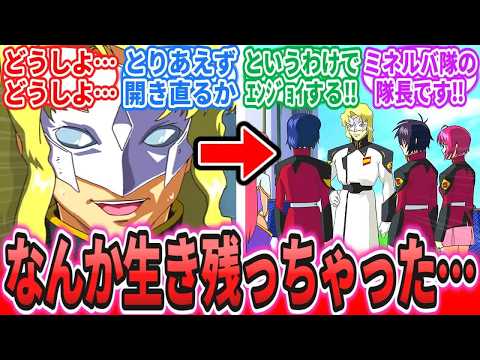
A viral YouTube video presenting fan reactions to an alternate scenario—”What if Rau Le Creuset had survived?”—has reignited discussion about one of Gundam SEED’s most pivotal character deaths. The video catalyzed deeper analysis of how Le Creuset’s presence aboard the Minerva would have altered the political dynamics within ZAFT, his relationship with Chairman Durandal, and his potential role as a mediator between conflicting ideologies represented by Kira Yamato and Shin Asuka. The discussion reflects a broader fan interest in exploring unrealized narrative possibilities within the SEED universe.
Why It Matters
Rau Le Creuset represents more than a conventional antagonist in Gundam SEED. He embodies a philosophical counterpoint to the series’ central themes—his nihilistic acceptance of fate contrasts sharply with Kira Yamato’s idealistic determination to protect his chosen world. Understanding how Le Creuset’s survival would reshape the narrative reveals fundamental truths about character design, narrative structure, and the ideological tensions that define the SEED franchise. For longtime fans and new audiences engaging with SEED FREEDOM, this analysis illuminates the thematic depth that made the original series culturally significant.
Background
Gundam SEED premiered in 2004 and concluded with Le Creuset’s death—a moment that profoundly affected viewers and established the series’ philosophical framework. Le Creuset, a genetically enhanced clone soldier, represented a worldview fundamentally opposed to Kira’s idealism. His final confrontation with Kira crystallized the series’ exploration of destiny, choice, and individual agency. Over the subsequent two decades, as fans revisited the series and engaged with SEED DESTINY, Le Creuset’s character continued to resonate, prompting recurring speculation about alternative scenarios. The recent release of SEED FREEDOM has renewed this discourse, with fans questioning whether Le Creuset’s absence was narratively necessary or merely tragic.
The video under discussion synthesizes multiple fan perspectives, drawing from online communities and social media discussions to construct a coherent analysis of how Le Creuset’s survival would alter key plot points, character arcs, and thematic resolutions across both SEED and SEED DESTINY.
Key Points
- Organizational Role: If Le Creuset had survived, his position within the Minerva would likely have been “Mobile Suit Squadron Leader” or equivalent, creating complex dynamics with existing command structures and personalities like Arthur Trine and Talia Gladys.
- Ideological Conflict with Durandal: Le Creuset’s philosophical stance—accepting fate rather than imposing it—would have made his cooperation with Durandal’s Destiny Plan uncertain, potentially destabilizing the Chairman’s grand strategy.
- Mediation Role: Le Creuset could have functioned as a philosophical mediator between Shin Asuka and Kira Yamato, having already transcended the existential struggles that torment younger soldiers.
- Confrontation with Neo Roanoke: Le Creuset’s encounter with Neo Roanoke—another genetically enhanced soldier struggling with identity—would have been emotionally charged, mixing empathy with philosophical critique.
- Reunion with Kira: A second meeting between Le Creuset and Kira would have reframed their ideological opposition, potentially leading to mutual understanding rather than antagonism.
- Thematic Implications: Le Creuset’s survival would have complicated the series’ treatment of destiny and choice, preventing the clean philosophical resolution that his death provided.
Organizational and Structural Implications
The most immediate challenge Le Creuset’s survival would have created is organizational. Within ZAFT’s military hierarchy, where would a genetically enhanced clone soldier with elite combat experience fit? This is not merely a matter of rank assignment; it directly impacts narrative flow and character interaction patterns.
Comparative analysis with Mobile Suit Gundam SEED ASTRAY reveals how similar scenarios—non-standard pilots integrating into formal military structures—create productive narrative tension. Le Creuset’s dual nature as both “Rau Le Creuset” (individual identity) and “genetic clone” (engineered origin) would have made his integration uniquely complex. Unlike conventional soldiers, Le Creuset carries philosophical baggage that transcends typical military hierarchy.
Arthur Trine’s presence aboard the Minerva would have functioned as a counterbalance to Le Creuset’s influence. Arthur’s role as the “voice of reason” and comedic foil would have created an interesting dynamic with Le Creuset’s more nihilistic worldview. Rather than unchecked authority, Le Creuset would have operated within a system of checks and balances, making his influence more subtle but potentially more profound.
Le Creuset and Durandal: Ideological Divergence
One of the most significant implications of Le Creuset’s survival concerns his relationship with Chairman Durandal. The moment when Durandal tells Rei “You are also Rau” carries profound weight—it suggests the Chairman viewed Le Creuset as more than a subordinate, but as a spiritual ally in pursuing his vision.
However, Le Creuset’s philosophy—acceptance of fate—fundamentally differs from Durandal’s project, which seeks to impose predetermined destinies on humanity. While both characters reject Kira’s idealism, their rejection stems from different premises. Le Creuset accepts fate as inevitable; Durandal seeks to engineer fate itself. This distinction would have created friction.
If Le Creuset had survived, Durandal’s Destiny Plan would have faced an unexpected obstacle: a powerful military figure whose philosophical framework contradicted the plan’s underlying assumptions. Le Creuset would not have actively opposed Durandal, but his mere existence would have introduced uncertainty into calculations that required absolute predictability.
Mediation and Mentorship: Le Creuset’s Potential Role
Perhaps Le Creuset’s most interesting potential function would have been as a philosophical mentor to younger soldiers, particularly Shin Asuka. Shin, like Kira, struggles against the constraints of his circumstances, but lacks the ideological clarity that sustains Kira’s resistance. Shin requires guidance from someone who has already transcended the existential crisis that defines his present.
Le Creuset, having accepted his nature as a clone and embraced his predetermined role before ultimately rejecting it, would have been uniquely positioned to help Shin navigate similar contradictions. Unlike Durandal, who seeks to control Shin’s choices, Le Creuset would have respected individual agency while illuminating the consequences of choice.
This dynamic parallels the structure found in Mobile Suit Gundam UC, where the protagonist encounters multiple adult figures offering competing philosophical frameworks. SEED DESTINY, with Le Creuset’s presence, would have developed similar complexity, with Kira, Shin, and Rei each receiving different guidance from a figure who understood their struggles from lived experience rather than ideological abstraction.
Confrontation with Neo Roanoke: Empathy and Critique
The prospect of Le Creuset encountering Neo Roanoke presents one of the most dramatically charged scenarios. Both are genetically enhanced soldiers struggling with questions of identity and origin. However, their responses differ fundamentally: Le Creuset eventually accepts his nature, while Neo attempts to escape it through amnesia and denial.
Le Creuset would have recognized in Neo a mirror of his own earlier struggles, but also a cautionary example of failed transcendence. Rather than simple anger, Le Creuset would likely have experienced a complex mixture of empathy and philosophical critique. He would have understood Neo’s pain while simultaneously recognizing the futility of Neo’s escape strategy.
This encounter would have allowed Le Creuset to articulate his core philosophy most directly: that running from one’s nature is impossible, and that true freedom emerges only through acceptance and understanding of one’s circumstances, not denial of them.
Reunion with Kira: Ideological Evolution
The potential reunion between Le Creuset and Kira represents the thematic heart of any survival scenario. Their original confrontation crystallized the series’ central conflict: idealism versus nihilism, choice versus fate, hope versus acceptance.
If Le Creuset had survived, this reunion would not have repeated their original dynamic. Instead, it would have demonstrated how both characters had evolved. Le Creuset, having lived beyond his original death, would have gained new perspective on his own philosophy. Kira, having fought through SEED DESTINY’s trials, would have developed greater nuance in his idealism.
Rather than the confrontational dialogue of their first meeting, Le Creuset might have offered something like: “I respect your choices. However, understand that every choice carries consequences that you alone must bear.” This represents neither capitulation to Kira’s idealism nor reassertion of Le Creuset’s nihilism, but rather a mature recognition that both perspectives contain partial truths.
Fan Reception and Community Discourse
The video’s exploration of fan reactions reveals significant patterns in how the SEED community engages with character analysis and narrative possibility. Multiple fan perspectives emerged:
Optimistic interpretations suggest Le Creuset would have become a stabilizing force aboard the Minerva, offering wisdom and perspective that could have prevented some of SEED DESTINY’s tragic outcomes. These fans view Le Creuset as fundamentally good-aligned, merely operating from a different philosophical framework.
Critical interpretations argue that Le Creuset’s presence would have complicated matters further, potentially creating additional conflict and preventing resolution of central plot threads. These fans emphasize Le Creuset’s role as antagonist and question whether his survival would have served narrative coherence.
Structural interpretations focus on how Le Creuset’s survival would have altered organizational dynamics, military strategy, and political maneuvering within ZAFT. These analyses treat Le Creuset as a variable that would have cascading effects throughout the narrative system.
Notably, social media discussions following SEED FREEDOM’s release have included speculation about genetic relationships between Le Creuset and Rei, reflecting fan recognition of their shared clone status and philosophical similarities. This suggests audiences are engaging with the series at a level of thematic and genetic analysis that extends beyond surface-level character appreciation.
Comparative Analysis: Le Creuset Within Anime’s Philosophical Antagonists
Understanding Le Creuset’s significance requires positioning him within broader anime traditions of philosophical antagonism. Unlike conventional villains motivated by power or revenge, Le Creuset embodies a complete worldview that challenges the protagonist’s fundamental assumptions.
Comparisons to Lelouch from Code Geass: Rebellion reveal interesting parallels. Both characters pursue grand designs that require controlling others’ choices, and both eventually recognize the moral cost of such control. However, Le Creuset’s acceptance of fate differs from Lelouch’s active pursuit of world domination. Where Lelouch must learn through catastrophic failure, Le Creuset arrives at his philosophy through contemplation of his own nature.
These comparative frameworks illuminate why Le Creuset’s survival would have enriched SEED DESTINY’s thematic exploration. His presence would have provided a living counterargument to Durandal’s Destiny Plan, a philosophical alternative that neither fully embraces nor fully rejects the Chairman’s vision.
Practical Viewing Recommendations
For audiences seeking to deepen their engagement with SEED and SEED DESTINY, several viewing practices enhance understanding of Le Creuset’s character and his potential alternate role:
Revisit SEED’s finale: Pay particular attention to Le Creuset and Kira’s final dialogue. Observe what Le Creuset says and, equally importantly, what he chooses not to say. This reveals his character’s depth and hints at philosophical positions he never fully articulates.
Track Durandal’s references to Le Creuset: Throughout SEED DESTINY, note how frequently and in what contexts the Chairman invokes Le Creuset’s memory. This reveals the ideological investment Durandal had in his deceased subordinate.
Analyze Shin Asuka’s character arc: Consider what mentorship Shin lacks and how Le Creuset’s presence might have redirected his development. This illuminates the narrative functions Le Creuset could have served.
Engage with related works: Mobile Suit Gundam UC presents a similar structure where multiple adult figures offer competing philosophical frameworks to a young protagonist. This comparative viewing enriches understanding of how SEED DESTINY might have developed with Le Creuset’s presence.
Broader Implications for Narrative Design
Le Creuset’s survival scenario illuminates fundamental principles of narrative design and character function. His death, while emotionally impactful, served a specific narrative purpose: it provided philosophical closure by removing the living embodiment of nihilism from the story world. His survival would have prevented such closure, instead creating ongoing tension between competing worldviews.
This raises questions about whether narrative resolution requires the death of philosophical antagonists, or whether mature storytelling can accommodate coexistence of fundamentally opposed perspectives. SEED FREEDOM’s release suggests contemporary audiences may be ready for more complex resolutions that don’t require elimination of alternative viewpoints.
The fan engagement documented in the video indicates that audiences recognize Le Creuset as more than a conventional villain. They understand him as a philosophical position made flesh, and they recognize that his death represents not just a character’s end but the suppression of an entire worldview from the narrative space.
Conclusion: Le Creuset’s Enduring Significance
After nearly two decades of engagement with Gundam SEED, the persistence of “what if Le Creuset survived” speculation reveals something fundamental about the character’s design and thematic importance. Le Creuset is not forgotten because he represents something irreplaceable: a complete philosophical alternative to the series’ dominant ideology.
His survival would not have simply added another character to the cast. It would have fundamentally altered the narrative’s ideological landscape, creating space for nuanced exploration of fate, choice, and individual agency that his death foreclosed. The Minerva, with Le Creuset aboard, would have become a philosophical battleground where Durandal’s determinism, Kira’s idealism, and Le Creuset’s acceptance competed for narrative dominance.
Most significantly, Le Creuset’s potential role as mentor to Shin Asuka would have provided the younger generation with access to hard-won wisdom about transcending existential crisis. Rather than repeating the ideological conflicts of their elders, Shin and his peers might have developed more sophisticated philosophical frameworks under Le Creuset’s guidance.
The video’s exploration of fan theories ultimately affirms what longtime SEED enthusiasts have always understood: that Le Creuset’s death was not inevitable but chosen, and that the narrative possibilities foreclosed by his death remain worth exploring. As the franchise continues to evolve, the question “What if Le Creuset had survived?” remains a productive lens for understanding the series’ deepest thematic commitments and unrealized potential.
As Le Creuset himself might have said, if he had lived to see this enduring fan engagement with his memory: “Measured and yet still living on through this discourse, I suppose I’ll simply enjoy the role of observer to these endless possibilities.”