▶ Watch the original YouTube video
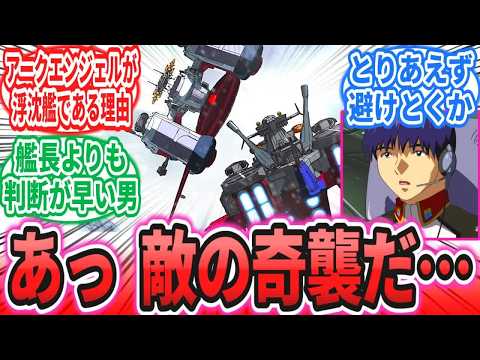
Why the Archangel Is the Strongest Battleship in Gundam SEED: A 15-Year Fan Analysis
The Archangel, the primary battleship in Mobile Suit Gundam SEED, dominates the battlefield in ways that fundamentally challenge the traditional role of warships in the Gundam franchise. Through 15 years of fandom experience and comparative analysis with other Gundam series, this deep dive explores why the Archangel transcends its classification as a mere support vessel to become a narrative and tactical centerpiece.
What Happened
Online discussions have intensified around the question: “Why is the Archangel the strongest battleship?” This debate emerged from fan observations that the Archangel operates at a level of combat effectiveness and narrative importance that far exceeds typical warship roles in the Gundam universe. Unlike support vessels in other Gundam series, the Archangel functions as an independent combat force and the central axis of the entire story, commanding attention alongside protagonist mobile suits like the Freedom Gundam.
Why It Matters
The Archangel’s prominence represents a significant departure from established Gundam conventions, where battleships traditionally serve as mobile suit support platforms. This shift redefines how warships function in mecha anime storytelling. Understanding why the Archangel achieves “strongest” status—through firepower, defense, tactical command, and narrative centrality—reveals broader trends in how the mecha genre evolved in the 2000s and influenced subsequent robot anime productions. The Archangel’s success as a narrative device challenged the industry-wide assumption that mobile suits must always be the primary focus.
Background
Mobile Suit Gundam SEED aired in 2002-2003, introducing the Archangel as the flagship of the Earth Alliance’s Eighth Fleet. The ship is commanded by Captain Maryu Ramius, whose tactical brilliance becomes inseparable from the vessel’s combat effectiveness. The protagonist Kira Yamato pilots the Freedom Gundam, yet the narrative consistently positions the Archangel as equally—if not more—critical to the story’s progression. This contrasts sharply with earlier Gundam series like the original Mobile Suit Gundam (White Base) or Gundam ZZ (Endora), where battleships remained firmly in supporting roles. The Archangel’s design incorporates multiple large-scale beam cannons, advanced shield systems, and exceptional mobility for a vessel of its class, creating a combat platform that can independently engage and destroy mobile suit squadrons.
Key Points
- Overwhelming Firepower: The Archangel’s multiple beam cannons and missile systems enable it to annihilate mobile suit formations independently, a capability that exceeds typical battleship specifications.
- Captain Maryu Ramius’s Command: Her tactical precision and emotionally detached decision-making maximize the Archangel’s combat potential, distinguishing her from commanders in other Gundam series.
- Exceptional Mobility and Defense: The Archangel combines shield systems with unusual maneuverability for a battleship, allowing it to evade attacks while maintaining offensive capability.
- Narrative Centrality: All major dramatic developments—conflicts between Kira and Athrun, Flay’s conspiracies, and Shin’s emergence—unfold aboard the Archangel, making it a protagonist-level entity rather than mere backdrop.
- Fan Recognition of Anomaly: Online communities widely acknowledge that a battleship achieving primary-role status contradicts Gundam franchise conventions, generating sustained debate about its implications.
- Comparative Superiority: When measured against contemporary warships like the Minerva from Gundam SEED Destiny, the Archangel surpasses all performance metrics and narrative influence.
Tactical and Narrative Analysis
Firepower and Defense Integration
In traditional Gundam storytelling, battleships function as mobile bases with limited independent combat capacity. The Archangel inverts this formula. Its arsenal of large-scale beam cannons, when fired simultaneously, generates destructive force that single mobile suits cannot withstand. This design philosophy appears intentional: in the video game Mobile Suit Gundam SEED: Federation vs. Z.A.F.T., the Archangel’s attack range and damage output significantly influence game balance, suggesting the developers recognized it as a combat unit transcending standard battleship classification.
The ship’s defensive systems further distinguish it. While conventional warships prioritize armor over mobility, the Archangel integrates shield technology with combat-grade maneuverability, allowing it to absorb incoming fire while repositioning for counterattacks. This combination violates established battleship design principles.
Command Structure and Tactical Superiority
A battleship’s performance depends entirely on its commanding officer. Captain Maryu Ramius demonstrates decision-making precision that separates her from other Gundam commanders. She prioritizes tactical analysis over emotional impulse, predicting enemy attack patterns and executing evasive maneuvers before threats materialize. This represents information-based superiority—the Archangel consistently operates from positions of strategic advantage, both spatially and informationally.
Comparison with other Gundam commanders reveals this distinction. While officers like those commanding the Lah Kailam in Gundam UC demonstrate competence, their decisions occasionally reflect emotional hesitation. Ramius maintains unwavering commitment to optimal tactical solutions, amplifying the Archangel’s inherent capabilities.
Narrative Positioning
Gundam SEED’s story structure places the Archangel at its narrative center. Rather than functioning as a mobile base, the ship becomes the stage upon which all major dramatic conflicts unfold. Kira and Athrun’s ideological struggle, Flay’s machinations, and Shin’s introduction all occur within the Archangel’s context. This differs fundamentally from other Gundam series, where battleships remain peripheral to protagonist-focused narratives. The Archangel’s narrative weight elevates it beyond mechanical specifications into the realm of story architecture.
Comparative Analysis: Archangel vs. Other Gundam Battleships
| Series | Battleship | Firepower | Defense | Narrative Impact | Commander Quality |
|---|---|---|---|---|---|
| Mobile Suit Gundam | White Base | Moderate | Moderate | Moderate | Bright Noah (Excellent) |
| Mobile Suit Gundam Z | Argama | Moderate | Moderate | Moderate | Henkel Heinkel (Mediocre) |
| Gundam SEED Destiny | Minerva | High | High | Low | Talia Gladys (Competent but Limited) |
| Gundam SEED | Archangel | Exceptional | Exceptional | Exceptional | Maryu Ramius (Outstanding) |
This comparison demonstrates the Archangel’s unique position. While the Minerva matches or exceeds the Archangel in raw specifications, it remains subordinate to protagonist mobile suit narratives. The Archangel, conversely, actively shapes protagonist behavior and story direction. This distinction—narrative agency rather than mere mechanical superiority—defines its “strongest” status.
Online Community Perspectives
Internet discussions reveal consistent themes. Twitter users frequently note that “a battleship achieving protagonist-level combat roles is unprecedented in Gundam.” This observation reflects genuine surprise at the franchise’s established conventions being challenged. The statement itself constitutes a challenge to Gundam’s traditional hierarchy, where mobile suits occupy the primary narrative position.
On 5-channel Gundam forums, recurring questions emerge: “If the Archangel’s firepower is this overwhelming, why are mobile suits necessary?” This question addresses a fundamental tension in the narrative design. The Archangel’s destructive capacity genuinely exceeds single mobile suit defensive capabilities, yet the story maintains mobile suit prominence. This paradox generates sustained fan debate.
Positive interpretations frame the Archangel’s prominence as Gundam SEED’s defining characteristic, distinguishing it from other Gundam entries. This perspective recognizes the battleship’s role as a deliberate creative choice rather than narrative oversight.
The Source of Archangel’s “Strength”
Tactical Superiority Beyond Specifications
“Strongest” cannot be measured by firepower alone. The Archangel achieves superiority through tactical positioning. It consistently initiates combat from elevated spatial positions, providing geometric advantage. Under Ramius’s command, it anticipates enemy movements and executes preemptive evasive maneuvers. These factors—spatial advantage and information superiority—combine to create overwhelming tactical dominance. In the Super Robot Wars game series, the Archangel consistently receives mechanics allowing it to act before enemies, mechanically representing this tactical advantage.
Narrative Resilience
Throughout Gundam SEED, the Archangel repeatedly faces seemingly insurmountable odds. Each time, Ramius’s command and the ship’s capabilities overcome these crises. This pattern mirrors the role of the Unicorn Gundam in Gundam UC, which repeatedly transcends desperate situations through protagonist growth. However, a critical distinction exists: Unicorn’s power derives from protagonist development, while the Archangel’s strength originates from inherent vessel capability and command excellence. This difference—external superiority rather than internal growth—fundamentally defines the Archangel as a “strongest” entity.
Industry Trend Implications
Early 2000s anime industry trends favored mobile suits over battleships. Gundam SEED reversed this trajectory by positioning a battleship as narrative centerpiece. Subsequent analysis of robot anime from the past five years reveals this “battleship revaluation” trend propagating to other series. Soukyuu no Fafner features the battleship Alvis as a central narrative element. The Macross franchise consistently emphasizes battleship combat importance. Gundam SEED functioned as the trend’s pioneer, demonstrating that battleships could sustain primary narrative roles.
The Disconnect Between Creator Intent and Fan Expectation
A notable tension exists between apparent creator intention and fan reception. The production team likely intended to establish the Archangel and Freedom Gundam as parallel protagonists—neither subordinate to the other. Fan expectations, however, centered on the Freedom Gundam as the supreme combat entity. This divergence generated the very debate surrounding the Archangel’s “strongest” status. The question itself—why a battleship rivals or exceeds a mobile suit in importance—reflects this unresolved tension between narrative design and audience assumptions.
Insights
The Archangel represents a fundamental redefinition of the battleship’s role within mecha anime. Traditionally, warships functioned as support infrastructure—necessary but subordinate to mobile suit protagonists. Gundam SEED challenged this hierarchy, establishing the Archangel as an independent combat force and narrative centerpiece. This shift was not merely mechanical but philosophical, questioning whether mobile suits must always dominate robot anime storytelling.
The sustained online debate about the Archangel’s “strength” reflects genuine uncertainty about this paradigm shift. Fans accustomed to mobile suit primacy experienced cognitive dissonance when a battleship achieved equivalent narrative weight. Rather than resolving this tension, the series embraced it, allowing both the Archangel and Freedom Gundam to function as protagonists.
The Archangel’s legacy extends beyond Gundam SEED itself. It demonstrated that battleships could sustain audience interest and narrative complexity, influencing subsequent robot anime productions. Its success validated an alternative approach to mecha storytelling—one where warships transcend support roles to become primary dramatic entities.
Ultimately, the Archangel’s “strongest” status derives not from any single factor but from the integration of exceptional firepower, superior defense systems, outstanding command, and narrative centrality. No other Gundam battleship combines these elements with equal effectiveness. This comprehensive superiority, rather than dominance in any isolated metric, defines the Archangel as the franchise’s strongest warship and one of mecha anime’s most significant narrative innovations.