▶ Watch the original YouTube video
Why Aslan Perfectly Masters the Strike Freedom Gundam: A Deep Analysis of Gundam SEED
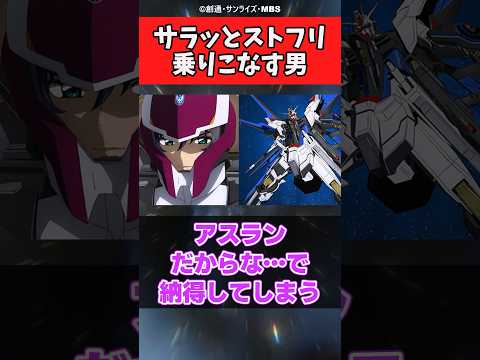
In the theatrical film “Mobile Suit Gundam SEED FREEDOM,” rival character Aslan Zala pilots Kira Yamato’s custom Strike Freedom Gundam with remarkable proficiency. This analysis explores why Aslan’s mastery of Kira’s specialized mobile suit represents far more than exceptional piloting skill—it reveals the fundamental nature of his character as an adaptive ace pilot.
What Happened
In “Gundam SEED FREEDOM,” Aslan Zala assumes control of the Strike Freedom Gundam, a mobile suit specifically designed and tuned by protagonist Kira Yamato. Rather than struggling with the unfamiliar machine, Aslan operates it with complete proficiency, executing complex maneuvers and deploying the Dragoon system—Kira’s custom remote weapon configuration—as naturally as if he had piloted the suit for years. This moment surprised many viewers, prompting widespread discussion about how a pilot trained in Zeon-aligned ZAFT technology could seamlessly operate an Earth Federation mobile suit customized to Kira’s individual preferences.
Why It Matters
Aslan’s mastery of the Strike Freedom represents a culmination of character development spanning the entire Gundam SEED series. Rather than being a convenient plot device, this moment validates years of narrative setup and reveals the true nature of Aslan’s exceptional abilities. Understanding why Aslan can pilot Kira’s machine illuminates the distinction between “perfect pilots” and “adaptive pilots”—a thematic distinction central to the Gundam franchise. For fans and analysts, this scene encapsulates how character consistency and foreshadowing can justify seemingly impossible feats within a fictional narrative.
Background
Aslan Zala has piloted multiple mobile suits throughout the Gundam SEED series, each with fundamentally different design philosophies. He began with the Zinn, progressed to the Aegis, then the Justice, and finally to the Strike Freedom in the theatrical film. Notably, the Justice and Strike Freedom represent opposite technological lineages—one designed by ZAFT (Zeon-aligned), the other by the Earth Federation. Additionally, a critical narrative detail involves Zaft Chairman Durandal preparing the Legend mobile suit for Aslan, a foreshadowing element that becomes relevant to understanding his Strike Freedom proficiency. Both the Legend and Strike Freedom share a common technological foundation: the Dragoon system, an advanced remote weapon platform requiring exceptional piloting coordination.
Key Points
- Dragoon System Mastery: Both the Legend (prepared for Aslan by Durandal) and the Strike Freedom utilize Dragoon technology, providing a logical foundation for Aslan’s rapid adaptation to Kira’s machine.
- Multi-Machine Experience: Aslan’s demonstrated ability to pilot diverse mobile suits with different design philosophies establishes a pattern of exceptional adaptability across technological platforms.
- Durandal’s Foresight: The narrative detail that Zaft’s chairman prepared an advanced mobile suit for Aslan suggests the leadership recognized his unique capability to master complex systems.
- Pilot-Machine Integration: Rather than merely operating controls, Aslan achieves true integration with the Strike Freedom, executing maneuvers distinctly different from Kira’s style while maintaining full system functionality.
- Narrative Consistency: The film employs the recurring logic “Aslan can do it,” which functions as a legitimate narrative principle given his established track record rather than mere convenience.
- Character Relationship Symbolism: Aslan’s piloting of Kira’s machine represents the evolution of their rivalry into mutual trust and cooperation.
Timeline
- Gundam SEED Series: Aslan progressively pilots Zinn, Aegis, and Justice mobile suits, establishing his adaptability across different technological systems.
- Mid-Series Development: Zaft Chairman Durandal prepares the Legend mobile suit for Aslan, foreshadowing his capability to handle advanced Dragoon-equipped systems.
- Gundam SEED FREEDOM (Theatrical Film): Aslan assumes control of the Strike Freedom Gundam and demonstrates complete mastery of Kira’s custom configuration.
Perspectives
The Adaptive Pilot Interpretation: Aslan represents a distinct archetype within the Gundam franchise—the adaptive ace pilot. Unlike Amuro Ray, whose abilities are intrinsically tied to the original Gundam, Aslan demonstrates the capacity to understand and master fundamentally different mechanical systems. His success with the Strike Freedom stems not from supernatural abilities (like Newtype powers) but from superior technical comprehension and practical experience. He understands not merely how to operate controls, but the underlying principles governing complex systems like the Dragoon platform.
The Narrative Foreshadowing Interpretation: The detail regarding Durandal’s preparation of the Legend for Aslan functions as deliberate narrative setup. The film’s creative team established Aslan’s capability to handle Dragoon-equipped systems well before the Strike Freedom scene, making his proficiency a logical consequence of established plot elements rather than an arbitrary convenience.
The Character Relationship Interpretation: Aslan’s piloting of Kira’s machine symbolizes the transformation of their relationship from rivalry to cooperation. By operating Kira’s custom-tuned machine effectively, Aslan demonstrates his willingness to embrace Kira’s technological approach and, by extension, his trust in Kira’s judgment and design philosophy.
Comparative Analysis
The Gundam franchise contains precedents for rival characters piloting protagonist machines. In “Mobile Suit Gundam Wing,” Quatre pilots the Wing Zero, though this feat relies heavily on Newtype-adjacent supernatural intuition rather than technical mastery. Aslan’s approach differs fundamentally—he achieves Strike Freedom proficiency through pure piloting skill and mechanical understanding, without invoking supernatural abilities. This distinction makes his achievement more grounded and narratively satisfying within the Gundam SEED universe’s established rules.
Insights
Aslan’s mastery of the Strike Freedom reveals that “adaptability” and “perfection” represent fundamentally different character archetypes. While perfection implies unchanging excellence in a fixed domain, adaptability implies the capacity for growth and transformation across diverse circumstances. Throughout the Gundam SEED series, Aslan has consistently demonstrated this adaptive capacity—not only in piloting different mobile suits but in navigating political allegiances, organizational changes, and evolving combat environments. His ability to pilot Kira’s machine represents the culmination of this character arc.
The film’s repeated invocation of “Aslan can do it” as narrative justification functions legitimately because the series has systematically established this capability. Rather than representing lazy writing, this narrative logic parallels how the original Gundam series employed “Newtype abilities” to justify seemingly impossible feats. In Gundam SEED, “Aslan’s adaptability” serves an equivalent narrative function—a principle grounded in character development rather than external convenience.
For viewers approaching Gundam SEED for the first time, understanding Aslan’s character requires attention to his progression across multiple mobile suits, his political transformations, and the subtle foreshadowing regarding his technical capabilities. The Strike Freedom scene rewards viewers who have invested in understanding Aslan’s journey, transforming what might initially seem implausible into a satisfying payoff of long-term character development. This approach demonstrates how serialized storytelling can justify seemingly extraordinary character moments through consistent narrative architecture.