▶ Watch the original YouTube video
How JoJo’s Bizarre Adventure Game Dialogue Creates Chemistry Impossible in the Anime
JoJo’s Bizarre Adventure game titles have generated unprecedented fan enthusiasm by featuring character interactions that could never occur in the original manga or anime. These dialogue sequences bring together characters from different story arcs and time periods, creating “what-if” scenarios that resonate deeply with longtime fans and reveal new dimensions of beloved characters.
What Happened
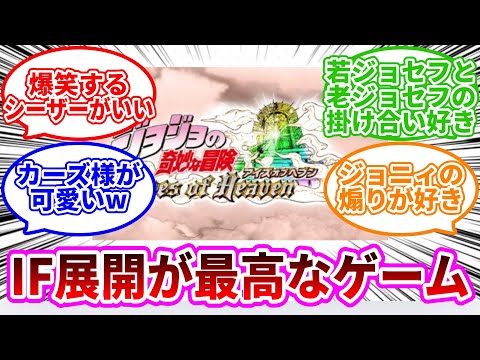
JoJo’s Bizarre Adventure game adaptations, particularly “Eyes of Heaven” for PlayStation 3, have introduced character interactions that transcend the limitations of the original narrative. These games feature dialogue between characters from different story arcs—some separated by over a century in the fictional timeline—creating moments that fundamentally cannot exist in the source material. Fan reactions to these interactions have been overwhelmingly positive, with viewers expressing both delight and frustration that such scenes never appeared in the anime or manga.
Why It Matters
These game-exclusive dialogues represent a significant evolution in how multimedia franchises can expand their universes. For JoJo fans who have followed the series across multiple decades and story arcs, these interactions fulfill a deep narrative desire: witnessing how characters from different eras would interact if they existed in the same timeline. The phenomenon demonstrates how games can serve as a complementary medium to anime and manga, offering creative expression that time constraints and narrative structure make impossible in traditional formats. This approach has become increasingly relevant as anime studios seek ways to deepen fan engagement beyond the primary source material.
Background
JoJo’s Bizarre Adventure spans eight story arcs, each featuring a different protagonist and set in different time periods, from 1887 to the present day. The series’ central theme involves destiny, inheritance, and conflict that transcends time itself—with antagonists like Dio Brando appearing across multiple generations. While the manga and anime have explored these temporal connections, they have never allowed characters from different arcs to directly interact. Game adaptations, particularly “Eyes of Heaven,” removed this narrative constraint, enabling unprecedented character combinations. The original manga began serialization over 30 years ago, and the anime adaptation of Part 3 “Stardust Crusaders” aired in the late 1980s, establishing the foundation for a fanbase that has grown deeply invested in the entire franchise.
Key Points
- Cross-generational character meetings: Games enable characters separated by decades or centuries to share scenes, creating “what-if” scenarios impossible in canon narrative
- Character depth revelation: Dialogue sequences expose hidden facets of characters’ personalities and relationships under circumstances that never occur in the original story
- Voice acting chemistry: New combinations of voice actors create unexpected dramatic and comedic resonance that enriches character dynamics
- Creator intent expression: Game developers demonstrate deep understanding and affection for characters through carefully crafted interactions that reflect the source material’s themes
- Expanded character presence: Characters with limited screen time in the original narrative gain new opportunities to shine and develop meaningful connections
- Emotional resonance through reunion: Deceased characters from the original story return to interact with living characters, creating poignant moments of connection that move fans emotionally
Comparative Analysis: Why JoJo Games Stand Apart
| Element | JoJo Games | Other Fighting Games |
|---|---|---|
| Character Timeline Differences | Characters from different story arcs (100+ year gaps) interact | Typically same timeline; temporal gaps rarely exceed decades |
| Dialogue Depth | Reflects complex relationships from extensive source material | Often game-original settings with less narrative foundation |
| Fan Expectations | Extremely high anticipation for impossible “what-if” scenarios | Character interactions generally fall within predictable ranges |
Notable Dialogue Examples and Their Significance
Caesar recognizing cross-dressed Joseph: This interaction exemplifies the deep bond between characters. In the original narrative, Caesar dies before the events where Joseph disguises himself as a woman occur. The game’s inclusion of this scene celebrates their relationship’s profundity—Caesar’s ability to recognize Joseph despite disguise reflects the unbreakable trust between them.
Bucciarati and Trish interactions: Game dialogue brings Bucciarati’s protective, parental affection for Trish into sharper focus. While the anime depicts his willingness to betray his organization to protect her, game conversations make this emotional bond more explicit and nuanced, revealing both his tenderness and occasional irony.
Jonathan and Dio confrontation: The most complex dialogue pairing in the games, this interaction carries the weight of the entire series’ central tragedy. Seeing these two characters face each other directly—something impossible in canon—forces both characters and players to confront the fundamental conflict that defines the entire franchise.
Fan Community Response
Online fan reactions reveal consistent themes: surprise that such scenes never appeared in the anime, emotional impact from witnessing deceased characters interact with living ones, and appreciation for the developers’ deep understanding of character relationships. Comments like “Why wasn’t this in the original anime?” reflect both frustration with narrative constraints and gratitude that games provided an outlet for these interactions. Fans particularly respond to moments that honor character deaths while allowing those characters new narrative presence—creating bittersweet experiences that deepen emotional investment in the franchise.
The intensity of fan engagement suggests that game dialogue serves a genuine narrative function beyond entertainment. For fans who have followed the series across decades, these interactions fulfill a psychological need to see their favorite characters interact across the franchise’s expansive timeline.
Insights
JoJo’s Bizarre Adventure game dialogues represent a sophisticated understanding of how different media can serve complementary narrative functions. The anime and manga establish character depth and story arcs; games extend this foundation by exploring relationships that the primary narrative structure prevents. This approach succeeds because it respects the source material while expanding its possibilities.
The phenomenon also reveals evolving fan expectations for multimedia franchises. Audiences no longer view supplementary media as secondary content—they expect it to offer genuine narrative value and emotional resonance. For JoJo specifically, the multi-generational structure of the story creates natural demand for cross-arc interactions that games uniquely satisfy.
Importantly, game dialogues function as expressions of creator affection for characters. Rather than cynical fan service, these interactions demonstrate developers’ commitment to honoring character complexity and relationships established across decades of storytelling. This authenticity resonates with fans and validates their investment in the franchise.
The success of this approach suggests a model for other long-running, multi-arc franchises seeking to deepen fan engagement. By recognizing that different media have different narrative possibilities, creators can use games not as mere adaptations but as genuine extensions of the fictional universe—spaces where imagination and constraint-free interaction can flourish.