▶ Watch the original YouTube video
Who Is Shuta? Decoding the Fairy Mystery in Detective Precure
Detective Precure has introduced an unusual mystery: the true identity of the fairy Shuta remains deliberately obscured by official sources. After 15 years of tracking the Precure franchise, one analyst explores the leading theories, contradictions, and what the show’s puzzle design reveals about the series’ evolution toward audience-driven mystery solving.
What Happened
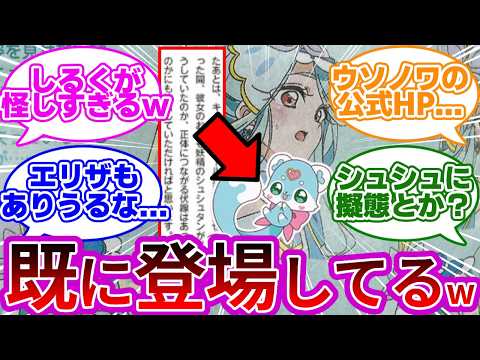
Detective Precure has introduced a mystery that breaks from franchise tradition: the official sources have posed a direct question to viewers—”Where was Shuta while Eclaire was absent?”—without providing a clear answer. Unlike previous Precure fairy characters whose identities were revealed early or established from the start, Shuta’s true nature remains ambiguous, prompting fans to actively theorize about the character’s origins.
Why It Matters
This mystery signals a significant shift in how the Precure franchise engages its audience. Recent Precure series have increasingly incorporated mystery elements—from cosmic backgrounds in Star Twinkle Precure to the origins of fairies in Delicious Party Precure. Shuta’s identity puzzle represents the franchise’s evolution from straightforward storytelling toward interactive, audience-driven mystery solving. This approach appeals to long-time fans while maintaining engagement across multiple age groups, transforming Precure from a children’s anime into a multi-generational entertainment property.
Background
The Precure franchise began in 2005 and has maintained consistent storytelling conventions for nearly two decades. Fairy characters have traditionally served as mentors or comic relief, with their origins clearly established early in each series. However, starting with recent installments, the franchise has begun layering mysteries into fairy character design and backstory. Detective Precure accelerates this trend by making a fairy’s identity the central unresolved question, explicitly inviting fan speculation through official channels.
Key Points
- The Core Mystery: Official sources have directly asked “Where was Shuta while Eclaire was absent?”—suggesting Shuta’s identity is tied to an existing character rather than an entirely new entity.
- Leading Theory—Silk: The character Silk shows visual similarities to Shuta (hand gestures, design elements) and is the most widely supported candidate, though her stated family background contradicts typical fairy lore.
- The Tanuki Connection: Shuta’s tanuki motif is significant because tanuki in Japanese folklore are known for shapeshifting, suggesting Shuta may possess multiple forms or identities.
- Jewel Theory: An alternative hypothesis proposes Shuta is not a fairy but rather a sealed jewel containing Eclaire’s power, though this conflicts with the “location” aspect of the official question.
- Arcana’s Role: The character Arcana, who wears glasses, may follow a historical Precure pattern where bespectacled characters become non-transforming supporters rather than Precure themselves.
- Merchandise Clues: Upcoming toys featuring wrap-around functionality suggest Shuta may have a form that coils around the wrist, hinting at future story developments.
Analysis of Leading Theories
The Silk Hypothesis
Silk remains the strongest candidate based on multiple forms of evidence. Visual analysis reveals similarities in hand gestures and design elements between Silk and Shuta. The character’s connection to Sherlock Holmes—a famous detective—aligns thematically with the series title “Detective Precure,” suggesting intentional narrative layering rather than coincidence.
However, a critical contradiction exists: Silk references her parents, which contradicts standard Precure fairy lore where fairies lack family structures. Recent Precure series, particularly Healing Good Precure, have introduced family concepts for fairy characters, suggesting the franchise’s world-building has evolved to accommodate this possibility. Additionally, all information about Silk’s background comes exclusively from Silk herself—no other character corroborates her history. This pattern mirrors how a fairy disguised as a human would need to establish her own cover story.
The Jewel Theory
An alternative explanation proposes Shuta is actually a sealed jewel containing Eclaire’s power rather than an independent fairy. Evidence supporting this includes the established concept of jewels within the series’ lore and the fact that other characters appear to possess complete knowledge about jewels. However, this theory conflicts with the official question’s phrasing: “Where was Shuta?” The use of “where” implies a location-based answer, suggesting Shuta is a mobile entity rather than a stationary object.
The Shapeshifter Possibility
The tanuki motif deserves particular attention. In Japanese folklore, tanuki are renowned for their ability to shapeshift and deceive. This characteristic suggests Shuta may possess multiple forms or identities. If combined with the Silk theory, this creates a compelling double-structure: Silk could be a human character, while Shuta—the tanuki fairy—borrows her appearance. This would explain both the visual similarities and the contradiction regarding family background.
Broader Franchise Patterns
The Glasses Character Rule
Historical analysis of Precure series reveals a consistent pattern: main characters wearing glasses typically become non-transforming supporters rather than Precure themselves. Examples include supporting characters in Precure 5 and the character Satoru in Wonderful Precure, both of whom wore glasses and remained in support roles despite having access to transformation knowledge.
Arcana, who wears glasses and shows interest in becoming a Precure, likely follows this established pattern. While Arcana may eventually learn the Precure secret, she will probably remain a civilian supporter rather than gain transformation abilities. This represents a consistent design philosophy across multiple series.
Fan Theories and Online Discussion
Twitter discussions have overwhelmingly favored the Silk theory, with hundreds of retweets supporting this interpretation. Reddit and forum communities have engaged in more detailed analysis, examining contradictions in Silk’s backstory and proposing the family-concept evolution as a resolution.
YouTube comments have attempted age-based deduction, comparing character ages and official profile information. However, these analyses contain a critical flaw: they conflate anime timeline information with official profile timestamps, which are not necessarily synchronized. Official profiles typically reflect current information rather than real-time updates, making age-based elimination unreliable without additional context.
Insights
Shuta’s unresolved identity represents a watershed moment for the Precure franchise. Fifteen years ago, when the series began, fairy origins were straightforward and self-evident. Today, the franchise deliberately constructs mysteries that require active viewer participation to solve. This evolution reflects broader changes in anime consumption: franchises increasingly design content to encourage fan communities to engage in collaborative theorizing and analysis.
The official decision to pose a direct question—”Where was Shuta?”—rather than provide an answer signals that the production team has intentionally embedded clues throughout the series for attentive viewers to discover. This approach transforms passive viewing into active investigation, extending viewer engagement beyond individual episodes.
The Silk theory’s dominance among fans, combined with the tanuki shapeshifter motif and the franchise’s evolving approach to fairy characterization, suggests the answer likely involves an existing character whose dual nature has been carefully concealed. Whether this resolution validates fan theories or introduces an unexpected twist, the mystery itself has achieved its purpose: it has made Precure a franchise where long-time viewers and newcomers alike engage in collaborative meaning-making.
Future episodes featuring Shuta’s perspective or Arcana’s role in the narrative will prove decisive. The franchise’s commitment to mystery-driven storytelling indicates that answers will emerge through careful observation rather than explicit exposition—a significant departure from Precure’s traditional narrative approach.