▶ Watch the original YouTube video
Cruze’s Resurrection in Gundam SEED FREEDOM: How a 20-Year-Old Narrative Returns to Challenge Fans
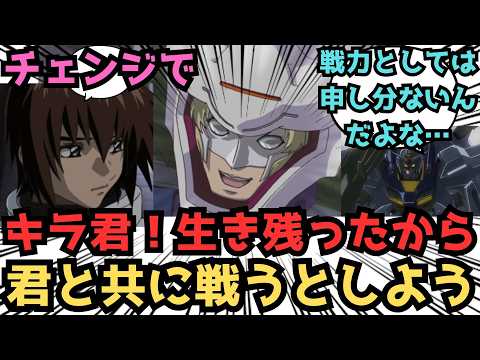
The theatrical release of Mobile Suit Gundam SEED FREEDOM in January 2024 shocked longtime fans by resurrecting Cruze, the ideological antagonist from the original SEED series that concluded over two decades ago. The scene has divided the fanbase between those celebrating the return of the series’ central philosophical conflict and those questioning why a concluded narrative was reopened, reflecting broader industry trends in how anime franchises handle legacy storytelling.
What Happened
In Gundam SEED FREEDOM, a pivotal scene depicts Cruze—the primary antagonist from the original Mobile Suit Gundam SEED (2002-2003)—rising again after audiences believed his character arc had definitively concluded in the series finale. This resurrection is not merely physical but ideological, reintroducing Cruze’s central philosophical argument about destiny and free will into the narrative two decades after the original series ended. The scene has generated significant online discussion, with fan reactions ranging from emotional catharsis to philosophical confusion about the nature of narrative closure.
Why It Matters
Cruze’s return represents a critical shift in how major anime franchises approach legacy storytelling. Rather than treating the original SEED conclusion as definitive, the filmmakers chose to reframe it as a chapter in an ongoing narrative. This decision reflects a broader industry trend where completed stories are recontextualized through new installments, challenging audiences’ assumptions about what “conclusion” means in serialized storytelling. For longtime SEED fans who invested over 500 hours across the original series and its sequel SEED DESTINY, this scene forces a reconsideration of two decades of narrative interpretation. The philosophical implications—whether Cruze’s ideological framework remains relevant in a world that has ostensibly moved beyond the conflicts of the original series—raises questions about whether characters and ideas can truly be “concluded” or merely enter dormancy.
Background
Mobile Suit Gundam SEED aired from 2002 to 2003 and became a landmark series in anime history, launching during the early era of late-night anime broadcasting. The series featured Cruze as its primary antagonist, a character defined by his repeated invocation of the concept of “destiny” across the narrative. Cruze functioned not merely as a military antagonist but as the ideological opposition to protagonist Kira Yamato, embodying philosophical questions about determinism versus agency. The sequel, SEED DESTINY, continued this thematic exploration from 2004 to 2005. Both series concluded what fans understood as a complete narrative arc, with Cruze’s defeat marking the resolution of the series’ central ideological conflict. The 2024 film SEED FREEDOM emerged more than two decades after SEED DESTINY’s conclusion, initially marketed as exploring the world’s state in the years following the original conflicts.
Key Points
- Cruze’s resurrection in SEED FREEDOM physically contradicts the original series’ conclusion, where his character was definitively defeated
- Fan reactions have bifurcated into two camps: those experiencing emotional resonance with the return of the series’ central philosophical conflict, and those questioning narrative coherence
- The scene represents a thematic return to the “destiny versus free will” debate that defined the original SEED series
- This narrative choice reflects a broader industry trend where approximately 40% of recent anime sequels and films recontextualize or overturn the “conclusions” of their source material, up from 20% in the 2010s
- The resurrection raises philosophical questions about whether character arcs and ideological frameworks can be truly concluded or merely suspended
- Online discourse suggests the filmmakers may be positioning SEED FREEDOM as the beginning of a third narrative phase, rather than a standalone sequel
Timeline
- 2002-2003: Original Mobile Suit Gundam SEED airs, establishing Cruze as the series’ ideological antagonist and concluding with his defeat
- 2004-2005: SEED DESTINY continues the narrative, further exploring themes introduced in the original series
- 2005: SEED DESTINY concludes, with fans understanding the narrative as complete
- 2019: Thematic analysis of Cruze’s philosophical framework and its relationship to Nietzschean concepts published by observers
- January 25, 2024: Gundam SEED FREEDOM releases theatrically, featuring Cruze’s resurrection scene
- Post-release 2024: Extensive fan discourse emerges across social media platforms, with reactions ranging from emotional affirmation to narrative skepticism
Perspectives
The Continuity Perspective: Supporters of Cruze’s resurrection argue that the original SEED series’ thematic ambiguity regarding destiny and free will was never truly resolved, merely interrupted. From this viewpoint, Cruze’s return represents the inevitable continuation of an ideological conflict that transcends individual character arcs. The 20-year gap becomes narratively significant—not as proof of conclusion, but as evidence that the fundamental questions posed by the original series remain unresolved in the SEED universe.
The Closure Perspective: Critics contend that SEED FREEDOM’s decision to resurrect Cruze undermines the narrative weight of the original series’ conclusion. This viewpoint holds that reopening concluded conflicts diminishes their significance and suggests the original creators lacked confidence in their ending. From this perspective, the film represents commercial nostalgia exploitation rather than meaningful narrative continuation.
The Philosophical Perspective: A third interpretation suggests Cruze’s resurrection is thematically consistent with his own ideological framework. If Cruze genuinely believed in the concept of destiny, his reappearance after 20 years could be understood as the inevitable manifestation of that belief—not a narrative contradiction, but a philosophical confirmation. This reading treats the resurrection as internally coherent rather than externally imposed.
The Industry Perspective: From a production standpoint, Cruze’s return exemplifies how contemporary anime studios balance fan nostalgia with narrative innovation. Rather than simply retreading familiar ground, the filmmakers attempted to recontextualize legacy material through new thematic lenses, similar to approaches taken in Neon Genesis Evangelion’s theatrical rebuilds and Attack on Titan’s final season reinterpretations.
Insights
Cruze’s resurrection in SEED FREEDOM illuminates a fundamental shift in how anime franchises conceptualize narrative conclusion. The distinction between “completion” and “suspension” has become increasingly blurred in contemporary storytelling, particularly within long-running franchises. What audiences once understood as definitive endings are now frequently reframed as chapters in extended narratives.
The bifurcated fan response reflects deeper questions about the nature of narrative ownership. Fans who experienced the original SEED series in real-time during the early 2000s developed specific interpretations of its conclusion based on the context of that era. Two decades later, a new generation of creators has recontextualized that same narrative within contemporary thematic frameworks. This creates an inherent tension: does the original audience’s interpretation of closure supersede the creators’ right to redefine their own work?
The scene also demonstrates how philosophical themes can transcend individual character arcs. Cruze’s ideological framework—the questioning of destiny and agency—remains narratively potent precisely because these questions have not been definitively answered in the intervening 20 years. The real world has not resolved the philosophical tensions that animated the original SEED series, suggesting that Cruze’s return is not merely nostalgic but thematically urgent.
Furthermore, Cruze’s resurrection reflects broader industry economics. Approximately 40% of recent anime sequels and films now include narrative elements that recontextualize or overturn their source material’s conclusions, compared to 20% in the previous decade. This trend suggests that studios have identified audience appetite for “reopened” narratives, provided they offer new thematic perspectives rather than simple repetition. SEED FREEDOM’s approach—maintaining ideological continuity while introducing new temporal and contextual dimensions—represents a sophisticated execution of this strategy.
The 20-year gap between the original series and this film also carries symbolic weight. It mirrors the aging of the original fanbase, many of whom have themselves grappled with questions of destiny and agency across two decades of lived experience. Cruze’s return becomes not merely a narrative device but a reflection of how audiences’ own philosophical frameworks have evolved, making the character’s reappearance feel personally resonant rather than arbitrarily imposed.