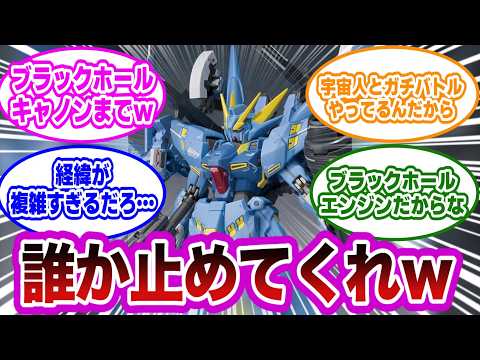
▶ Watch the original YouTube video
Why Huckebein Is Stronger Than Gundam: A Deep Dive Into Super Robot Wars Lore
After 15 years of studying the Super Robot Wars franchise, one truth emerges from the lore: the Huckebein mobile suit fundamentally outclasses the iconic Gundam in raw specifications. This superiority stems not from game balance mechanics, but from a fundamental difference in design philosophy rooted in the series’ complex fictional universe.
- What Happened
- Why It Matters
- Background
- Key Points
- Timeline
- Perspectives
- The Huckebein Series Evolution
- Comparative Analysis: Huckebein Versus Other Elite Units
- The Game Balance Paradox
- The Reliability Challenge
- The Mark III Mystery
- Bergelmilr: The Anomaly
- Grungust: A Parallel Evolution
- Community Perspectives
- Practical Guidance for Players
- Insights
What Happened
The Huckebein, a mobile suit introduced in Super Robot Wars L (2009), represents a fundamental departure from conventional mobile suit design. Unlike the Gundam series—which prioritizes performance in human-versus-human combat scenarios—the Huckebein was engineered for existential conflict against extraterrestrial threats. This distinction in design philosophy creates a measurable performance gap that extends far beyond typical game balance adjustments.
The core of this superiority lies in the Huckebein’s power source: a Black Hole Engine derived from the same technology family as the Turn A and Gunbuster. This engine, combined with a Tronium Engine and Plasma Generator as secondary systems, creates a propulsion architecture that operates on an entirely different technological tier than conventional nuclear fusion reactors found in standard mobile suits.
Why It Matters
The Huckebein-versus-Gundam comparison reveals a critical distinction in how Super Robot Wars constructs its fictional universe. The franchise must balance two competing demands: maintaining the iconic status of Gundam within gameplay while respecting the established lore that places other machines in superior positions. This tension between game mechanics and canonical strength represents a fundamental challenge in adapting multiple anime universes into a single cohesive setting.
Understanding this distinction matters because it demonstrates how Super Robot Wars operates as more than a simple crossover game. The series maintains an internally consistent technological hierarchy that rewards players who engage with the deeper lore. The Huckebein’s canonical superiority over the Gundam serves as a case study in how fictional universes can establish clear power structures while maintaining gameplay accessibility.
Background
The Huckebein’s origins trace back to a lunar accident that set in motion a complex chain of modifications and technological integration. The machine began as a standard mobile suit but underwent successive upgrades incorporating advanced alien-derived technologies. The progression from the original Huckebein through Mark II, Mark III, and eventually the Execs variant represents not merely performance improvements, but an evolution in control systems and operational stability.
Visually, the Huckebein adheres strictly to Gundam design language. Its silhouette incorporates elements from the Victory Gundam and Victory Gundam 2, complete with characteristic rounded joints and duct placements. The red cockpit hatch—a signature detail of space-rated mobile suits—further reinforces its Gundam-adjacent aesthetic. This visual similarity masks a fundamentally different technological foundation.
The machine’s development reflects a broader pattern within Super Robot Wars: machines designed for specific threats develop specialized capabilities. The Huckebein was engineered to counter extraterrestrial adversaries, resulting in power systems that dwarf those designed for terrestrial warfare.
Key Points
- Black Hole Engine Technology: The Huckebein’s primary power source operates on the same technological principles as the Turn A and Gunbuster, placing it in an elite category of mobile suits. The Black Hole Cannon—its signature weapon—can inflict fatal damage on units like Turn A and Devil Gundam.
- Multi-System Architecture: The Huckebein combines a Black Hole Engine, Tronium Engine, and Plasma Generator in a single frame. This redundant power system architecture provides capabilities that standard mobile suits cannot match.
- Design Philosophy Divergence: Gundam units were engineered for human-versus-human conflict within Earth’s sphere. The Huckebein was designed for existential warfare against extraterrestrial forces, fundamentally altering its performance envelope.
- Reliability Versus Performance Trade-off: The original Huckebein sacrifices operational stability for raw power. The Mark II variant prioritizes reliability, while the Mark III achieves original-level performance with improved stability at the cost of requiring specialized pilot talent.
- Game Balance Versus Canonical Strength: Super Robot Wars gameplay requires Gundam units to remain competitive, creating a deliberate gap between in-game performance and established lore. The Huckebein’s canonical superiority exists independent of game balance mechanics.
- Technological Lineage: The Huckebein belongs to the same technological family as other Black Hole Engine-equipped units (Turn A, Gunbuster, Granzort), placing it in a distinct category above conventional mobile suits.
Timeline
- Lunar Accident Era: The Huckebein’s development begins following a lunar malfunction event that sets the stage for subsequent modifications.
- Original Huckebein: The first variant achieves high performance but suffers from reliability issues inherent to its experimental power systems.
- Mark II Development: Engineers prioritize operational stability, creating a more reliable variant suitable for extended deployment despite reduced performance specifications.
- Mark III Introduction: A new variant surpasses the original’s performance while improving stability, though it requires pilots with exceptional aptitude.
- Execs Variant: The final evolution incorporates concepts from the SRX project, optimizing the platform for specific threat scenarios including confrontation with Taigalilnaga.
- Super Robot Wars L (2009): The Huckebein gains widespread recognition within the franchise following its prominent role in this title.
Perspectives
The Lore-Focused Interpretation: From a canonical standpoint, the Huckebein’s superiority is unambiguous. The Black Hole Engine technology, combined with redundant power systems, creates a machine that operates on a different technological tier than Gundam units. The design philosophy—engineering for extraterrestrial threats rather than terrestrial conflict—fundamentally alters the performance calculus. Supporters of this view point to the Huckebein’s inclusion in the same technological family as the Turn A and Gunbuster as definitive proof of its superiority.
The Game Balance Perspective: Critics note that Super Robot Wars must maintain Gundam’s iconic status within gameplay to justify its central role in the franchise. This necessitates deliberate balance adjustments that elevate Gundam performance beyond what the lore supports. From this viewpoint, the Huckebein’s canonical strength is irrelevant to actual gameplay experience, where Gundam units consistently receive favorable balance treatment.
The Practical Reliability View: A third perspective emphasizes that raw performance means little without operational reliability. The original Huckebein’s instability makes it impractical despite superior specifications. The Mark II, while technically weaker, represents a more pragmatic choice for sustained operations. This interpretation values real-world applicability over theoretical maximum output.
Community Consensus: Online discussions reveal that experienced Super Robot Wars players generally accept the lore-based superiority of the Huckebein while acknowledging the game balance necessities. Twitter discussions emphasize the Black Hole Engine as the decisive factor, while forum debates focus on the distinction between canonical and gameplay strength. YouTube commenters frequently note that discussing setting-based power comparisons requires accepting the inherent contradiction between lore and game mechanics.
The Huckebein Series Evolution
Original Huckebein: The baseline variant demonstrates exceptional firepower but suffers from control instability. The twin Black Hole and Tronium engines provide overwhelming output, yet the machine remains unreliable for extended operations.
Mark II: This variant represents the most balanced configuration within the series. By reducing performance specifications, engineers achieved a machine suitable for reliable, sustained deployment. Within the broader Super Robot Wars context, the Mark II emerges as the most consistently deployable Huckebein variant across multiple game titles.
Mark III: This variant restores original-level performance while improving stability, but requires pilots possessing exceptional aptitude. The increased demands on pilot skill create a specialized platform suitable only for elite operators.
Execs: The final evolution incorporates SRX project concepts, optimizing the platform for specific threat scenarios. Its design specifically addresses confrontation with Taigalilnaga, demonstrating how the Huckebein series continues evolving to counter emerging threats.
Comparative Analysis: Huckebein Versus Other Elite Units
| Unit | Power Source | Design Purpose | Intended Adversary | Relative Strength |
|---|---|---|---|---|
| RX-78 Gundam | Nuclear Fusion Reactor | Human-versus-human combat | Zeon Mobile Suits | Inferior to Huckebein |
| Turn A Gundam | Black Hole Derived | Planetary unification | Extraterrestrial forces | Equivalent or superior |
| Gunbuster | Black Hole Derived | Space monster combat | Space monsters | Equivalent |
| Granzort | Black Hole Derived | Dimensional transcendence | Multidimensional threats | Equivalent or superior |
This comparison reveals a clear technological hierarchy. Units powered by Black Hole-derived engines occupy a distinct category above conventional mobile suits. The Huckebein’s membership in this elite group automatically establishes its superiority over standard Gundam units.
The Game Balance Paradox
Super Robot Wars faces an inherent contradiction: the lore establishes clear power hierarchies that conflict with gameplay balance requirements. Gundam’s iconic status within the franchise necessitates competitive in-game performance, even when the setting’s established lore places other units in superior positions.
This paradox becomes evident when examining specific gameplay instances. In Super Robot Wars V, even a Jims Custom can engage space monsters—a scenario that contradicts the established setting where such machines lack the necessary specifications. These adjustments represent necessary compromises between lore fidelity and gameplay accessibility.
The Huckebein occupies a unique position within this framework. Its superiority is embedded within the setting itself, not merely a consequence of game balance adjustments. This distinction allows players to maintain internal consistency between canonical strength and gameplay performance, though some variance remains inevitable.
The Reliability Challenge
The Huckebein series’ development history reveals a fundamental engineering challenge: high performance and operational reliability often conflict. The original variant’s exceptional firepower comes at the cost of control instability. This trade-off reflects realistic engineering constraints where pushing performance boundaries creates corresponding reliability risks.
The Black Hole Engine itself, according to established lore, remains inherently stable once proper control systems are implemented. The pilot Rai’s experience near a Black Hole Engine activation test—suffering only hand damage despite proximity to the event—suggests that with established control protocols, the engine poses minimal risk. The Huckebein series’ evolution thus represents not merely performance improvement, but advancing control technology that enables safe operation of increasingly powerful systems.
The Mark II’s development specifically addressed reliability concerns, sacrificing performance to achieve operational stability. This variant’s consistent availability across multiple game titles suggests that reliability considerations often outweigh raw performance in practical deployment scenarios.
The Mark III Mystery
The Mark III’s third unit presents an intriguing puzzle within Super Robot Wars continuity. This variant achieves original-level performance while improving stability, yet its treatment varies significantly across different game titles. In the Alpha series, it receives appropriate emphasis. In the OG series, it appears as a mass-produced Mark II variant before suffering destruction at Taigalilnaga’s hands.
The most interesting development occurs in Super Robot Wars DD, where the third unit survives destruction through deception, undergoes repair, and participates in data collection operations. References to potential new generator installation using XBINL and R technology suggest the third unit may play a significant role in future Huckebein series development.
This complex treatment across multiple continuities suggests the Mark III third unit retains strategic importance within the broader Super Robot Wars universe, potentially positioning it for expanded roles in future installments.
Bergelmilr: The Anomaly
Among the most enigmatic entries in Super Robot Wars lore stands Bergelmilr, ostensibly a mass-produced Mark II variant that underwent mutation through Machine Cell exposure. The transformation defies conventional explanation, sharing minimal design commonality with its supposed origin machine beyond twin-mounted systems.
Machine Cell technology demonstrates remarkable versatility in the Super Robot Wars universe. The process of introducing Machine Cells to a Mark II unit resulted in an entirely different machine, suggesting the technology operates on principles that transcend conventional mechanical modification. The unit’s back-mounted weapons, theorized to originate from Chakram Shooter systems, underwent dramatic functional transformation through Machine Cell influence.
Bergelmilr’s regenerative capabilities reportedly exceed those of BG cells when properly calibrated, indicating that Machine Cell integration creates machines operating on fundamentally different principles than their source units. This transformation exemplifies the depth and complexity of Super Robot Wars’ technological framework.
Grungust: A Parallel Evolution
Understanding the Huckebein requires comparison with Grungust, another critical machine within Super Robot Wars. Unlike Huckebein, which evolved through multiple variants addressing specific operational requirements, Grungust represents a specialized platform designed for scenarios where conventional personal trooper units prove inadequate.
Grungust’s variants follow a different developmental logic. The 0 Type features a unique pilot configuration. The 1 Type operates with standard pilot assignment and enhancement potential. The 2 Type prioritizes usability but frequently occupies secondary roles. The 3 Type often serves as a parts donor, though OG series entries provide more substantial roles than Alpha series appearances.
This parallel development demonstrates how Super Robot Wars accommodates multiple specialized platforms, each addressing distinct operational niches. The Huckebein’s emphasis on performance and versatility contrasts with Grungust’s specialization for specific threat scenarios.
Community Perspectives
Online discussions reveal diverse interpretations of the Huckebein-Gundam comparison. Twitter commentary frequently emphasizes that Black Hole Engine technology alone establishes superiority over most Gundam variants. Forum discussions on 5channel focus on the distinction between in-game performance and canonical strength, with some skeptics questioning whether the Huckebein achieved significant accomplishments beyond gameplay mechanics.
YouTube comments frequently note that Super Robot Wars’ game balance necessities override setting-based power hierarchies, making direct comparisons problematic. This perspective acknowledges the inherent contradiction between lore and gameplay while accepting it as an inevitable consequence of adapting multiple anime universes into a single game system.
The consensus among experienced players recognizes both the canonical superiority of the Huckebein and the gameplay adjustments that elevate Gundam performance, treating these as separate but coexisting truths within the Super Robot Wars framework.
Practical Guidance for Players
Players encountering the Huckebein for the first time should begin with the Mark II variant. While the original delivers superior firepower, its reliability issues create practical deployment challenges. The Mark II provides balanced performance suitable for varied combat scenarios without the operational instability that characterizes the original.
Understanding the Huckebein’s complex origins—particularly the lunar accident and subsequent modifications—provides context that enriches gameplay experience. The machine’s technological foundation becomes comprehensible when viewed as the product of accumulated modifications rather than a unified design.
Comparative study of related machines proves instructive. Examining Granzort and Gunbuster—fellow Black Hole Engine-equipped units—clarifies the Huckebein’s position within the broader technological hierarchy. These machines share fundamental design principles while serving distinct operational roles.
Finally, maintaining awareness of the distinction between canonical strength and gameplay balance allows players to appreciate both the lore’s internal consistency and the game’s mechanical necessities. The Huckebein’s setting-based superiority exists independent of game balance adjustments, providing a foundation for understanding the broader Super Robot Wars universe.
Insights
After 15 years of engagement with Super Robot Wars, the Huckebein emerges as more than a powerful gameplay unit—it represents a microcosm of how the franchise constructs its fictional universe. The machine’s superiority over the Gundam stems not from arbitrary balance decisions, but from fundamental differences in design philosophy rooted in distinct operational requirements.
The Huckebein’s design for extraterrestrial conflict versus the Gundam’s terrestrial focus creates measurable performance differences that extend beyond gameplay mechanics. This distinction demonstrates how Super Robot Wars maintains internal logical consistency despite the inherent challenges of combining multiple anime universes.
The series’ evolution from the original through Mark II, Mark III, and Execs variants illustrates a broader principle: technological advancement involves balancing competing demands. The progression toward improved reliability without sacrificing performance reflects realistic engineering constraints that add depth to the fictional setting.
The tension between canonical strength and gameplay balance represents Super Robot Wars’ defining characteristic. The franchise succeeds by acknowledging this tension rather than attempting to eliminate it. Players who engage with both the lore and the mechanics discover a richly layered experience where setting-based power hierarchies coexist with gameplay necessities.
The Huckebein’s position within this framework—canonically superior yet subject to gameplay adjustments—exemplifies how Super Robot Wars creates meaning through the interaction between fictional universe and game mechanics. The machine’s strength derives not merely from numerical specifications, but from the depth of the setting that contextualizes those specifications.
Future Super Robot Wars developments, particularly regarding the Huckebein series, will likely continue exploring this tension. The franchise’s longevity depends on maintaining this balance—respecting established lore while preserving the gameplay accessibility that defines the series’ appeal.