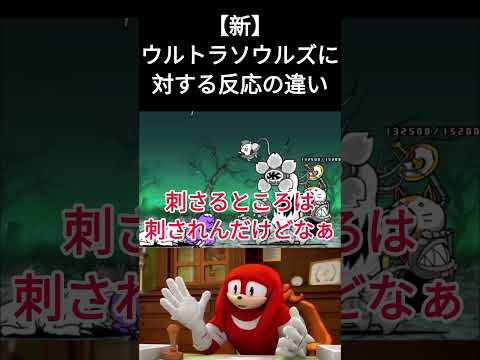
▶ Watch the original YouTube video
Battle Cats’ New Ultra Souls: How Restriction Mechanics Are Reshaping Game Balance and Player Strategy
The Battle Cats’ new Ultra Souls update has introduced restriction mechanics—such as “No Boomerang,” “No Hammer,” and “No Gadgets”—that fundamentally alter how players approach the tower defense game. The update has split the player community into two camps: those who welcome the increased strategic depth and those frustrated by the limitations on previously dominant characters.
What Happened
The Battle Cats has rolled out a new content tier called Ultra Souls, featuring stages with specific restriction mechanics that prevent players from using certain character types or abilities. These restrictions include “No Boomerang,” “No Hammer,” “No Gadgets,” “No Spin Attack,” and “No Mini” units. Unlike previous Battle Cats content where players could rely on a consistent set of overpowered characters, Ultra Souls forces players to adapt their team composition based on each stage’s unique limitations.
Why It Matters
This update represents a significant shift in how mobile tower defense games approach balance and longevity. By introducing restriction mechanics, The Battle Cats is moving away from a single-dominant-strategy model toward a more nuanced metagame where success requires strategic flexibility. This design philosophy has proven effective in other major titles like Puzzle & Dragons and Monster Hunter: World, both of which extended their lifespans substantially through similar mechanics. For The Battle Cats, the update signals an attempt to deepen gameplay complexity while maintaining accessibility, a critical balance for long-term player retention in the competitive mobile gaming market.
Background
The Battle Cats is a tower defense game that has built its reputation on carefully calibrated character balance. Over the past three years, the game has seen a steady power creep, with new characters becoming progressively stronger. While this kept the game fresh for some players, it risked destabilizing the overall balance system. The introduction of Ultra Souls appears to be a deliberate response to this trend—a way to prevent the game from becoming dominated by a handful of overpowered units while simultaneously encouraging players to develop diverse team compositions.
The restriction mechanic is not new to gaming. Puzzle & Dragons introduced similar limitations (skill sealing, drop change restrictions) as early as 2015, and Monster Hunter: World uses environmental restrictions to force strategic adaptation. However, The Battle Cats’ implementation is notably comprehensive, affecting multiple character types simultaneously and creating a new layer of strategic depth.
Key Points
- Restriction mechanics introduced: Ultra Souls stages feature limitations on specific character types and abilities, forcing players to rethink team composition.
- Power creep addressed: The update prevents previously dominant characters from being universally applicable, creating a more balanced metagame.
- Community divided: Strategic-minded players welcome the increased complexity, while players invested in specific powerful characters express frustration.
- Metagame diversification: The answer to “What is the strongest character?” shifts from absolute to situational, increasing overall game depth.
- Long-term engagement potential: Similar mechanics in other games have extended content lifespan by 2+ years through continuous strategic adaptation.
- Developer intent clear: The precise design of restrictions suggests intentional balance philosophy rather than arbitrary limitations.
Timeline
- Current (Stage 1): Players adapt to new restriction mechanics; community reaction remains divided.
- 3–6 months (Stage 2): Optimal strategies for each restriction type emerge; metagame stabilizes and community discussion intensifies.
- 6–12 months (Stage 3): Ultra Souls becomes normalized content; initial criticism diminishes as players recognize value in the system.
Perspectives
Positive Reception: Players who prioritize strategic depth view Ultra Souls as a necessary evolution. They argue that restriction mechanics eliminate reliance on a single dominant strategy, forcing meaningful decision-making about team composition. These players appreciate that the update rewards knowledge and adaptability over raw character power.
Critical Reception: Players who have invested heavily in specific powerful characters express frustration that their investments no longer guarantee success. They view the restrictions as unnecessarily limiting and worry that the added complexity makes the game feel tedious rather than engaging. Some argue that the restrictions reduce player agency by forcing specific team compositions.
Developer Perspective (Inferred): The careful design of restrictions suggests three core intentions: (1) preventing infinite power creep by creating situations where overpowered characters cannot be used, (2) stimulating strategic thinking by requiring players to solve puzzles within constraints, and (3) extending content longevity by ensuring players constantly encounter new strategic challenges.
Insights
The Ultra Souls update illustrates a fundamental truth in game design: there is no universally “correct” balance. Every balance decision involves tradeoffs. Restriction mechanics increase strategic depth but reduce player freedom. The critical question is whether developers understand this tradeoff and implement restrictions intentionally—and evidence suggests The Battle Cats’ team does.
The divided community response is not a failure but a sign of healthy evolution. It indicates that The Battle Cats is transitioning from a single-playstyle game (“use the strongest character”) to a multi-playstyle game (“adapt your strategy to the constraints”). Historical precedent from Puzzle & Dragons and Monster Hunter: World suggests that initial criticism will diminish within 3–6 months as players adapt and discover the depth the system offers.
More broadly, Ultra Souls reflects a maturing mobile gaming industry. As the market becomes saturated and player expectations rise, strategic complexity and replayability have become more valuable than raw accessibility. Games that successfully balance depth with approachability—like Puzzle & Dragons—achieve significantly longer lifespans. The Battle Cats appears to be making this same calculation.
For players, the practical lesson is clear: success in the Ultra Souls era requires viewing restrictions not as obstacles but as design puzzles. The question shifts from “What is the strongest team?” to “What is the strongest team within these constraints?” This reframing transforms frustration into engagement and unlocks the content’s true strategic value.