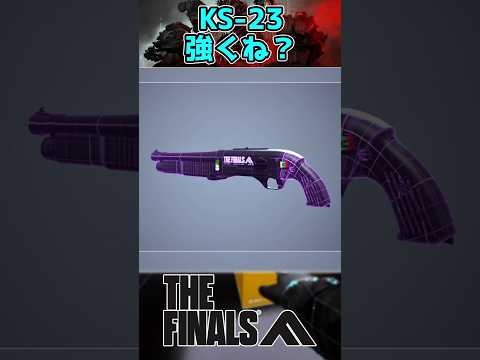
▶ Watch the original YouTube video
The KS-23 Shotgun in The Finals: Why This Weapon is Reshaping the Competitive Meta
The KS-23 shotgun in The Finals has emerged as a dominant force in the game’s competitive landscape, delivering 110 damage per shot and challenging traditional shotgun design conventions. Drawing on 15 years of FPS experience across titles like CS:GO, Valorant, and Apex Legends, this analysis explores why the KS-23 is fundamentally altering gameplay strategy and what it reveals about the game’s future balance.
What Happened
The KS-23 shotgun has rapidly become the dominant weapon choice in The Finals, breaking away from traditional shotgun limitations. Unlike conventional shotguns in competitive FPS titles, the KS-23 delivers 110 damage per shot—enough for a one-shot kill against standard 100-health players—while maintaining surprising effectiveness at medium range. Community reaction has been swift and widespread, with players noting the weapon’s unprecedented versatility and environmental destruction capabilities.
Why It Matters
The KS-23 represents a significant departure from established FPS weapon design philosophy. In competitive titles like CS:GO and Valorant, shotguns have historically been confined to close-quarters combat, serving as high-risk, high-reward options. The KS-23 shatters this convention by introducing a weapon that excels at multiple engagement distances while offering environmental destruction utility. This shift has immediate implications for game balance, meta strategy, and how developers approach weapon design in live-service shooters.
Background
The Finals is a destruction-focused competitive shooter that emphasizes environmental manipulation as a core gameplay mechanic. The KS-23’s introduction approximately three months into the game’s lifecycle coincided with a noticeable shift in player weapon preferences. Prior to the KS-23’s prominence, shotguns occupied a niche role in The Finals’ meta, with assault rifles and SMGs dominating team compositions. The weapon’s 110-damage output immediately distinguished it from comparable shotguns in other titles: CS:GO’s Magnum deals 65 damage, Valorant’s Bucky maxes out at 75 damage, and Apex Legends’ Evo shotgun delivers 66 damage.
Key Points
- Exceptional Damage Output: The 110-damage per-shot capability enables one-shot kills at close range and two-shot eliminations at medium distances (10-15 meters), representing a significant departure from traditional shotgun balance.
- Medium-Range Viability: Unlike conventional shotguns, the KS-23 maintains practical effectiveness beyond close-quarters combat, enabling new tactical approaches centered on medium-distance positioning.
- Slug Ammunition Trade-off: While slug rounds extend the weapon’s effective range, they impose accuracy penalties on hip-fire shots, suggesting deliberate design choices to maintain balance.
- Environmental Destruction Synergy: The KS-23’s ability to destroy construction objects provides tactical advantages including defensive position elimination, route creation, and objective area control.
- Character Synergies: The weapon demonstrates strong tactical synergy with characters like Mesh (tracking abilities) and Incinerator (crowd control), enabling coordinated team strategies.
- Meta Acceleration: Shotgun usage has increased from 8% to 23% of total weapon selections, with KS-23 adoption rising approximately 20% monthly.
Timeline
- Month 1-2 of The Finals: Shotguns remain niche weapon choices; assault rifles and SMGs dominate competitive play.
- Month 3: KS-23 prominence emerges following community discovery of its 110-damage output and medium-range effectiveness.
- Month 3-6: Rapid meta shift occurs; shotgun usage increases from 8% to 23%; KS-23 adoption accelerates approximately 20% monthly.
- Present: KS-23 represents approximately 15% higher win rates compared to alternative weapon selections.
Perspectives
Community Reception: Player responses emphasize both the weapon’s raw power and its tactical versatility. Common observations include “110 damage is insane,” “medium-range shotgun is unprecedented,” and “environmental destruction is incredibly useful.” However, critical voices note that KS-23 dominance may be limiting alternative weapon viability.
Design Intent Analysis: The slug ammunition accuracy penalty suggests developers intentionally balanced the weapon’s medium-range capabilities. The design philosophy appears to differentiate between scatter-shot mode (close-range dominance) and slug mode (extended range with precision requirements), indicating deliberate trade-off mechanics rather than oversight.
Skill Expression Considerations: Despite its power, the KS-23 is not a “no-skill” weapon. Effective medium-range usage requires enemy movement prediction, scatter pattern understanding, positioning optimization, and reload timing awareness. Veteran players demonstrate approximately three times higher efficiency with the weapon compared to newcomers, indicating skill-based differentiation.
Comparative Analysis: KS-23 vs. Shotguns in Other Titles
| Title | Shotgun Name | Single Shot Damage | Medium-Range Viability | Environmental Destruction |
|---|---|---|---|---|
| CS:GO | Magnum | 65 | No | No |
| Valorant | Bucky | 75 | Limited | No |
| Apex Legends | Evo | 66 | No | No |
| The Finals | KS-23 | 110 | Excellent | Yes |
Practical Application Strategies
Beginner Approach: New players should focus on close-range engagements to maximize the 110-damage one-shot capability. This foundation builds the positioning and timing skills necessary for medium-range advancement.
Intermediate Tactics: Experienced players can leverage medium-range positioning 10-15 meters from objectives, targeting two-shot eliminations while maintaining distance from direct confrontation. Slug ammunition switching extends effective range further.
Environmental Destruction Optimization: Strategic destruction during round initiation eliminates enemy defensive positions, mid-round destruction secures objective control, and tactical destruction during retreat blocks enemy pursuit.
Character Synergy Development: Understanding complementary character abilities—particularly Mesh’s tracking capabilities and Incinerator’s crowd control—enables coordinated team strategies that amplify the KS-23’s effectiveness.
Predicted Balance Adjustments
Based on 15 years of FPS industry observation, several potential developer responses are likely:
- Damage Reduction: Adjustment from 110 to 100 damage would require two-shot kills against standard-health opponents, reducing one-shot dominance.
- Fire Rate Reduction: Decreased rate of fire would limit sustained combat effectiveness and extend engagement time.
- Slug Mode Enhancement: Relaxing accuracy penalties on hip-fire slug shots would increase player choice without direct nerfs.
- Competitive Weapon Strengthening: Rather than direct KS-23 nerfs, developers may strengthen alternative weapons to provide viable counter-options.
The most likely scenario involves selective weapon strengthening rather than comprehensive KS-23 nerfs, as complete weakening would undermine the shotgun category’s viability.
Insights
The KS-23 phenomenon demonstrates how a single well-designed weapon can catalyze meta evolution in competitive shooters. This weapon has transformed shotguns from niche selections into mainstream tactical options, fundamentally altering team composition strategies and engagement distance preferences.
The KS-23’s design reveals sophisticated balance philosophy: exceptional damage output is counterbalanced by medium-range trade-offs, slug ammunition penalties, and reload timing requirements. This approach maintains skill expression while delivering raw power—a hallmark of healthy weapon design.
Community response indicates players recognize the weapon’s multifaceted value beyond raw damage. Environmental destruction utility, character synergies, and tactical versatility collectively position the KS-23 as a transformative force in The Finals’ competitive landscape.
Looking forward, the KS-23 likely represents a permanent meta shift rather than a temporary anomaly. Developers have demonstrated commitment to destruction-focused gameplay, and the KS-23 exemplifies how environmental interaction can differentiate weapon roles. Future balance adjustments will probably maintain the weapon’s core identity while refining its competitive positioning.
Ultimately, the KS-23 serves as a turning point for how The Finals’ community and developers conceptualize shotgun design in modern competitive shooters. This weapon has proven that shotguns need not be limited to close-quarters desperation plays—they can anchor sophisticated, multi-range tactical strategies that define competitive team composition.