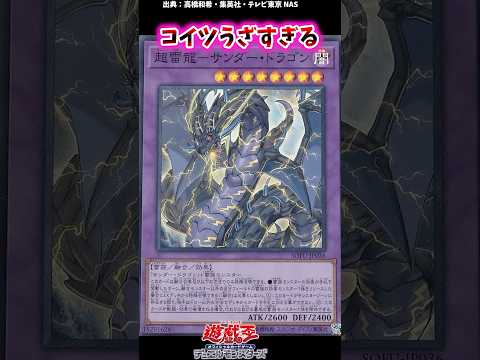
▶ Watch the original YouTube video
Why Yu-Gi-Oh Players Hate Swordsoul Strategist Longyuan: A Deep Analysis of the Game’s Most Controversial Card
Swordsoul Strategist Longyuan has become one of the most despised cards in the Yu-Gi-Oh OCG community, not because it’s overpowered in isolation, but because its ease of summoning, versatility, and persistent board presence fundamentally warp the game’s design philosophy. After 15 years of competitive play, this analysis explores why players believe the card should be banned entirely.
What Happened
Swordsoul Strategist Longyuan, a Link-1 monster with exceptional utility, has become ubiquitous in the Yu-Gi-Oh OCG meta-game. While technically restricted to one copy per deck rather than banned, the card has generated widespread frustration among the player community. The discontent stems not from the card’s raw power level, but from how its existence constrains deck-building freedom and limits future card design possibilities, particularly for Thunder-type monsters.
Why It Matters
This controversy highlights a fundamental tension in trading card game design: the difference between a “strong card” and a “format-warping card.” Swordsoul Strategist Longyuan exemplifies the latter. Its pervasive adoption rate and design efficiency have created a situation where the card doesn’t need to dominate tournaments to damage the game’s health—it simply needs to exist. The card’s impact extends beyond competitive play into the creative space where designers develop new cards, effectively creating invisible constraints that limit innovation.
Background
The author, drawing on 15 years of Yu-Gi-Oh OCG experience, first recognized Swordsoul Strategist Longyuan’s problematic nature just before it was restricted. While constructing Thunder-type decks, the author noticed that new Thunder-type support cards were being deliberately weakened, seemingly designed to avoid synergies with Longyuan. This observation prompted deeper analysis comparing Longyuan to other historically problematic cards like Firewall Dragon (2017), Tornado Dragon (2015), and Pendulum Magicians (2016).
Key Points
- Ease of Summoning vs. Effect Power Imbalance: Longyuan can be summoned consistently on the first turn from most Thunder-type decks with minimal deck constraints, yet provides powerful effects that benefit numerous strategies beyond its archetype.
- Negative Impact on Card Design: Since Longyuan’s introduction, new Thunder-type support cards have been noticeably weakened, suggesting designers are actively avoiding interactions with the card to prevent future format warping.
- Chain Lock Problem: When Longyuan resolves, it creates fixed chain patterns that generate unpredictable and disproportionately powerful board states, described as “monsters being born twice” in the community.
- Format Homogenization: The card’s high adoption rate across diverse deck types reduces format diversity and makes non-Longyuan strategies inherently disadvantaged in competitive play.
- Restriction Insufficient: Community consensus suggests that restricting Longyuan to one copy per deck is inadequate; complete prohibition is necessary to restore design freedom and format health.
- Versatility Across Archetypes: Unlike previous problematic cards that were limited to specific strategies, Longyuan functions effectively in Thunder-type decks broadly, amplifying its format impact.
Historical Comparison
The author identifies three cards with similar format-warping properties:
Firewall Dragon (2017): Symbolized the power of Link Summoning and was adoptable across many decks. However, it required specific conditions for optimal play. Longyuan surpasses it in ease of summoning and consistency.
Tornado Dragon (2015): Offered versatile spell and trap destruction across multiple strategies. Yet it required specific setup conditions. Longyuan achieves similar utility with fewer restrictions.
Pendulum Magicians (2016): Dominated the format through Pendulum Summoning’s inherent power. However, the strategy remained largely confined to Pendulum-focused decks. Longyuan’s applicability extends far beyond a single archetype.
The critical distinction: Longyuan combines the versatility of Firewall Dragon, the utility of Tornado Dragon, and the consistency of Pendulum Magicians—while exceeding each in ease of deployment.
Design Philosophy Impact
The author emphasizes that Longyuan represents a loss of “design freedom” in deck construction. One of the primary appeals of Yu-Gi-Oh is the infinite possibility space of deck-building. Longyuan’s existence constrains this freedom by making it nearly mandatory for competitive viability in Thunder-type strategies. Furthermore, its presence forces designers to avoid creating synergistic Thunder-type cards, effectively capping the creative potential of an entire monster type.
The author notes that 2023’s Yu-Gi-Oh environment, while theoretically diverse with many new deck archetypes, was undermined by Longyuan’s overrepresentation. Decks that declined to include Longyuan faced systematic disadvantages in tournament play, creating a false metagame where format diversity existed only on paper.
Practical Counter-Strategies
For players navigating the current format, three approaches are recommended:
Prioritize Longyuan Disruption: Cards like “Ash Blossom & Joyous Spring” and “Infinite Impermanence” that prevent Longyuan’s summoning or negate its effects should be prioritized in deck construction.
Build Longyuan-Independent Strategies: Paradoxically, constructing decks that deliberately exclude Longyuan can provide strategic advantage through unpredictability, as opponents cannot rely on standard threat assessment patterns.
Master Longyuan Mechanics: Deep understanding of Longyuan’s effect interactions, particularly chain blocking techniques, enables more effective counterplay and adaptation.
Community Sentiment
Online discourse reveals consistent player frustration. Common sentiments include:
“The audacity of a restricted card”—expressing irony that Longyuan remains restricted rather than banned despite its format impact.
“Thunder-type never gets proper support because of this card”—reflecting the design constraint hypothesis, where Thunder-type cards are deliberately weakened to avoid Longyuan synergies.
“It doesn’t rampage, so it’s tolerated, but it’s in the same category as Harpie’s Feather Duster”—noting that Longyuan’s subtle, pervasive impact mirrors other historically problematic cards that weren’t immediately recognized as format-warping.
“The format itself isn’t bad, but this card being everywhere ruins it”—emphasizing that the problem is Longyuan’s adoption rate rather than the card’s inherent power level.
Insights and Future Outlook
After 15 years of competitive play, the author concludes that Longyuan represents one of Yu-Gi-Oh OCG’s most format-damaging cards—not because of raw power, but because it threatens the game’s fundamental design philosophy. The card demonstrates exceptional design competence; the problem is that this competence creates invisible constraints on future development.
Three potential outcomes are anticipated:
Longyuan Prohibition: Most likely scenario. Yu-Gi-Oh’s management prioritizes format health, and cards that constrain design space typically face eventual bans.
Concurrent Thunder-Type Strengthening: If Longyuan is banned, designers will gain freedom to create more powerful Thunder-type support, potentially revitalizing the archetype.
Emergence of New Problem Cards: Trading card game history suggests that solving one design problem often creates space for new ones. Future cards may emerge with similar format-warping properties.
The author’s final reflection: Yu-Gi-Oh continuously evolves and faces new challenges. Longyuan represents one such trial. Overcoming this challenge will strengthen the game and expand its creative potential for future development.