▶ Watch the original YouTube video
The Voices of Soldiers in Gundam: Understanding the Psychology of Ordinary Troops Across the Series
A viral video reconstructs multiple Gundam series narratives from the perspective of ordinary soldiers rather than protagonists, revealing how the franchise’s most compelling storytelling emerges from the experiences of unnamed troops. This analysis explores why the psychological depth of background characters has become central to understanding Gundam’s realism and thematic power.
What Happened
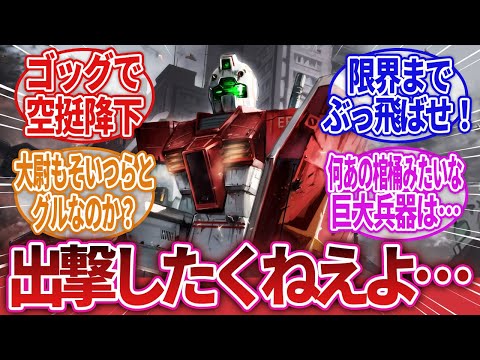
A video essay has gained significant attention by reframing Gundam series narratives through a soldiers’ bulletin board format, allowing unnamed troops from across different Gundam timelines to share their experiences of warfare. Rather than following protagonist pilots like Amuro or Char, the video centers on the voices of ordinary soldiers—their fears, doubts, and survival struggles across conflicts ranging from the One Year War to the events of Gundam: The Witch from Mercury.
The video presents soldiers discussing the terror of facing high-performance mobile suits, the arbitrary cruelty of military assignments, equipment failures, and the fundamental meaninglessness of their individual contributions to larger conflicts. These testimonies span both Federation and Zeon forces, emphasizing that the brutality of war transcends factional boundaries.
Why It Matters
This perspective shift reveals a critical dimension of Gundam’s storytelling that distinguishes it from other mecha anime. By centering ordinary soldiers, the series achieves a realism that protagonist-focused narratives cannot match. The voices of unnamed troops expose the fundamental powerlessness of individuals caught in systemic conflict, a theme that resonates with viewers who recognize themselves as ordinary people rather than exceptional heroes.
This approach also demonstrates how Gundam has evolved as a war narrative. While early entries treated soldiers as background elements, contemporary Gundam works increasingly portray troops as psychologically complex individuals with personal stakes in conflicts they may not fully understand or support. This evolution reflects broader changes in how anime depicts warfare and human experience within military systems.
Background
The Gundam franchise, beginning with Mobile Suit Gundam in 1979, has long explored warfare through multiple narrative lenses. However, the series’ treatment of ordinary soldiers has deepened significantly over its 40+ year history. Early works focused almost exclusively on protagonist pilots and their exceptional abilities. By the 2000s, spin-off series like Mobile Suit Gundam: The 08th MS Team began centering narratives on regular soldiers, establishing a template for depicting the psychological reality of combat troops.
Director Tomino Yoshiyuki has stated in multiple interviews that war should be understood not as a story of heroes but as a collective tragedy involving countless unnamed individuals. This philosophical framework has increasingly influenced how Gundam productions portray military personnel. Series like Gundam SEED, Gundam 00, Iron-Blooded Orphans, and Gundam: The Witch from Mercury have progressively given soldiers more agency and psychological depth.
The video’s format—presenting soldiers as participants in an online forum discussing their experiences—is itself a creative innovation that allows viewers to recognize these troops as thinking, feeling individuals rather than narrative background.
Key Points
- Cross-series soldier perspectives: The video draws soldiers from multiple Gundam timelines and conflicts, creating a unified space where troops from different eras and factions share their experiences of warfare’s brutality.
- The terror of protagonist machines: Ordinary soldiers express helplessness and fear when facing high-performance mobile suits piloted by protagonists, highlighting the vast technological and skill gaps that determine survival in Gundam warfare.
- Systemic cruelty and arbitrary assignments: Soldiers describe being sent to frontlines on espionage charges, surviving colony drops, and experiencing the war’s fundamental irrationality—where individual competence matters less than circumstance and command decisions.
- Equipment limitations and practical problems: Troops discuss the real-world constraints of mass-produced mobile suits like the GM and Zaku, including maintenance failures and tactical disadvantages that affect survival rates more than heroic individual action.
- Shared suffering across factions: Both Federation and Zeon soldiers appear, emphasizing that the experience of powerlessness and trauma transcends ideological boundaries, revealing war’s essential tragedy as universal rather than factional.
- The value of survival: A recurring theme is that simply surviving without major accomplishments or losses represents a form of success—a perspective that inverts traditional military narratives centered on heroic achievement.
Timeline
- 1979: Mobile Suit Gundam introduces the franchise with protagonist-centered narrative; soldiers largely function as background elements.
- 2000s: Mobile Suit Gundam: The 08th MS Team establishes a template for soldier-centered storytelling, with regular troops as protagonists experiencing combat’s psychological reality.
- 2002-2004: Gundam SEED series begins depicting rank-and-file soldiers with individual backgrounds and moral doubts about their participation in conflict.
- 2007-2009: Gundam 00 Season 2 prompts deeper consideration of how protagonist actions affect unnamed soldiers and civilians.
- 2015-2017: Iron-Blooded Orphans centers narrative on a mercenary organization of ordinary soldiers, inverting traditional protagonist hierarchies.
- 2022-present: Gundam: The Witch from Mercury continues depicting protagonists as soldiers within larger systems rather than exceptional individuals above military structure.
Perspectives
The Soldier’s Experience: From the perspective of ordinary troops, Gundam warfare is characterized by powerlessness, arbitrary command decisions, and the recognition that individual effort rarely determines outcomes. Soldiers face technological disadvantages, equipment failures, and the constant awareness that their survival depends on factors beyond their control. This perspective reveals war not as a clash of ideologies but as a system that grinds individuals into insignificance.
The Production Evolution: Gundam’s creative teams have increasingly recognized that depicting soldiers as psychologically complex individuals creates greater realism and emotional impact than protagonist-focused narratives alone. This shift reflects both artistic maturation and recognition that audiences connect more deeply with characters who resemble themselves—ordinary people in extraordinary circumstances—rather than exceptional heroes.
The Viewer’s Recognition: Audiences respond powerfully to soldier-centered narratives because they recognize themselves in these characters. Most people are not protagonists in their own lives but rather participants in larger systems. Gundam’s soldiers embody this fundamental human experience, making the franchise’s war narratives more psychologically resonant than typical mecha anime.
Comparative Analysis with Other Mecha Anime: Unlike Macross, which emphasizes pilot heroics against alien threats, or Neon Genesis Evangelion, which centers on protagonist psychology, Gundam uniquely balances individual soldier psychology with systemic warfare. This creates a narrative space where both personal trauma and structural injustice receive equal weight, distinguishing Gundam’s approach to war storytelling.
Insights
The popularity of soldier-centered Gundam narratives reflects a broader cultural shift in how war is understood and depicted. Rather than celebrating military achievement, contemporary Gundam works interrogate the human cost of conflict and the powerlessness of individuals within military systems. This represents a maturation of the franchise from action-adventure entertainment toward serious examination of warfare’s psychological and social dimensions.
The video’s format—presenting soldiers as forum participants with distinct voices—democratizes narrative authority. By allowing ordinary troops to articulate their experiences directly, the work challenges traditional hierarchies where protagonists and commanders determine narrative meaning. This structural choice mirrors broader cultural movements toward centering marginalized perspectives and recognizing the validity of ordinary people’s experiences.
The recurring theme of survival without major accomplishment as a form of success inverts traditional military narratives. In Gundam’s soldier-centered stories, avoiding death and maintaining psychological coherence become achievements equal to or exceeding combat victories. This reframing acknowledges that in real warfare, most soldiers’ primary goal is returning alive, not achieving glory.
The question raised by the video’s final reference to “new Gundam pilots wanted” and the possibility of technologically-enabled Newtype abilities suggests future Gundam narratives may further democratize exceptional abilities. If technology can grant Newtype powers to ordinary soldiers, the franchise’s traditional hierarchy—where exceptional individuals pilot exceptional machines—dissolves entirely. This would represent the ultimate validation of soldier-centered narratives: a world where all troops possess equivalent capabilities and must navigate warfare as fundamentally equal participants.
Ultimately, the enduring power of Gundam’s soldier voices lies in their capacity to make viewers recognize warfare not as a story of heroes and villains, but as a system that transforms ordinary people into casualties of history. This recognition—that most of us are soldiers in someone else’s war—remains the franchise’s most profound and unsettling insight.