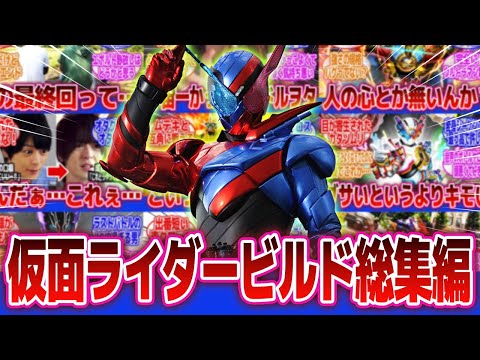
▶ Watch the original YouTube video
Kamen Rider Build Compilation Sparks Fan Debate on What Makes a Character Worth Supporting
A YouTube compilation of Kamen Rider Build has reignited fan discussions about character design, psychological complexity, and how modern audiences define their favorite characters. The analysis reveals a fundamental shift in fandom values—from celebrating flawless heroes to embracing deeply human, contradictory personalities.
- What Happened
- Why It Matters
- Background
- Key Points
- Character Analysis: Design as Narrative Language
- The Evolution of Fan Preferences
- Hazard Form: Redefining the Berserk Transformation
- Evolto: Quantifying Ultimate Power
- Narrative Ambiguity: The Controversial Ending
- Comparative Analysis: Kamen Rider Build’s Unique Approach
- Viewing Guide for New Audiences
- Fan Community Response
- Insights: The Redefinition of Character Appeal
What Happened
A comprehensive YouTube compilation of Kamen Rider Build has generated significant fan engagement, with viewers analyzing character design choices, narrative complexity, and thematic depth. The compilation prompted detailed discussions in comment sections about what makes certain characters resonate with audiences—particularly the character Grease, whose unconventional background and personality traits have become unexpectedly popular among fans.
Why It Matters
The fan response to this compilation reveals a meaningful evolution in how audiences engage with tokusatsu (Japanese special effects) media. Rather than celebrating traditionally powerful or visually perfect characters, modern fans increasingly gravitate toward psychologically complex, flawed, and relatable personalities. This shift reflects broader changes in storytelling preferences across anime, manga, and live-action media, where authenticity and internal contradiction often outweigh conventional heroic ideals.
Background
Kamen Rider Build, which premiered in 2017, distinguished itself through meticulous character design that directly reflects psychological states. The series introduced innovative visual storytelling techniques—such as using bottle-based transformation systems to represent internal conflict and employing subtle design elements (like a warning sticker on a character’s head) to convey deeper narrative meaning. The show’s approach to character development challenged traditional tokusatsu conventions by prioritizing psychological complexity over straightforward heroism.
Key Points
- Design as Psychology: Kamen Rider Build uses visual design elements—particularly character costumes and accessories—to express internal psychological states, with each design choice carrying narrative significance.
- The Rogue Paradox: The character initially perceived as a complete villain reveals layers of complexity through subtle design choices, demonstrating how visual storytelling can subvert audience expectations.
- Hazard Form Innovation: The series introduces a new interpretation of the “berserk form” archetype, replacing chaotic, beast-like transformation with mechanical, calculated precision—representing psychological suppression rather than personality erasure.
- Grease’s Unexpected Appeal: A character combining farming background with idol fan interests and occasionally awkward behavior has become fan-favorite, suggesting audiences now value human imperfection over traditional heroic perfection.
- Evolto’s Quantified Strength: The final antagonist breaks series conventions by presenting explicitly numerical power levels (50x transformation burden, 3400T punch force), establishing unprecedented power scaling.
- Ambiguous Ending: The series concludes with world fusion that erases most characters’ memories while preserving one protagonist’s, creating intentional narrative imbalance that has sparked ongoing fan discussion.
Character Analysis: Design as Narrative Language
Kamen Rider Build’s most distinctive feature is its use of character visual design to communicate psychological states. The character Rogue exemplifies this approach—a warning sticker on the back of the head serves as visual metaphor for the character’s fractured completeness. This design choice operates similarly to how physical actions in other acclaimed series (such as repeated falls in figure skating narratives) represent internal emotional development.
The series demonstrates that costume design, color choices, and accessories function as a visual language communicating character psychology. Grease’s design—combining practical farming aesthetics with modern idol fan culture references—visually represents the character’s contradictory nature: simultaneously grounded and contemporary, serious and occasionally absurd.
The Evolution of Fan Preferences
Traditional Kamen Rider fandom prioritized three character attributes: visual appeal, combat strength, and narrative importance. However, the overwhelming fan support for Grease reveals a fundamental shift in these values. Current audiences increasingly favor:
- Relatable, ordinary professional backgrounds (farming, rather than inherent special status)
- Contemporary, specific hobbies and interests (idol fan culture, rather than generic traits)
- Authentic human imperfection and occasional awkwardness, rather than flawless heroic presentation
This represents what might be termed “fandom maturation”—a move away from celebrating idealized perfection toward appreciating complex, contradictory humanity. Audiences now recognize that psychological depth and relatable imperfection often generate stronger emotional investment than traditional heroic archetypes.
Hazard Form: Redefining the Berserk Transformation
Kamen Rider Build introduces a fundamentally different interpretation of the “berserk form” concept. Traditional tokusatsu media depicts uncontrolled transformations through chaotic, animalistic movement and complete personality erasure. Hazard Form instead presents mechanical precision, calculated efficiency, and targeted aggression—suggesting psychological suppression rather than total consciousness loss.
The character’s repeated apologies during Hazard Form transformation indicate that consciousness persists while physical control is completely dominated by the transformation state. This creates a more psychologically disturbing scenario than traditional berserker forms: the character remains aware but powerless, experiencing their own body’s actions without control. This approach parallels psychological horror more closely than conventional action sequences.
Evolto: Quantifying Ultimate Power
The series’ final antagonist, Evolto, breaks established tokusatsu conventions by explicitly quantifying power levels. Official specifications include 3400-ton punch force, 3730-ton kick force, 50x transformation burden on the user, and multiple special abilities including black hole generation and matter annihilation. These specifications significantly exceed power levels established in previous Heisei-era Kamen Rider series.
More significantly, Evolto demonstrates tactical superiority through simultaneous ability deployment—combining multiple powers strategically rather than relying on raw strength alone. This approach to antagonist design emphasizes intelligent combat strategy alongside overwhelming power, creating a more multidimensional final threat.
Narrative Ambiguity: The Controversial Ending
Kamen Rider Build concludes with world fusion that erases most characters’ memories while preserving one protagonist’s recollection. This intentional narrative imbalance creates lasting emotional impact and ongoing fan discussion. The ending presents genuine tragedy—the protagonist survives but becomes isolated from companions who no longer remember shared experiences.
This conclusion deliberately avoids conventional “everyone wins” resolutions, instead presenting a bittersweet outcome where victory comes with significant psychological cost. The surviving protagonist must navigate a new world as the sole memory-bearer, creating existential loneliness despite physical survival.
Comparative Analysis: Kamen Rider Build’s Unique Approach
| Series | Protagonist’s Core Conflict | Visual Expression Method | Distinction from Build |
|---|---|---|---|
| Kamen Rider Blade | Human-monster boundary ambiguity | Suit color differentiation | Build uses external bottle system rather than suit design |
| Kamen Rider Ryuki | Parallel world choice dilemmas | Rider-versus-rider conflict | Build emphasizes unified fusion solution over conflict |
| Kamen Rider Decade | World destruction and reconstruction | Interdimensional interference | Build focuses on human memory as central element |
Viewing Guide for New Audiences
Sequential viewing is essential: Kamen Rider Build prioritizes psychological character development with densely interconnected episodes. Watching from episode one is strongly recommended, particularly to understand the transformation of the character who becomes Rogue.
Supplementary materials are necessary: The theatrical film and V-cinema (direct-to-video) releases provide essential context for complete character understanding, particularly regarding Grease’s background and the post-series world state. The series’ ending cannot be fully appreciated without these supplementary works.
Related works enhance comprehension: Additional V-cinema releases further develop character complexity and explore the post-series world, clarifying the ultimate fate of characters and the nature of the new world established by the series conclusion.
Fan Community Response
YouTube compilation comments reveal consistent thematic patterns. High-engagement comments frequently praise Grease’s characterization, noting that the combination of farming background, idol fan interests, and occasional awkwardness creates unprecedented character authenticity compared to traditional Kamen Rider protagonists.
Rogue’s design receives particular analytical attention, with viewers recognizing how subtle visual elements communicate character complexity and subvert initial villain expectations. The mechanical precision of Hazard Form generates discussion about psychological horror elements and the distinction between traditional berserker transformations and Build’s interpretation.
The series’ ending generates mixed responses—some viewers appreciate the bittersweet conclusion and its psychological depth, while others express sadness regarding the memory erasure and resulting character separation. This division reflects the ending’s intentional narrative ambiguity.
Insights: The Redefinition of Character Appeal
Kamen Rider Build represents a watershed moment in tokusatsu character development. The series demonstrates that audiences increasingly value psychological complexity, relatable imperfection, and authentic human contradiction over traditional heroic ideals. Characters like Grease—combining mundane professional reality with contemporary specific interests and occasional social awkwardness—resonate more powerfully than flawless, idealized heroes.
This shift reflects broader entertainment industry trends toward character-driven narratives that prioritize internal development over external power scaling. Build’s success suggests that modern audiences recognize deeper emotional investment emerges from characters who feel authentically human—contradictory, imperfect, and genuinely relatable—rather than from traditionally heroic archetypes.
The series’ willingness to conclude with narrative ambiguity and psychological cost rather than conventional victory further demonstrates how contemporary storytelling values thematic depth and emotional authenticity over reassuring resolution. Build’s influence on subsequent tokusatsu productions and broader anime/manga narratives will likely continue as creators recognize the commercial and artistic value of psychologically complex, imperfect characters.