▶ Watch the original YouTube video
After 15 years of analyzing Hellsing, one of anime’s most philosophically complex works, a critical transformation emerges: Alucard’s absorption into Schrödinger’s Cat represents not a simple power upgrade, but a fundamental shift from individual immortality to probabilistic existence. This paradoxical metamorphosis raises profound questions about strength, identity, and the nature of existence itself.
What Happened
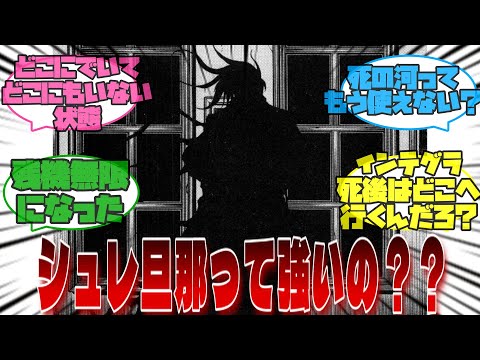
In the final chapters of Hellsing, protagonist Alucard undergoes a dramatic transformation after losing over 3 million vampire souls. Rather than being destroyed, he is absorbed into Schrödinger’s Cat—a being created through Nazi super-science or established through quantum observation. This absorption fundamentally alters Alucard’s existence: he transitions from a physically immortal individual capable of resurrection to a probabilistic entity that exists in a state of quantum superposition—simultaneously everywhere and nowhere.
Why It Matters
This narrative development challenges conventional understandings of power and strength in anime and manga. Alucard’s transformation illustrates how author Hirano Kohta subverts typical power progression narratives by presenting strength as potentially antithetical to identity. The event raises philosophical questions about what constitutes true immortality, whether gaining ultimate power necessarily represents victory, and whether the loss of one’s essential nature can be compensated by invulnerability. For fans and scholars of anime, this moment exemplifies the medium’s capacity to engage with quantum mechanics and existential philosophy.
Background
Hellsing, serialized in the early 2000s, established itself as a vampire narrative that transcended genre conventions. Alucard, the series’ central character, initially embodied traditional vampire strength: the ability to absorb countless souls and resurrect from near-total destruction. Throughout the narrative, he harbored a singular desire—to be defeated and destroyed by a human, to achieve death and release from his monstrous existence. Integra Hellsing, the organization’s leader and Alucard’s master, ultimately denied him this wish by granting him Schrödinger’s Cat’s abilities, condemning him to eternal existence rather than granting him the death he sought.
Key Points
- Nature of the Transformation: Alucard shifts from individual immortality (sustained by 3 million absorbed souls) to quantum-state existence (existing in probabilistic superposition)
- The Paradox of Strength: While physically invulnerable in his new form, Alucard loses the essential nature of his vampire identity and the ability to be observed as a coherent entity
- Conflicting Fan Interpretations: The fanbase remains divided between viewing this as Alucard’s ultimate empowerment versus his fundamental diminishment as a character
- Integra’s Cruelty as Compassion: Integra’s decision to grant Schrödinger’s abilities, while denying Alucard his desired death, represents simultaneous punishment and protection
- Schrödinger’s Ambiguous Nature: The series deliberately leaves Schrödinger’s origins unclear—whether created by Nazi science or established through quantum observation—mirroring the uncertainty principle itself
- Philosophical Implications: The transformation raises questions about observation, existence, and whether a being that cannot be definitively observed can truly be said to exist
Timeline
- Early 2000s: Hellsing serialization begins; Alucard established as protagonist with desire for human-inflicted death
- Series Progression: Alucard accumulates over 3 million vampire souls, establishing his physical immortality
- Final Arc: Alucard loses his accumulated souls and encounters Schrödinger’s Cat
- Transformation: Alucard is absorbed into Schrödinger’s quantum state, achieving invulnerability at the cost of coherent existence
- Post-Series Questions: Speculation remains about Alucard’s fate following Integra’s eventual death
Perspectives
The Strength Interpretation: Many fans view Alucard’s transformation as his ultimate ascension. By becoming a probabilistic entity that cannot be definitively observed or attacked, he achieves a form of invulnerability that transcends physical immortality. In this reading, attacks cannot land because the act of observation itself becomes uncertain—Alucard may or may not be where the attack occurs.
The Loss of Identity Interpretation: Conversely, other analysts argue that Alucard’s transformation represents his destruction as a character. The essence of Alucard throughout the series was his role as a vampire—a being who consumed souls and wielded that power. By becoming a quantum entity, he loses this defining characteristic. He is no longer Alucard the vampire, but rather a probabilistic phenomenon wearing his name.
The Curse-as-Gift Reading: A third perspective, supported by textual evidence, interprets Integra’s action as simultaneously cruel and compassionate. Alucard desired death; Integra denied him this mercy by ensuring his eternal existence. This represents both punishment (eternal loneliness) and protection (eternal life). The ambiguity is intentional—the series refuses to declare whether this outcome is blessing or damnation.
The Quantum Mechanics Lens: Scholars of the work note that Hellsing’s use of Schrödinger’s Cat extends beyond metaphor into genuine philosophical territory. The series engages with the uncertainty principle and quantum superposition as literal narrative elements, positioning Alucard within a framework where existence itself becomes probabilistic rather than deterministic.
Comparative Analysis: Immortality Across Anime
Hellsing’s approach to immortality differs fundamentally from other major anime treatments of the concept. In Demon Slayer, Muzan’s immortality derives from biological regeneration with identifiable weaknesses (sunlight, specific toxins). In Fate/Zero, mages extend their lives through external magical resources, creating dependency. Hellsing’s Alucard, by contrast, achieves freedom from physical law itself—he exists outside conventional causality.
This represents a qualitative rather than merely quantitative difference in power. Traditional immortality operates within physical reality; Schrödinger’s Cat operates within quantum uncertainty. The former can be challenged through sufficient force; the latter cannot be challenged because the fundamental act of observation becomes uncertain.
Industry Context: Quantum Mechanics in Modern Anime
Hellsing’s incorporation of quantum mechanical concepts predates a broader industry trend. Since the mid-2010s, anime and manga increasingly employ quantum uncertainty as a narrative device—evident in works like Steins;Gate, which explores temporal paradoxes through quantum mechanics. Hellsing’s early adoption of these concepts, applied to vampire mythology, demonstrates author Hirano Kohta’s philosophical sophistication and prescience regarding industry direction.
Unresolved Questions
The series deliberately leaves critical questions unanswered. What occurs when Integra dies? Does Alucard finally achieve the death he sought, or does he descend into deeper isolation? Can a being in quantum superposition choose to collapse its own wave function? These questions persist because the series refuses definitive answers—it instead invites perpetual contemplation.
Similarly, Schrödinger’s true nature remains ambiguous. Was this entity created through Nazi super-science? Established through quantum observation? The deliberate uncertainty mirrors the uncertainty principle itself, making the ambiguity thematically appropriate rather than narratively incomplete.
Fan Community Response
Online discussions reveal the depth of fan engagement with this transformation. The most common interpretation celebrates Alucard’s newfound invulnerability. However, substantial portions of the community mourn the loss of his vampire identity. A particularly insightful observation notes that Integra’s action constitutes “harassment”—denying Alucard his desired death while granting him eternal existence.
Humorous interpretations also emerge, such as speculation that Schrödinger, if conscious, would resent existing within Alucard’s being. These varied responses indicate that the fanbase engages not merely with power scaling but with character psychology and narrative philosophy.
Insights
Hellsing’s treatment of Alucard’s transformation reveals anime’s capacity to engage seriously with philosophical concepts. The series refuses the comfort of clear resolution—it does not declare whether Alucard’s new existence constitutes triumph or tragedy. This ambiguity is not a flaw but the work’s central achievement.
The narrative demonstrates that strength and identity can be fundamentally opposed. Alucard becomes physically invulnerable while losing his essential nature as a vampire. This paradox challenges readers to reconsider their assumptions about power, existence, and what constitutes a meaningful existence.
Furthermore, the work illustrates how quantum mechanics can function as more than scientific window-dressing in narrative. By applying Schrödinger’s Cat to a character’s literal existence, Hellsing transforms a physics thought experiment into a meditation on observation, identity, and the nature of being.
The series ultimately poses an unanswerable question to its audience: Is eternal invulnerability worth the loss of coherent identity? Is denial of death, when death is desired, an act of love or cruelty? By refusing to answer, Hellsing grants readers the responsibility of interpretation—a responsibility that extends the work’s philosophical engagement far beyond its final chapter.