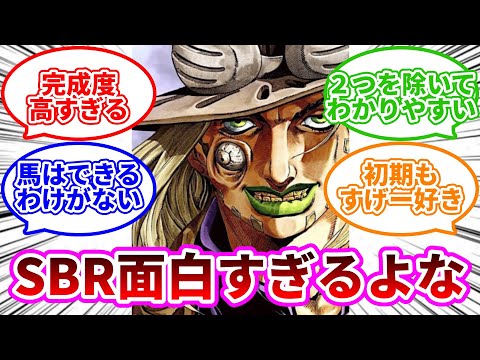
▶ Watch the original YouTube video
Why Johnny Joestar’s Character Development Is JoJo’s Greatest Achievement
After 15 years of following the JoJo’s Bizarre Adventure series, one fan argues that Johnny Joestar’s transformation in Steel Ball Run represents the franchise’s most compelling protagonist arc. Unlike previous JoJo heroes defined by innate strength or willpower, Johnny’s journey from paralysis to self-actualization offers a uniquely relatable form of character growth that has influenced an entire generation of manga and anime storytelling.
What Happened
Steel Ball Run, the seventh installment of JoJo’s Bizarre Adventure, introduced Johnny Joestar, a protagonist whose character arc fundamentally differs from his predecessors. Beginning as a paralyzed man competing in a cross-continental horse race, Johnny undergoes a transformation that transcends physical recovery. His growth is neither the predetermined strength of earlier JoJo heroes nor the traditional training montage found in contemporary shonen manga. Instead, Johnny’s development represents a spiritual and psychological rebirth—a journey from despair to self-belief that resonates with audiences on a deeply human level.
Why It Matters
Johnny Joestar’s character arc matters because it represents a fundamental shift in how JoJo’s Bizarre Adventure approaches heroism and personal growth. The series, which began in 1987, had established a pattern of protagonists driven by strong moral conviction—what the narrative calls the “golden spirit.” However, Johnny introduces moral ambiguity and pragmatism, willing to do whatever it takes to achieve his goals. This evolution reflects creator Hirohiko Araki’s artistic maturation and has influenced how subsequent manga and anime portray character development. The shift from weekly to monthly serialization also allowed for deeper character introspection and world-building, fundamentally changing the series’ pacing and emotional resonance. For fans and industry observers, Johnny’s journey demonstrates how format changes and narrative innovation can elevate a long-running franchise.
Background
Steel Ball Run began serialization in 2004 and concluded after its transition from Weekly Shonen Jump to Ultra Jump, a monthly publication. This shift in serialization format proved crucial to the work’s development. The earlier installments of JoJo’s Bizarre Adventure (Parts 1-6) were published weekly, creating pressure to pack multiple action sequences into each chapter. When Steel Ball Run moved to monthly publication, creator Hirohiko Araki gained the luxury of time—allowing for extended character moments, environmental storytelling, and the development of what fans describe as the work’s distinctive “atmosphere.”
Johnny Joestar arrives as a former jockey rendered paraplegic by a gunshot wound. Desperate and seemingly without purpose, he enters the Steel Ball Run—a cross-continental horse race spanning North America. Alongside Gyro Zeppeli, an Italian executioner and master of the “Spin” technique (an evolution of the series’ earlier “Ripple” power system), Johnny embarks on a journey that becomes far more than a simple competition. The race becomes a vehicle for Johnny’s physical and spiritual rehabilitation.
Key Points
- Relatable Growth Model: Johnny’s development follows the pattern of “already capable, but growing further”—a form of character progression that audiences find more emotionally resonant than either predetermined strength or traditional training arcs.
- Partnership Excellence: The dynamic between Johnny and Gyro Zeppeli represents the highest caliber of buddy relationships in the entire JoJo franchise, characterized by mutual dependence and evolving power dynamics.
- Format-Driven Evolution: The transition from weekly to monthly serialization enabled deeper character exploration and transformed the work from action-focused manga into a genuine adventure narrative.
- Technical Innovation in Combat: Steel Ball Run replaces pure Stand ability matchups with the Spin technique—a learnable skill that democratizes power progression and echoes the series’ original Ripple combat system.
- Narrative Scope: The cross-continental race setting elevates the work beyond typical battle manga, infusing it with genuine travel narrative and environmental storytelling.
- Moral Complexity: Unlike previous JoJo protagonists guided by absolute moral conviction, Johnny operates in moral gray areas, willing to eliminate obstacles regardless of ethical considerations—signaling Araki’s artistic evolution.
Timeline
- 2004: Steel Ball Run begins serialization in Weekly Shonen Jump
- 2009: Steel Ball Run concludes; fan discovers the complete work and experiences the full narrative impact
- 2004-2009 (ongoing): Series transitions to Ultra Jump (monthly publication), fundamentally altering pacing and narrative structure
- Post-2009: Steel Ball Run’s influence becomes apparent in subsequent manga and anime featuring growth-oriented protagonists
Perspectives
The Growth Narrative Perspective: Compared to contemporary protagonists like Eren Yeager (Attack on Titan), who possesses unwavering conviction from the beginning, or Tanjiro Kamado (Demon Slayer), who follows a classical training progression, Johnny’s arc operates differently. Eren’s growth feels predetermined—a strong-willed character simply executing his predetermined vision. Tanjiro follows the ancient mentor-student model. Johnny, however, must rebuild himself from psychological devastation. He doesn’t acquire new abilities; he reclaims his agency and self-belief. This distinction resonates powerfully with audiences because it mirrors real human resilience rather than fantasy power progression.
The Format Innovation Perspective: The shift from weekly to monthly publication wasn’t merely a scheduling change—it represented a fundamental philosophical shift in how the work could be told. Weekly serialization demands rapid plot progression and frequent action beats. Monthly publication permits extended scenes of characters sharing coffee, riding horses, or camping under stars. These seemingly mundane moments carry profound emotional weight, revealing character relationships and internal growth that weekly formats cannot accommodate. Fans who followed the earlier parts (particularly Part 5: Golden Wind and Part 6: Stone Ocean) during their weekly runs often reported fatigue and declining engagement. Steel Ball Run’s monthly pace restored the series’ narrative breathing room.
The Buddy Relationship Perspective: Fan commentary consistently identifies the Johnny-Gyro partnership as the franchise’s apex buddy dynamic. While Part 3’s Joseph Joestar and Jotaro Kujo formed a compelling duo, Johnny and Gyro’s relationship carries greater depth precisely because they begin unequal. Johnny is disabled; Gyro is a condemned criminal. As the narrative progresses, Johnny grows stronger while Gyro’s fate darkens. This inversion of power dynamics creates emotional stakes absent from more balanced partnerships. The relationship becomes genuinely interdependent rather than hierarchical.
Insights
Steel Ball Run represents a watershed moment in JoJo’s Bizarre Adventure’s evolution. The series originally positioned itself as an adventure narrative—Jonathan fighting vampires, Joseph battling supernatural threats, Jotaro confronting otherworldly enemies. However, Parts 5 and 6 gradually shifted toward enclosed, conflict-driven narratives: organized crime and prison escape respectively. Steel Ball Run reclaims the adventure essence while introducing narrative sophistication absent from earlier installments.
Johnny Joestar’s character arc demonstrates that protagonist growth need not follow established templates. He neither inherits predetermined strength nor climbs a training hierarchy. Instead, he reconstructs his identity through adversity, relationship, and spiritual awakening. This model has proven influential—subsequent manga and anime increasingly feature protagonists whose growth involves psychological and emotional dimensions alongside physical capability.
The work also illustrates how production format directly impacts narrative quality. The monthly serialization enabled Araki to craft scenes of genuine atmosphere and character intimacy. The Spin technique, while mechanically similar to earlier power systems, functions differently narratively—it’s a learnable skill rather than an innate ability, democratizing power progression in ways that resonate with audiences seeking accessible heroism.
For the franchise’s future, Steel Ball Run establishes a new template. The subsequent Part 8 (JoJolion) continues exploring these themes within a post-apocalyptic setting. Should the series continue beyond current installments, Johnny’s model of growth-through-adversity will likely remain influential. The challenge for any anime adaptation lies in translating the work’s atmospheric qualities—its sense of genuine travel, its quiet character moments, its visual complexity—into animated form. The horse animation alone presents technical challenges that will test production capabilities.
Ultimately, Steel Ball Run’s significance extends beyond JoJo fandom. It demonstrates how long-running franchises can evolve, how format changes can revitalize storytelling, and how character development rooted in psychological authenticity resonates more powerfully than predetermined power progression. Johnny Joestar stands as proof that the most compelling heroes aren’t those born strong, but those who choose strength despite overwhelming odds.